
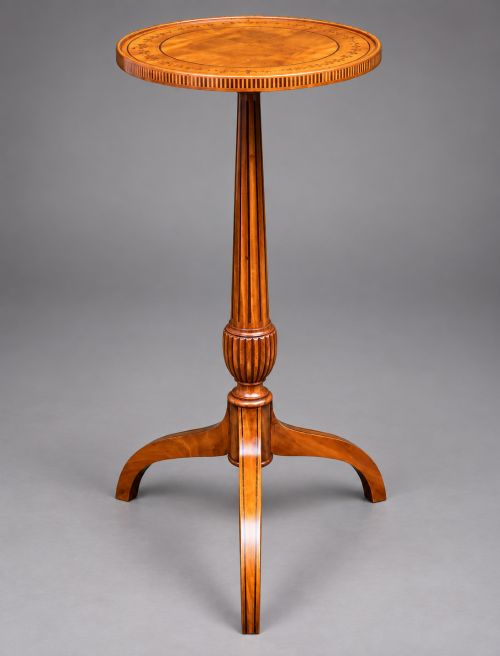
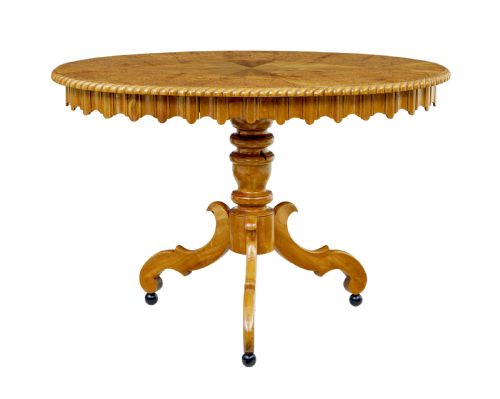
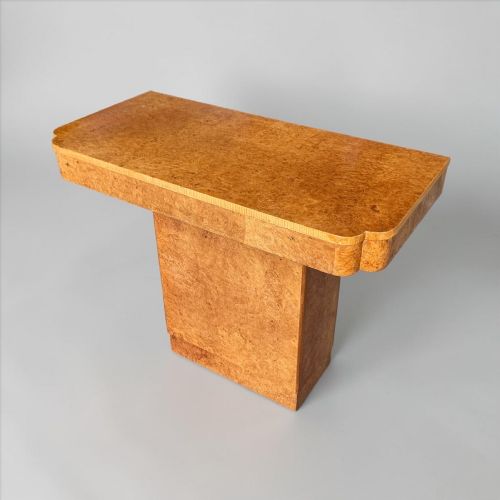
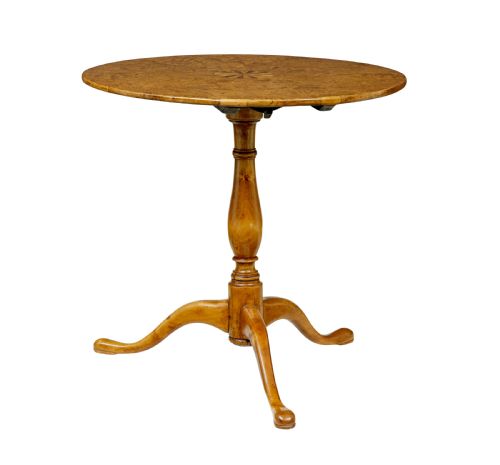


Golden Wood Pedestal Table
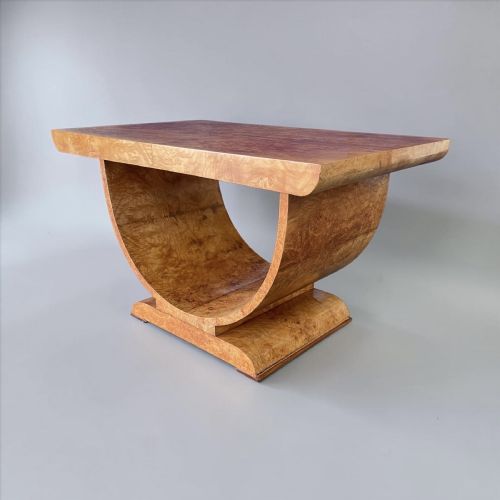
A golden wood pedestal table brings warmth and figure to a room through blonde grains and balanced central columns.
Golden Wood Pedestal Table
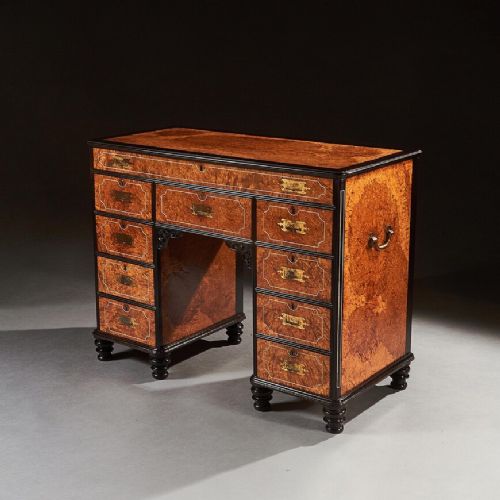
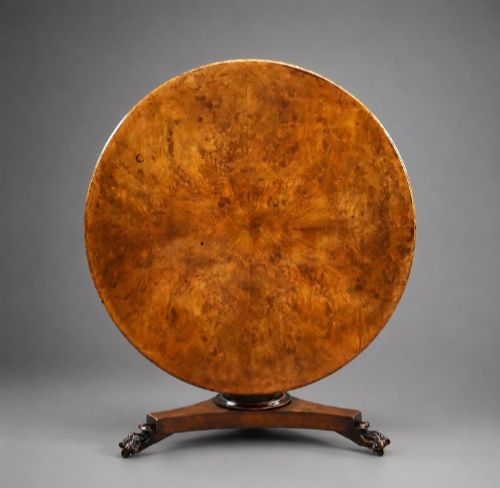
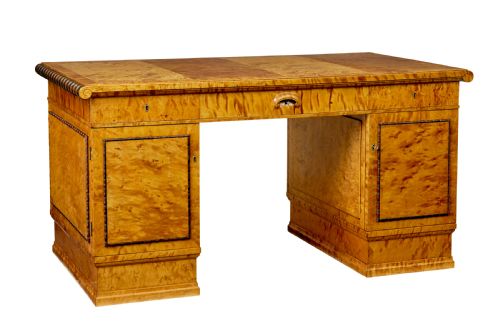
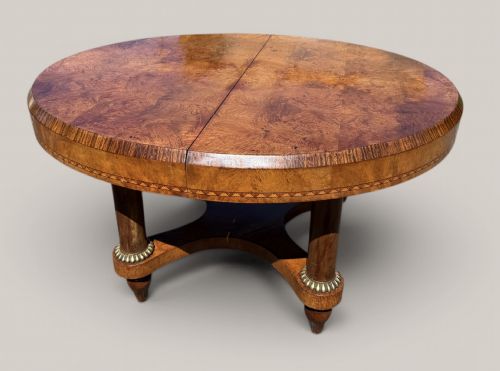
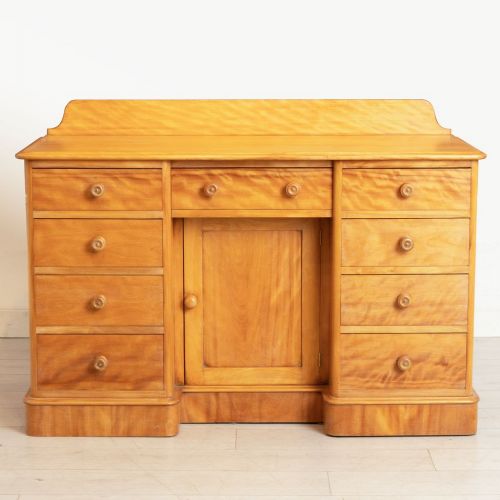
When searching for a golden wood pedestal table, buyers encounter nineteenth-century occasional tables, breakfast tables, and desks defined by pale, figured timbers and single central supports. The selection draws heavily from Swedish and Victorian workshops where lighter woods like birch, satin birch, and burr elm dominate the forms.
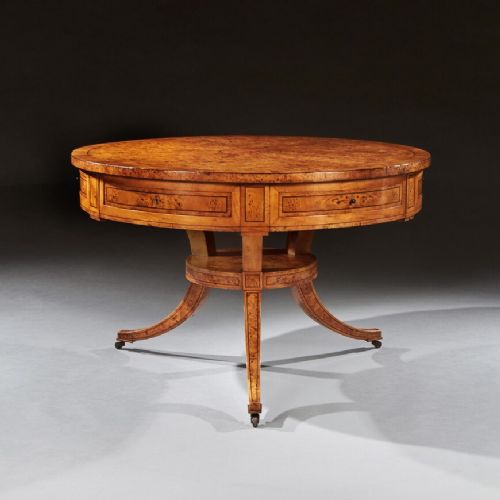
The inventory leans toward occasional tables, centre tables, and pedestal desks resting on tripod bases or central columns. Swedish pieces from the nineteenth century frequently employ burr birch veneers to create striking patterns across circular or oval tops.
Examples stretch across the nineteenth century into Art Deco and Biedermeier revivals, maintaining a focus on light timber tones and compact proportions. Side tables and bedside cabinets also appear, sharing the characteristic pedestal configuration and warm, honeyed palette.
How they were made
Cabinet makers utilised choice timbers such as birch, satin birch, and burr elm, often sliced into thin veneers to display intricate grain patterns across broad surfaces. These veneers were laid over secondary woods on sturdy carcases, ensuring stability while showcasing the natural figuring of the material.
Pedestal construction required precise joinery to anchor the central column firmly to a weighted tripod or plinth base. Turned wooden pillars and carved details demonstrate traditional lathe work and hand-finishing techniques common to Scandinavian and British workshops.
Materials range from solid ash and satin birch to elaborate amboyna and ebony campaign desks.
What varies in quality
Quality rests upon the selection and matching of the wood grain, where symmetrical burr patterns and rich figuring elevate an ordinary piece to a striking focal point. Master craftsmen aligned veneers meticulously across table tops to create harmonious visual movement.
The proportion and stability of the central pedestal relative to the top determine the structural integrity and visual balance of the furniture. Finer examples display subtle turned elements and tight joinery that endure decades of daily use.
John Taylor of Edinburgh
The Golden Wood Pedestal Table Glossary
- Burr birch
- A growth on a birch tree producing swirling, knotty grain patterns that makers prized for decorative veneer work. This wood yields a golden, highly figured surface.
- Pedestal table
- A table supported by a single central pillar or column rather than four corner legs. This form allows maximum legroom around the perimeter.
- Tilt top
- A table mechanism allowing the top to pivot to a vertical position when not in use. It conserved floor space in smaller nineteenth-century rooms.
- Biedermeier
- A Central European style spanning the nineteenth century focusing on clean lines and utilitariant comfort over excessive ornamentation. It favoured native blonde woods like birch and ash.
- Guéridon
- A small French table supported by a single column or figures, typically used as a stand for lamps or decorative objects. The form originated in the seventeenth century but persisted through later revivals.
Golden Wood Pedestal Table: Frequently Asked Questions
What rooms suit a pedestal table?
These tables fit easily into hallways, living rooms, and bedrooms as lamp stands or central display pieces. Their compact footprint allows them to sit comfortably beside seating without crowding the floor.
The single central column also makes pulling chairs close to the edge straightforward. Smaller occasional versions work well in corners or tight spaces where four-legged tables prove too cumbersome.
How do I care for birch surfaces?
Light woods require protection from direct sunlight to prevent the golden tones from darkening or fading unevenly over time. Dust regularly with a dry, soft cloth and avoid chemical polishes that leave residue on historic finishes.
Using coasters and mats protects the polished veneer from moisture rings and heat damage. Periodic waxing maintains the natural lustre of the timber without building up heavy layers.
Are tilt top tables stable?
Historic tilt mechanisms rely on a wooden catch or brass latch beneath the top to lock the surface securely in place. When properly engaged, the table remains steady for normal daily use.
The pivot joint allows the top to fold flat for storage or movement between rooms. Checking the hinge mechanism ensures the latch holds the surface firmly horizontal.
What is burr wood?
Burr wood comes from a tree deformity or tree growth that produces tightly clustered knots and swirling grain patterns. Cabinet makers sliced this wood into thin veneers to cover flat surfaces with dramatic natural designs.
Because every burr formation is unique, furniture featuring this material displays one-of-a-kind patterns. The golden hues of birch and elm burrs create bright, reflective surfaces.