



Golden Walnut Bureau Desk
These golden walnut bureau desk pieces bring warm grain and practical writing spaces into a room, offering timeless utility.
Golden Walnut Bureau Desk
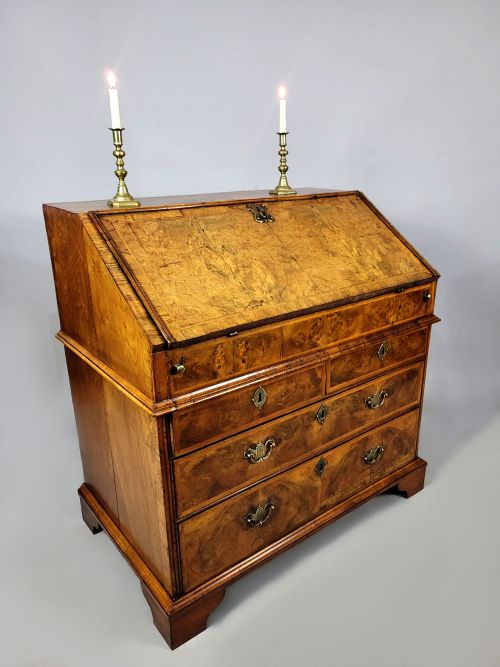
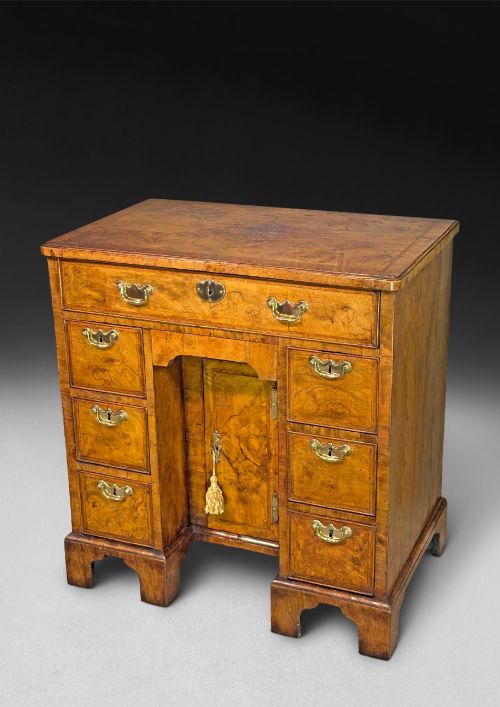
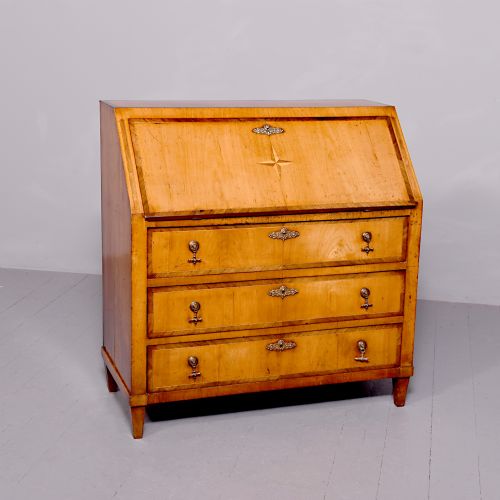
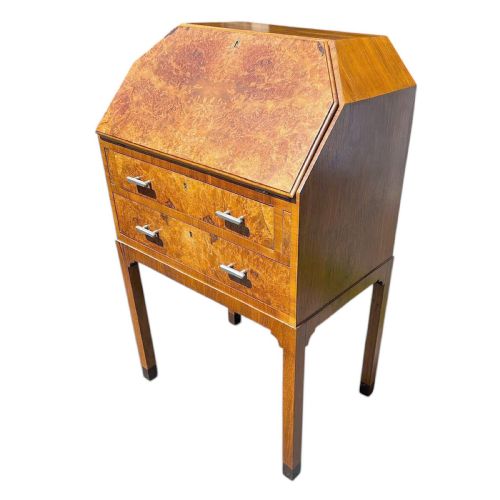
A golden walnut bureau desk combines rich timber figuring with fitted writing compartments, appearing in forms such as compact kneehole desks, sloping bureaux, and ornate bonheur du jour tables. The selection ranges from early Georgian examples down to Victorian, Art Deco, and Continental pieces.
The most prevalent formats on this page are the slope-front bureau and the refined writing desk, often featuring figured or burr veneers that highlight the natural warmth of walnut. These items span various eras including the eighteenth and nineteenth centuries, alongside twentieth-century revivals.
Makers and workshops from Georgian origins to later Victorian eras utilised walnut timber to create dedicated writing furniture. Buyers encounter both English craftsmanship and Continental interpretations, including French revival styles and inlaid marquetry bureau plat designs.
Materials and construction methods
Cabinet makers selected figured walnut and burr walnut veneers, laying them over secondary woods like oak to create striking grain patterns across flat surfaces and sloping lids. Marquetry inlay and rosewood banding frequently decorate the primary timbers.
Metal components such as brass handles, hinges, and occasional ormolu mounts provide functional accents and structural support. Glass elements appear in associated display sections, while internal compartments utilise smaller timber drawers and pigeonholes.
Golden Walnut Bureau Desk Retail Price Guide 2026
Typical asking prices for golden walnut bureau desk among the pieces listed under this phrase on Sellingantiques today, from the lower quarter to the upper quarter. They describe what is for sale here now, not the wider market.
Some bureau interiors conceal secret compartments designed to hide love letters from prying eyes.
Distinctions in quality
The standard of a golden walnut bureau desk rests upon the selection and matching of the veneer, where symmetrical burr patterns indicate superior craftsmanship. The intricacy of the internal fittings, such as secret compartments and pigeonholes, further separates standard production from exhibition pieces.
Structural integrity and the preservation of original mounts, brasswork, and inlaid details determine the overall merit of a piece. Finer examples maintain crisp marquetry and smooth internal mechanics without excessive restoration.
Morison of Edinburgh
The Golden Walnut Bureau Desk Glossary
- Burr walnut
- A prized timber harvested from growth excrescences on walnut trees, yielding complex, swirling grain patterns. Cabinet makers slice this wood into thin veneers for decorative furniture surfaces.
- Bureau
- A writing desk featuring a sloping lid that opens to reveal a fitted interior of small drawers and pigeonholes. Later variations include freestanding tables and pedestal forms.
- Bonheur du jour
- A small, light lady writing desk originating in France during the eighteenth century. These pieces typically feature a raised superstructure with small drawers or shelves above the writing surface.
- Kneehole desk
- A compact desk design with a central recessed space for the user's legs, flanked by pedestals of small drawers. This form allows for organised storage within a modest footprint.
- Marquetry
- The art of applying thin pieces of wood veneer and other materials to form decorative patterns and pictures on a furniture surface. This technique requires precise cutting and fitting.
Golden Walnut Bureau Desk: Frequently Asked Questions
What is a bureau desk?
A bureau desk is a writing cabinet traditionally featuring a sloping fall-front lid that drops down to create a writing surface. Inside, it contains an arrangement of small drawers and pigeonholes for correspondence.
Over time, the term has also been applied to various writing tables and kneehole desks that provide integrated storage for paperwork and writing materials.
How do I identify Georgian walnut?
Georgian walnut furniture, dating from the eighteenth century, typically displays rich honey and golden tones with subtle figuring rather than the heavy burrs seen on later Victorian pieces. Construction often incorporates solid walnut or figured veneers laid over oak secondary timbers.
Early pieces often feature simple, elegant proportions, sometimes with herringbone stringing or crossbanding framing the drawer fronts and writing surfaces.
Where were bonheur du jour desks used?
A bonheur du jour served as a refined ladies writing desk in domestic drawing rooms and boudoirs during the nineteenth century and earlier French periods. Its compact size made it suitable for casual correspondence rather than heavy administrative work.
The raised back section allowed for the display of small decorative items or the storage of writing paper and envelopes.
How do I care for walnut furniture?
Walnut furniture benefits from stable indoor humidity levels and protection from direct sunlight to prevent the timber veneers from drying out or fading. Regular dusting with a soft, dry cloth preserves the finish.
Applying a quality wax polish occasionally nourishes the wood and maintains the natural lustre of the golden grain without building up heavy residues.