



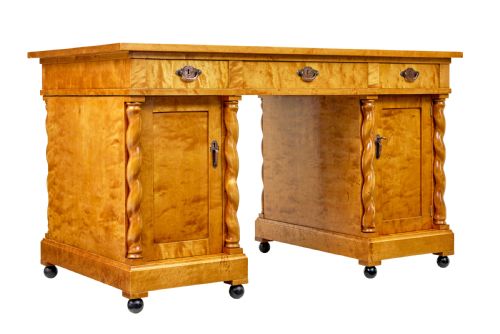


Golden Satin Birch Table
A golden satin birch table brings a luminous, warm grain to a room, ranging from compact Victorian writing desks to Swedish Empire revival pedestals.
Golden Satin Birch Table
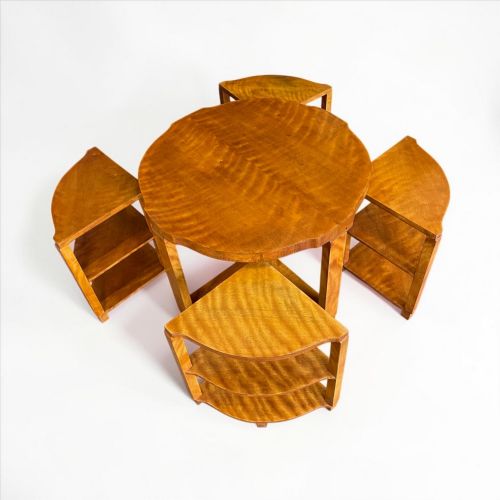
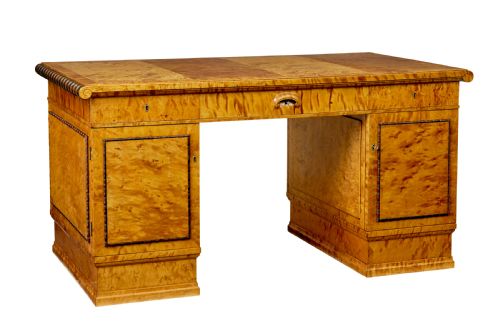
A golden satin birch table encompasses a varied group of nineteenth and early twentieth-century furniture, dominated by writing desks, centre tables, and occasional tables. You are most likely to encounter Victorian pieces from the mid to late nineteenth century alongside Swedish designs from the Biedermeier, Art Deco, and Empire revival periods.
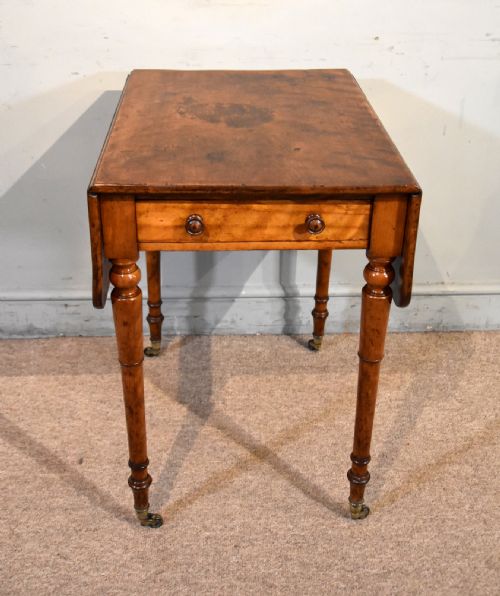
The material displays a distinctively pale, shimmering figure that distinguishes these tables from darker timbers like mahogany or walnut. British makers utilised the wood alongside continental European workshops, particularly in Sweden, producing forms that range from simple Pembroke and breakfast tables to intricate games and tea tables.
What varies in quality
The distinction between ordinary and exceptional pieces rests upon the selection and movement of the timber figure. Highly figured flame birch veneer creates a deeper, more dramatic optical shimmer across large surfaces like desk tops and centre tables.
Execution of secondary details dictates the overall calibre of the piece. Crispness in carved elements, precision in ebony inlay, and the integration of quality brass hardware separate standard domestic furniture from finer workshop productions.
Some Victorian dressing chests come equipped with candle scones, ready for evening routines long before the arrival of electric light.
Johnstone and Jeanes
The Golden Satin Birch Table Glossary
- Satin birch
- A timber derived from the birch tree, prized for its lustrous, light-reflecting grain that resembles satin. It forms the primary visual characteristic of these tables.
- Flame birch
- A highly figured variety of birch veneer displaying undulating, flame-like patterns. Cabinetmakers selected this cut for prominent tabletops and drawer fronts.
- Pembroke table
- A small table featuring two hinged drop leaves on opposing sides. This form gained popularity for its versatility in domestic interiors.
- Kneehole desk
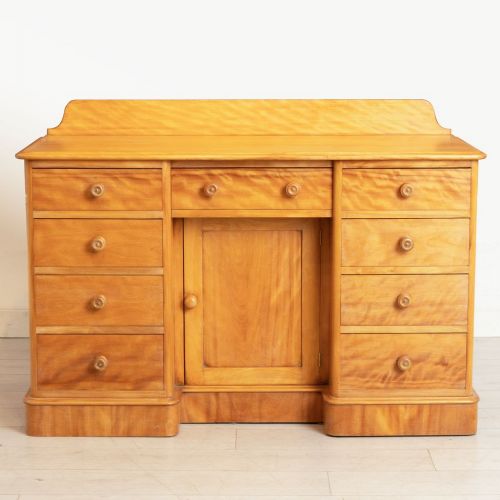
- A writing desk featuring a central recess for the user's legs, flanked by pedestals of drawers. They often appear in Victorian and Edwardian iterations.
- Biedermeier
- A prominent Central and Northern European style spanning the nineteenth century, known for utilitarian elegance and emphasis on clean wood grain. Swedish interpretations frequently utilised birch.
Golden Satin Birch Table: Frequently Asked Questions
How do I care for a satin birch surface?
Keep these tables away from direct sunlight and excessive heat sources to prevent the pale timber and delicate veneers from drying out.
Dust regularly with a soft, dry cloth and avoid modern silicone polishes, which can build up and dull the natural lustre of the grain.
Were these tables made in Britain or Scandinavia?
Both regions produced significant numbers of these pieces during the nineteenth and early twentieth centuries. British makers often favoured writing desks and Pembroke tables.
Meanwhile, Swedish workshops produced distinctive centre tables, games tables, and pedestal desks under Biedermeier and Empire revival influences.
What is the difference between a centre table and an occasional table?
A centre table was traditionally designed to stand free in the middle of a room, finished with detail on all sides for viewing from any angle.
An occasional table is generally smaller and lighter, intended to be moved about the room as needed for lamps, drinks, or display.
How do I identify a Victorian piece from an Art Deco one?
Victorian examples frequently display revival details like Rococo curves, turned legs, and functional writing compartments with brass hardware. They date predominantly from the mid to late nineteenth century.
Art Deco pieces from the early twentieth century lean towards geometric simplicity, smooth cylindrical pedestals, and streamlined surfaces that highlight the natural wood figure without heavy ornamentation.