
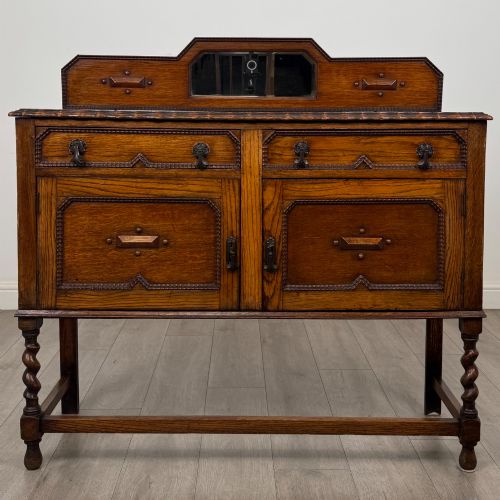
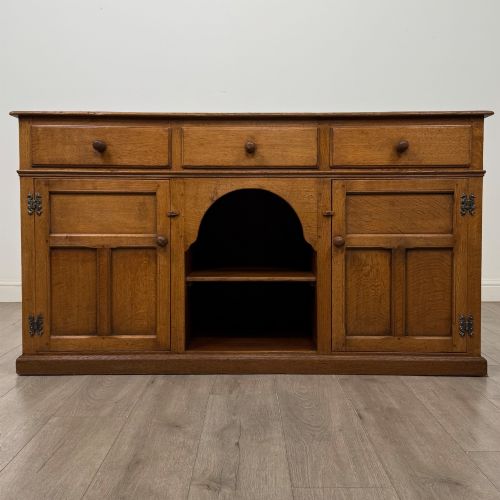
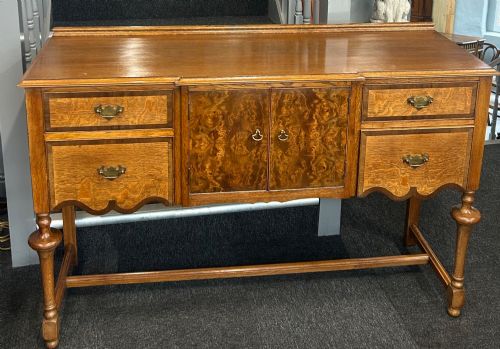


Golden Oak Buffet
These golden oak buffet selections span robust Victorian styles and lighter Edwardian forms, offering practical storage with distinct character.
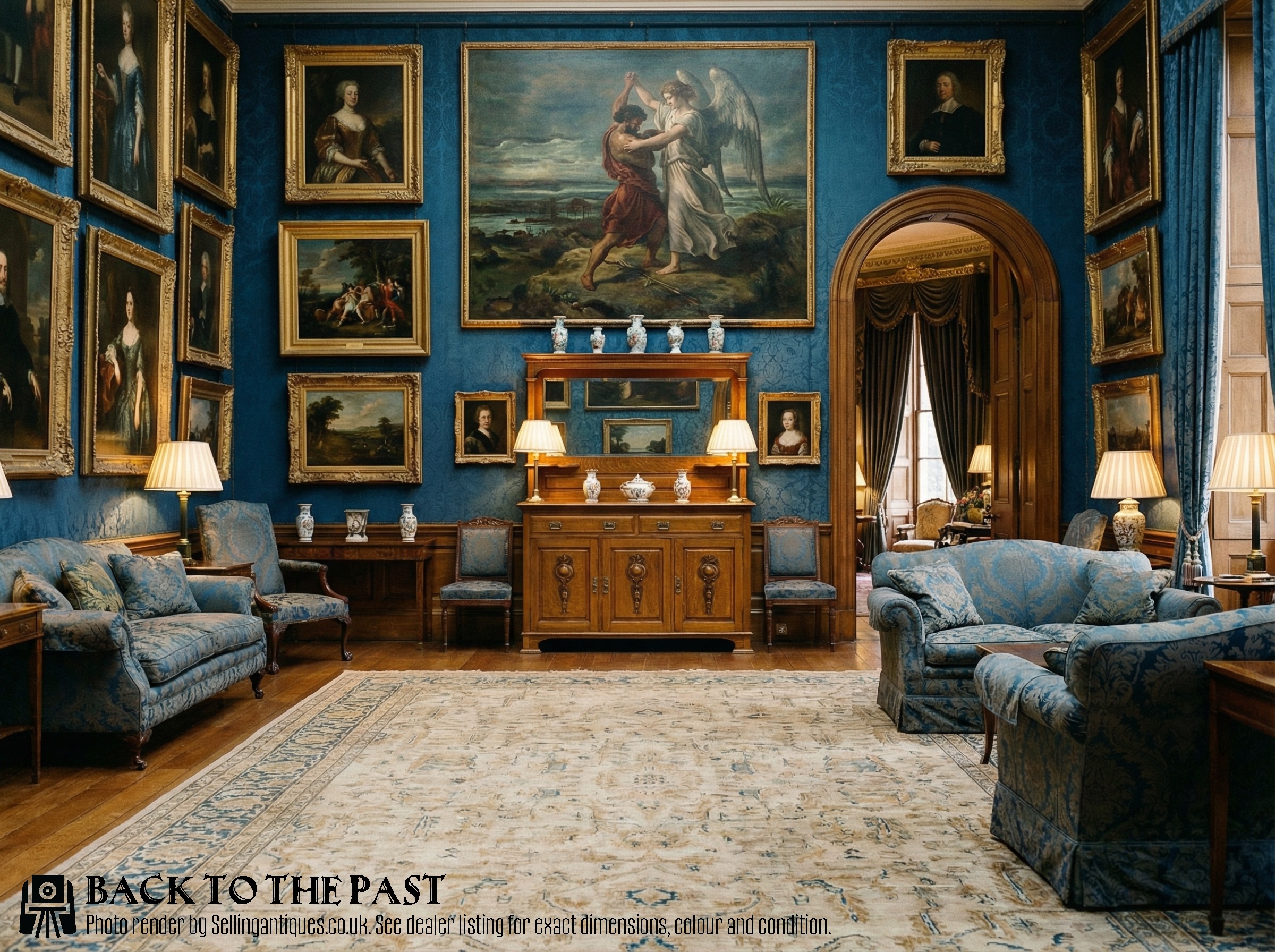
Golden Oak Buffet
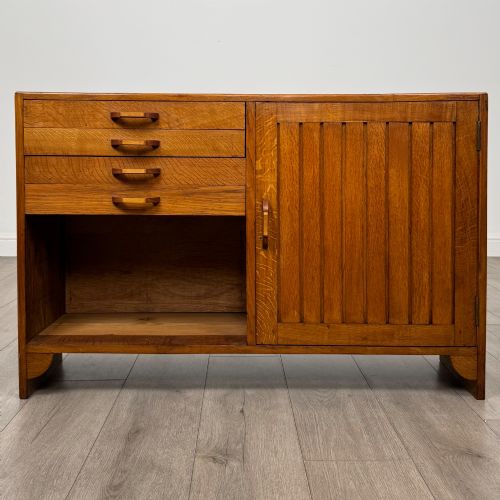
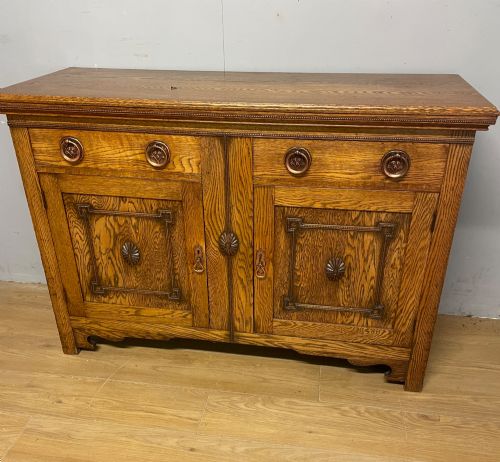
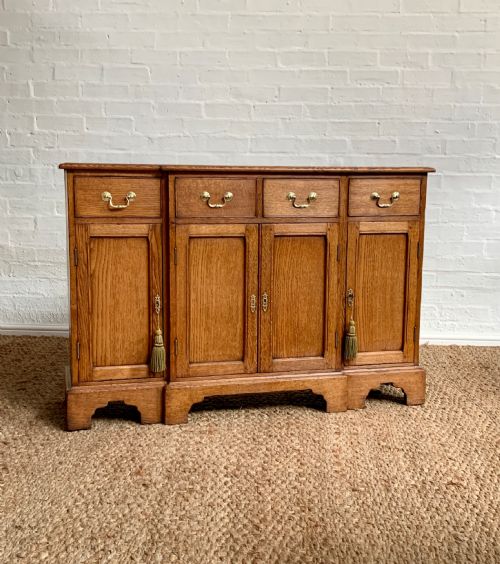
A golden oak buffet serves as a substantial dining room furnishing designed for storing tableware, serving food, and displaying decorative items. Pieces meeting this description range from early Victorian architectural designs to compact Edwardian cupboards and mid-century interpretations.
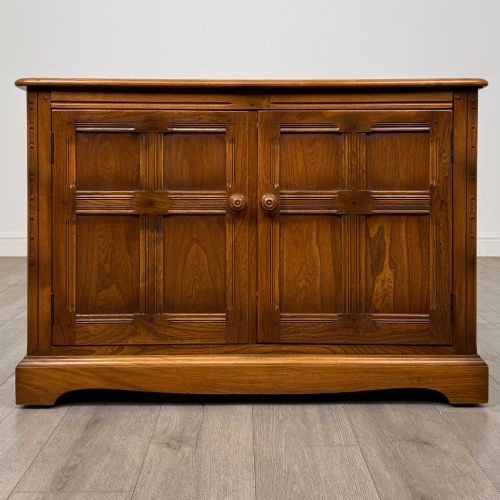
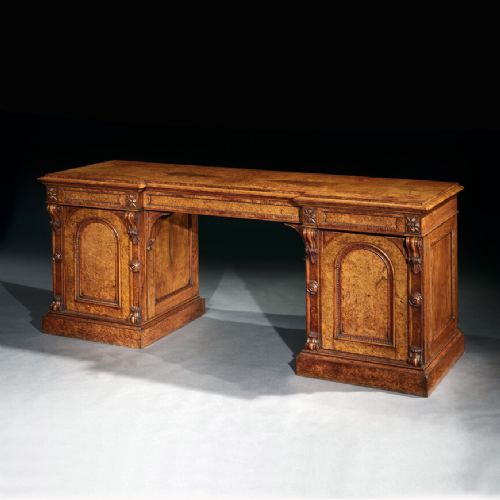
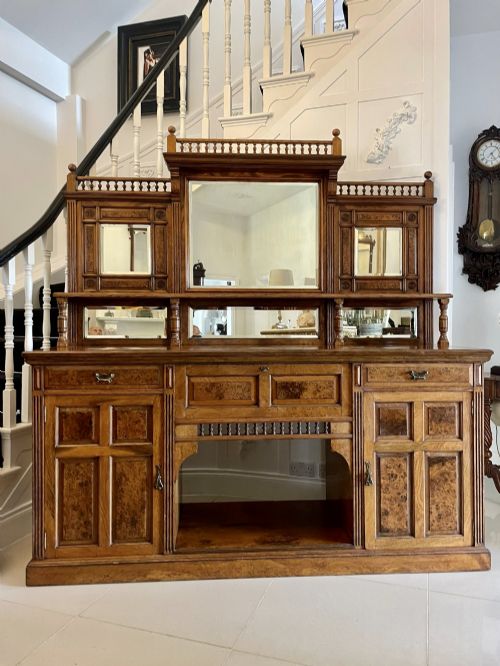
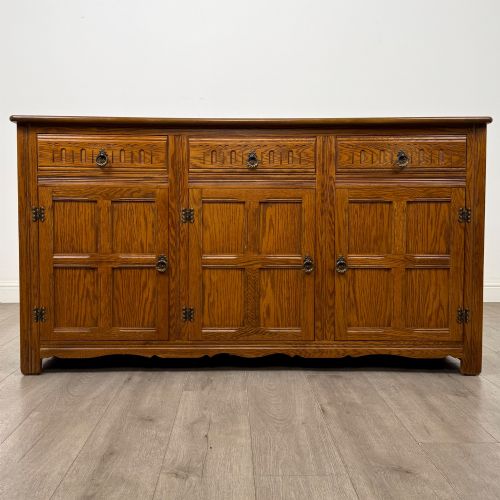
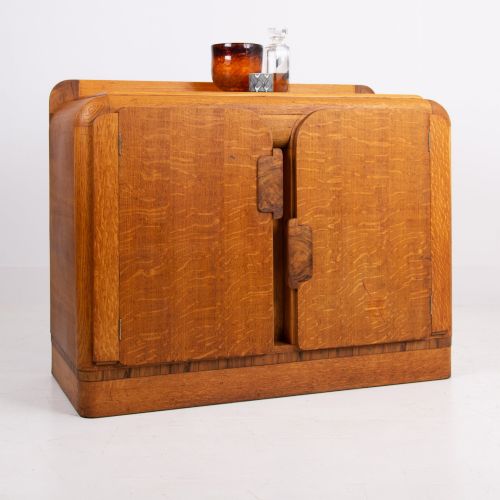
The material presentation leans heavily toward warm golden tones of oak and pollard oak, often paired with mirror glass backs, brass fittings, and copper accents. Forms vary from simple two-door sideboards and court cupboards to elaborate mirror-backed credenzas and serving tables.
Edwardian and Victorian examples predominate, though the record extends from seventeenth-century style reproductions through to nineteen-thirties modernism. Buyers regularly encounter pieces influenced by the Arts and Crafts movement alongside traditional revival styles.
How they were made
Cabinet makers utilised solid oak and figured pollard oak veneers over secondary timbers, exploiting the natural grain patterns through quarter-sawing and careful sectioning. Surface enrichment relied on hand-carving, Gothic tracery, and turned wooden elements rather than applied ornamentation.
Metal hardware formed an integral structural and decorative component, incorporating cast brass drop handles, copper strap hinges, and iron locks. Backboards frequently incorporated bevelled mirror glass held within heavy wooden frames, while internal shelving utilised solid timber construction fixed with traditional joinery.
Early nineteenth-century dining rooms relied on these heavy sideboards to keep the port decanter safely out of reach until the proper moment.
What varies in quality
The distinction between standard utility items and exceptional cabinet work rests in the choice of timber and the ambition of the design. Selection of highly figured pollard oak or deliberate quarter-sawn golden oak grain marks out superior workshops.
Execution of carving and the integration of hardware reveal the maker's hand, where crisp relief work and well-fitted drawers separate master furniture from commercial production. Original glass, sound structural framing, and intact brass or copper mountings elevate a piece's integrity.
Gomme·Liberty and Co.
The Golden Oak Buffet Glossary
- Pollard oak
- Timber taken from trees that have been pollarded, producing a dense, highly figured grain pattern prized for decorative veneers.
- Court cupboard
- A heavy enclosed piece of furniture with upper and lower tiers used historically for displaying plate and storing provisions.
- Dumb waiter
- A tiered side table or serving stand designed to hold dishes near a dining table without requiring servant attendance.
- Arts and Crafts
- A design movement prioritising traditional craftsmanship, simple forms, and visible construction over industrial standardisation.
- Credenza
- A sideboard or buffet cabinet typically featuring low proportions and generous surface area for serving.
Golden Oak Buffet: Frequently Asked Questions
What is a golden oak buffet used for?
These pieces function as principal dining room storage cabinets, providing enclosed shelving for china, linen, and silverware.
The flat top surface serves as a serving area during meals or a display space for decorative ceramics and silver.
How do I date a golden oak buffet?
Dating relies on identifying stylistic markers, construction techniques, and hardware types characteristic of specific periods such as the Victorian or Edwardian eras.
Heavier carved ornament typically points to nineteenth-century manufacture, whereas lighter golden tones and simpler lines often indicate early twentieth-century work.
Are these buffets made of solid oak?
Many examples utilise solid oak for structural frames, legs, and drawer construction, while larger panels often employ oak veneers.
Figured woods like pollard oak are typically applied as veneers over stable secondary timbers to showcase the decorative grain.
How do I care for golden oak furniture?
Maintenance requires regular dusting with a soft dry cloth and occasional application of appropriate beeswax to nourish the timber.
Placement away from direct heat sources and strong sunlight prevents the oak and any veneer work from drying out or splitting.