



Golden Brown Writing Desk
A golden brown writing desk brings rich timber grain and period character directly to your study.
Golden Brown Writing Desk
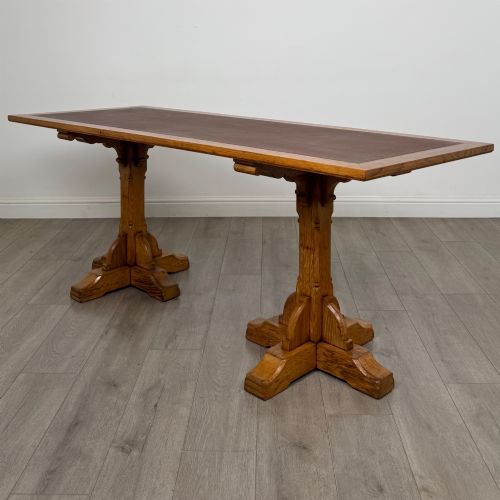
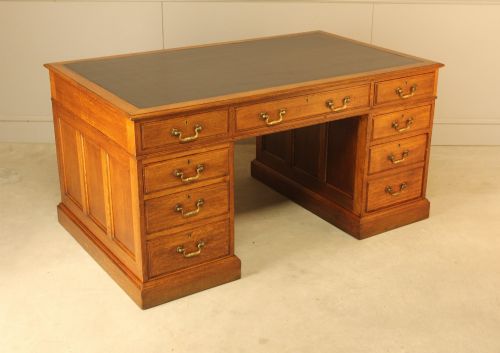
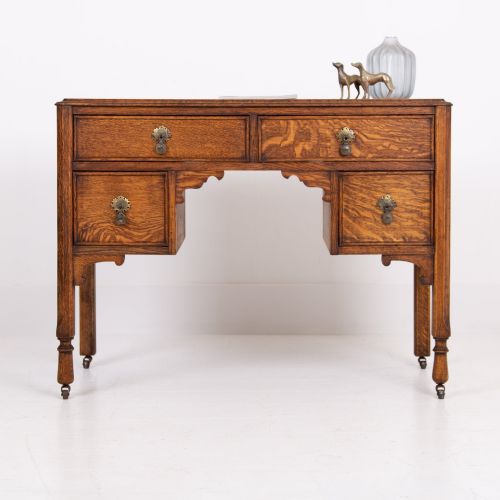
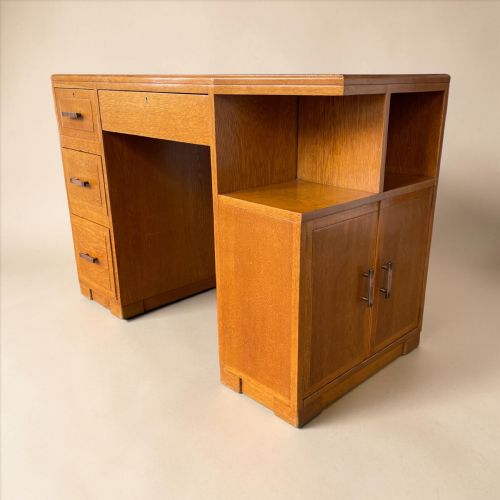
A golden brown writing desk encompasses various timber workspaces spanning multiple periods from the nineteenth and twentieth centuries. These pieces appear in forms such as pedestal desks, writing tables, and compact writing slopes.
Origins vary across English, French, and American workshops, yielding both large library tables and delicate ladies writing tables. Each variation reflects the prevailing interior tastes of its specific decade.
Materials and construction
Timbers such as oak, walnut, mahogany, and satinwood form the primary structure of these desks, often enhanced by decorative wood veneer or inlay. Selected pieces incorporate secondary woods like cherry, olive wood, and elm.
Hardware details frequently include brass handles, locks, and fitted leather writing surfaces. Specialised construction methods range from solid timber joinery to complex bureau interiors featuring secret drawers.
Several desks conceal secret compartments behind pigeonholes, designed for hiding love letters or private ledger books.
Assessing quality and finish
Quality differentiates through the selection of figured timber grain and the precision of inlaid details. Superior examples exhibit harmonious proportions and intact original hardware, such as Bramah locks.
Edwards & Roberts·Morison of Edinburgh
The Golden Brown Writing Desk Glossary
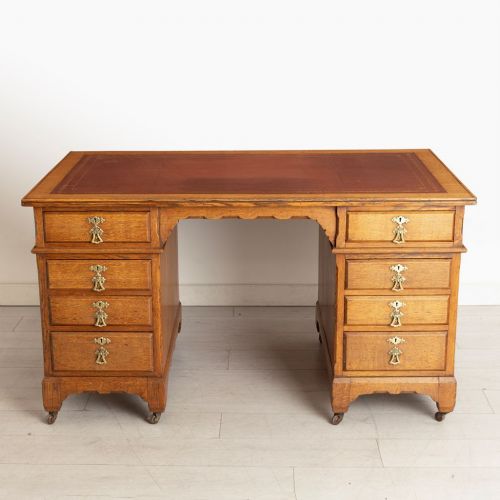
- Pedestal desk
- A freestanding desk comprising two supporting pedestals of drawers beneath a main writing surface. This form offers substantial storage capacity and a finished back for placement in the centre of a room.
- Writing slope
- A portable or stationary box with a slanted lid designed to hold paper and provide an angled writing plane. Inside compartments typically organise inkwells, pens, and correspondence.
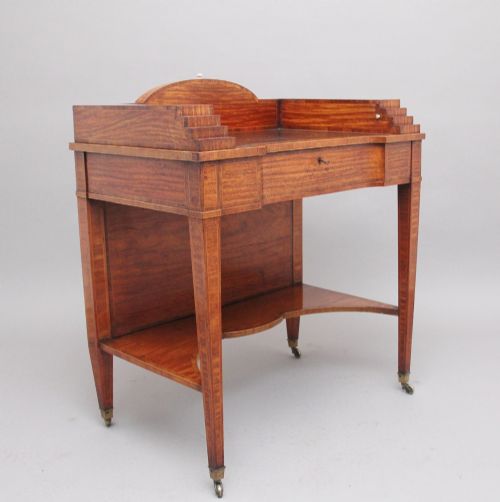
- Satinwood
- A durable, yellowish timber prized for its lustrous grain and smooth texture. It serves prominently in Sheraton Revival and eighteenth century pieces for contrasting veneers and stringing.
- Bureau
- A desk featuring a hinged sloping flap that opens to reveal a fitted interior of pigeonholes and small drawers. The lower section generally incorporates multiple full width storage drawers.
- Library table
- A large freestanding table utilised historically for consulting heavy volumes in a study or library. These versions often feature spacious rectangular tops supported by sturdy timber legs or pedestals.
Golden Brown Writing Desk: Frequently Asked Questions
How do I care for a walnut writing surface?
Maintain the timber by dusting regularly with a soft, dry cloth and avoiding direct sunlight or excessive heat. Apply a quality beeswax periodically to nourish the grain and protect the finish.
Prevent moisture damage by using coasters and blotters on the leather or wood top. Gentle care preserves the historical patina without altering the original surface.
How can I date an oak writing desk?
Examine the construction methods, hardware, and timber characteristics to determine the approximate decade. Edwardian and Victorian pieces often display machine sawn components and specific revival styles.
Earlier examples from the nineteenth century exhibit hand cut joinery marks and distinct patination. Comparing the secondary woods inside drawers also aids in establishing the correct period.
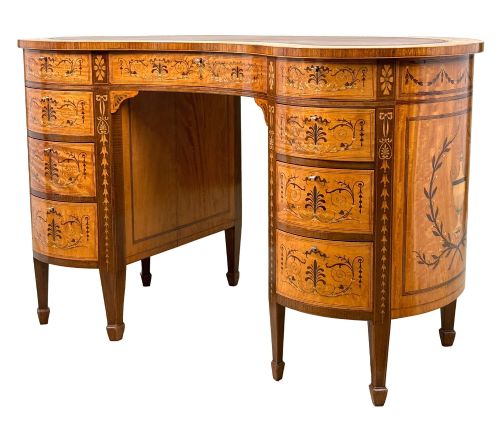
Where should I place a kidney shaped desk?
Position a kidney shaped desk where its curved front can be fully appreciated, such as floating away from a wall. This allows the finished back and graceful silhouette to serve as a focal point.
Ensure adequate natural light falls across the writing surface without causing glare on the leather insert. The curved design requires slightly more clearance to navigate around the perimeter comfortably.