

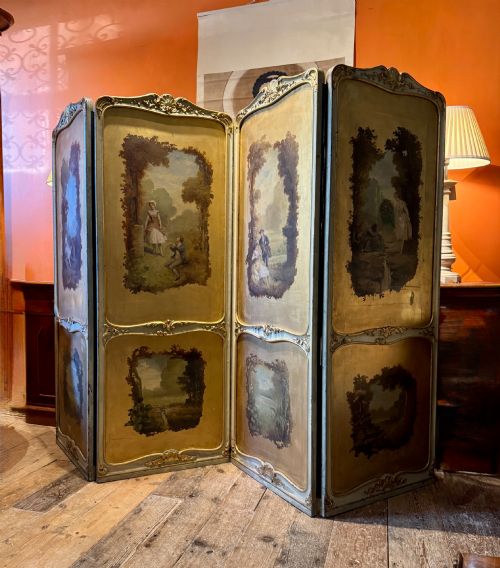
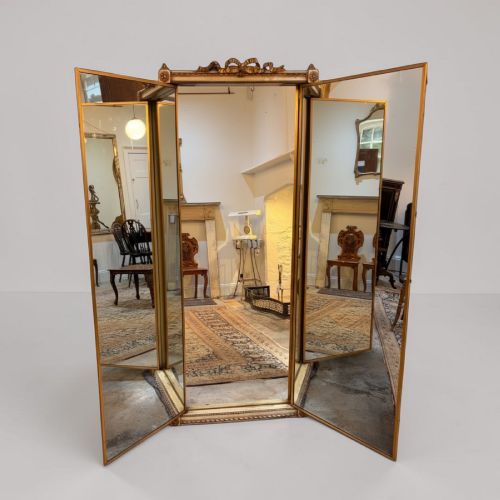
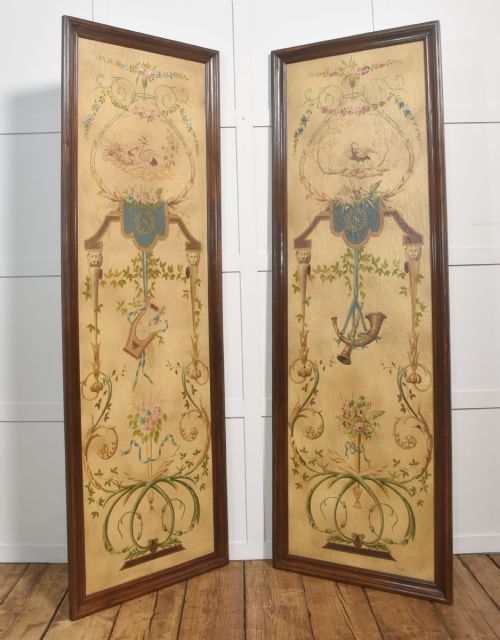
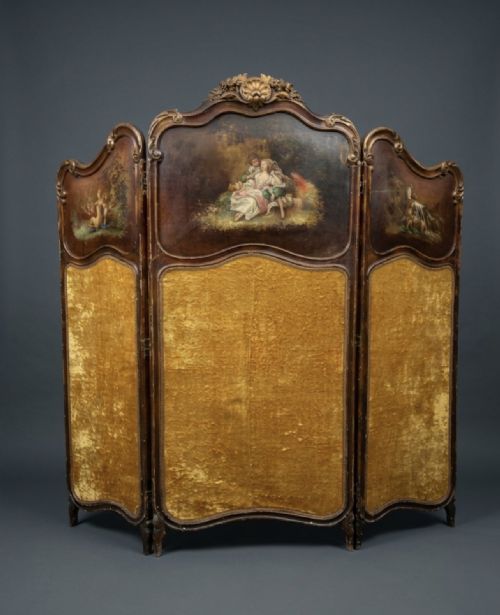


Gold Wood Screen
These gold wood screen pieces bring gilt splendour and architectural division to a room, offering both decorative presence and practical partitioning.
Gold Wood Screen
When searching for a gold wood screen, you encounter a varied selection of room dividers, fire screens, and decorative panels spanning the Georgian, Victorian, and Edwardian periods. These pieces range from grand tripartite giltwood frames to intricate Chinese carved wooden plaques and Indian embroidered textile designs.
Origins stretch across English, French, Chinese, Japanese, and Indian workshops, demonstrating how different cultures utilised gilded woodwork and textiles for interior display. Whether utilised as a photographic prop or a traditional hearth guard, each object carries distinct period characteristics.
Materials and construction
Makers shaped these items primarily from wood, applying meticulous layers of gold leaf and giltwood to achieve a luminous metallic finish. Carved wooden elements often pair with textiles, embroidery, silk cotton, and glass to create layered visual depth.
Structural complexity varies from simple hinged wooden folds to elaborate triptychs and pole-mounted panels supported by brass or metal hardware. Lacquer work, painted panels, and photographic inserts further demonstrate the diverse assembly techniques employed by period artisans.
Gold Wood Screen Retail Price Guide 2026
Typical asking prices for gold wood screen among the pieces listed under this phrase on Sellingantiques today, from the lower quarter to the upper quarter. They describe what is for sale here now, not the wider market.
Listings feature items spanning the Georgian, Victorian, and Edwardian eras, utilising giltwood, lacquer, textile, and brass.
Assessing quality and execution
Superior examples distinguish themselves through the crispness of hand-carved wood details and the uniform application of genuine gold leaf rather than plain metallic paint. The integrity of original gilding and the depth of relief work govern the visual impact of the piece.
The quality of incorporated textile elements, such as intricate needlework or hand-embroidered silver and gold thread, separates standard items from finer decorative works. Additionally, the smoothness of folding hinges and the stability of structural joints indicate superior maker execution.
The Gold Wood Screen Glossary
- Giltwood
- Wood that has been coated with gold leaf or a gold-colored preparation. This finish was widely utilised on decorative furniture and frames during the eighteenth and nineteenth centuries.
- Pole screen
- A freestanding vertical screen featuring an adjustable panel mounted on a central wooden pole. They were traditionally placed near hearths to shield the face from excessive heat.
- Modesty screen
- A small decorative screen designed to provide visual privacy or shade in a room. They often feature painted panels or textile inserts.
- Triptych mirror
- A three-paneled mirror arrangement where the outer wings fold over the central panel. This style appeared frequently in early twentieth-century French interior design.
- Spade foot
- A flat, slightly tapered foot shape found on furniture legs during the Georgian period. It provides a stable and refined termination to vertical supports.
Gold Wood Screen: Frequently Asked Questions
What is a pole screen used for?
Pole screens served a practical purpose in period parlours by protecting a person's complexion from the intense heat of an open fireplace. The adjustable panel could be slid up and down the wooden stem to block the warmth directly.
Over time, these items transitioned from functional hearth accessories to purely decorative room accents. Their intricate embroidery and carved standards made them prized focal points in Victorian and Georgian interiors.
How do I distinguish a fire screen from a room divider?
Fire screens are typically single, solid panels supported by feet or a central pole, designed specifically to sit in front of a hearth when the fire is unlit. They tend to be smaller in scale and feature protective glass or needlework.
Room dividers, conversely, consist of multiple hinged folds intended to partition larger spaces or conceal areas of a room. These larger pieces often incorporate three to six interconnected panels of wood, lacquer, or fabric.
How do I care for antique giltwood?
Antique giltwood requires gentle maintenance to preserve the delicate gold leaf finish against moisture and abrasive cleaning agents. Dusting should be done lightly with a soft, dry brush without applying heavy pressure.
Avoiding direct sunlight and fluctuating humidity helps prevent the underlying wood from warping and the gesso ground from cracking. Proper placement ensures the longevity of the metallic surface.
How can I tell a Victorian screen from a Georgian one?
Georgian screens, such as those from the Hepplewhite or George III eras, typically display restrained classical proportions and fine cabinetmaking details like spade feet. Their woodwork reflects an emphasis on symmetry and architectural harmony.
Victorian pieces often embrace more exuberant revival styles, incorporating heavier gilding, elaborate floral carvings, and eclectic ornamentation. The introduction of varied textiles and photographic elements also points towards later nineteenth-century production.