



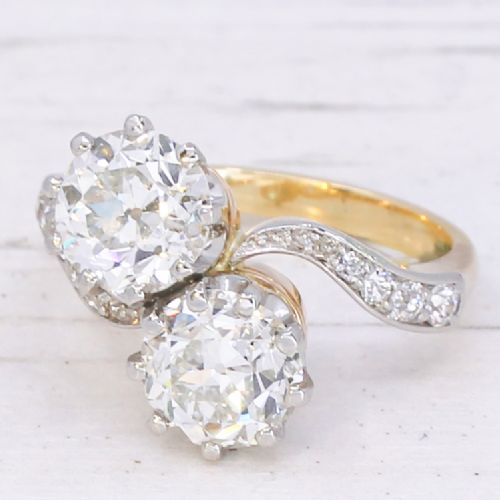


Gold Toi Et Moi Ring
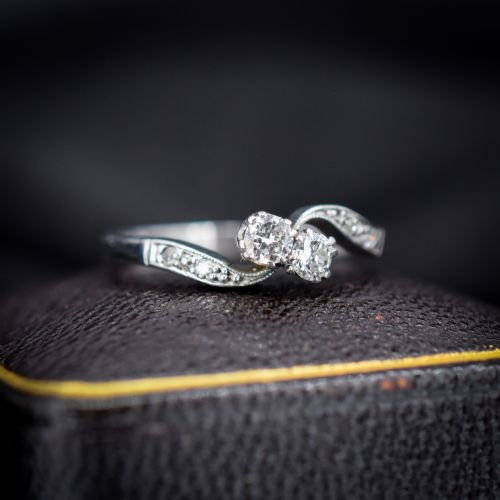
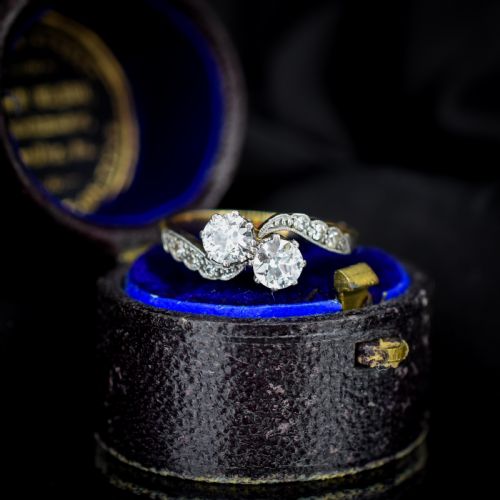
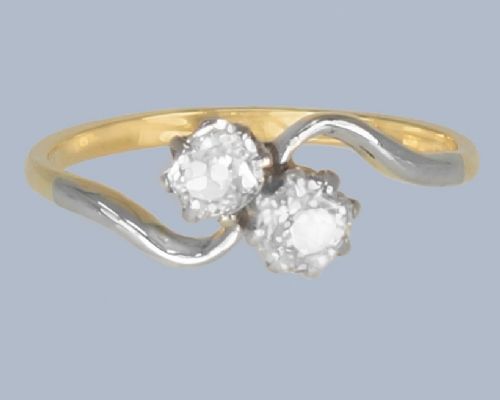
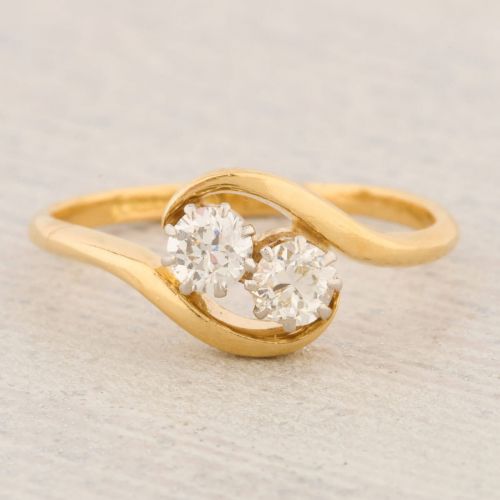
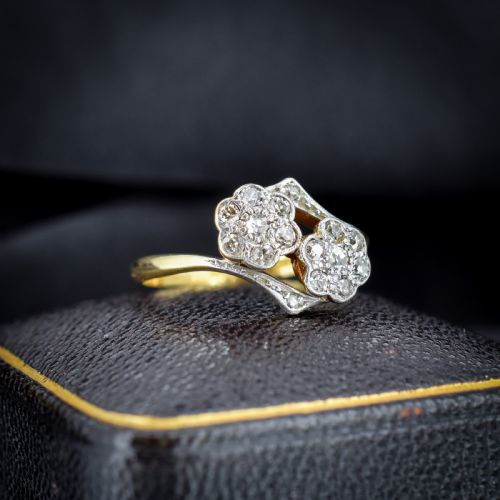
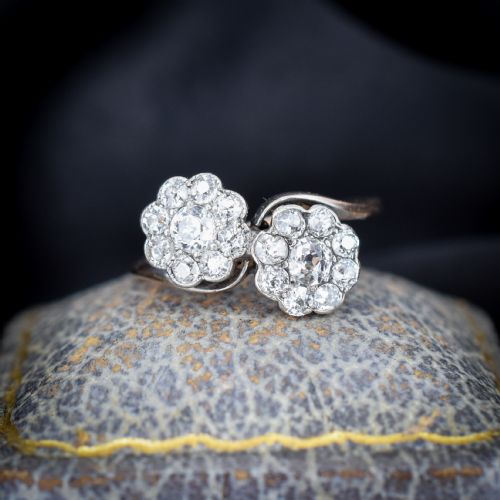
A gold toi et moi ring brings together two principal gemstones in a single twist or crossover band, representing two souls joined as one.
Gold Toi Et Moi Ring
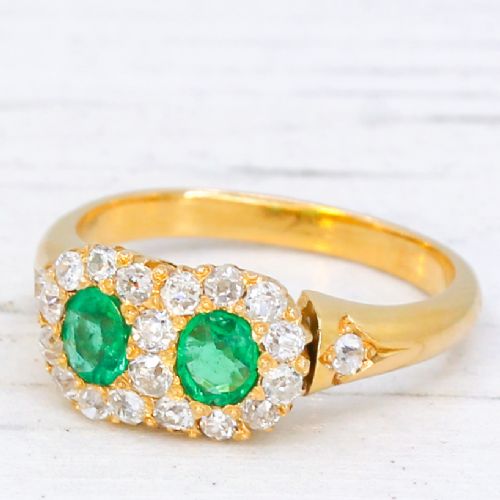
A gold toi et moi ring centres on a two-stone configuration, where twin gems rest side by side or sweep past one another on the finger. This design gained immense popularity during the Edwardian period and the Art Deco era, drawing on 19th-century roots.
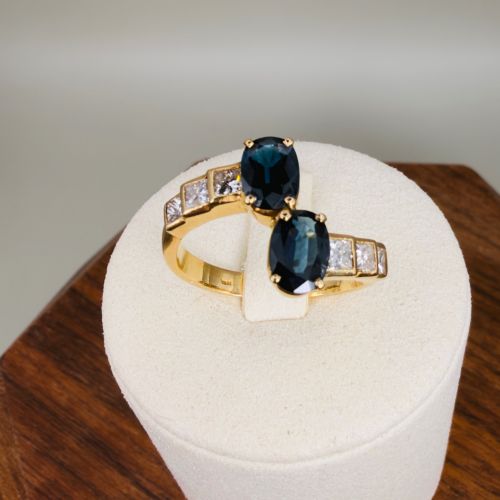
Examples on this page frequently pair diamonds with coloured stones such as sapphires, rubies, emeralds, or pearls. The twist, crossover, or bypass form allows these diverse materials to sit closely together in balanced harmony.
How they were made
Goldsmiths utilised 18ct yellow gold, 18ct white gold, and platinum settings to construct these enduring bands. Platinum frequently appeared in Edwardian pieces to mount old-cut diamonds securely while keeping the metalwork delicate.
Gemstones were shaped by hand, featuring old European cuts, rose cuts, or oval facets that reflect the candlelit or early electric interiors of their origins. Crossover shanks required precise metal shaping to ensure the twin stones flowed naturally into the twist.
Listings feature periods spanning from the nineteenth century through the Edwardian era, Art Deco, and mid-century decades.
What varies in quality
Quality rests in the proportional balance between the two central stones and the weight of the gold or platinum band. Stones chosen with matching visual presence create a more cohesive composition.
The finesse of the setting work, particularly where platinum meets yellow gold in crossover shoulders, dictates the refinement of the piece. Substantial shank thickness ensures the twist retains its structural integrity through decades of wear.
The Gold Toi Et Moi Ring Glossary
- Toi et Moi
- French for you and me, denoting a ring design featuring two distinct gemstones set side by side. This style became a traditional choice for romantic tokens and engagement rings.
- Crossover
- A ring shank style where the metal bands cross over each other before meeting the central stones. This creates a fluid, organic silhouette on the finger.
- Old Cut
- A hand-faceted diamond cut prevalent before modern brilliant-cutting techniques were standardised. These stones typically display smaller tables and higher crown heights.
- Bypass
- A ring design where the ends of the shank pass by one another rather than meeting directly under the main stones. It shares similarities with the twist and crossover forms.
Gold Toi Et Moi Ring: Frequently Asked Questions
What does toi et moi mean?
It translates from French as you and me, representing two distinct entities united in one jewel.
This symbolism made the two-stone configuration a popular choice for historic engagement and sentiment rings.
How do I wear a crossover ring?
The sweeping shoulders and twin stones suit being worn alone as a statement piece on the hand.
Because the stones sit close to the finger in historic mounts, pairing them with a straight wedding band requires careful fitting.
Are old cut diamonds different?
Old cut diamonds feature hand-cut facets that catch ambient light with a softer, broader glow than modern stones.
Their unique proportions reflect the artisanal cutting methods of the nineteenth and early twentieth centuries.
How to date an antique ring?
Dating relies on combining the specific gemstone cuts, metal combinations, and shank styles recorded in each piece.
Edwardian items often pair platinum-topped gold with old-cut diamonds, while Art Deco examples lean toward geometric platinum and white gold mountings.