
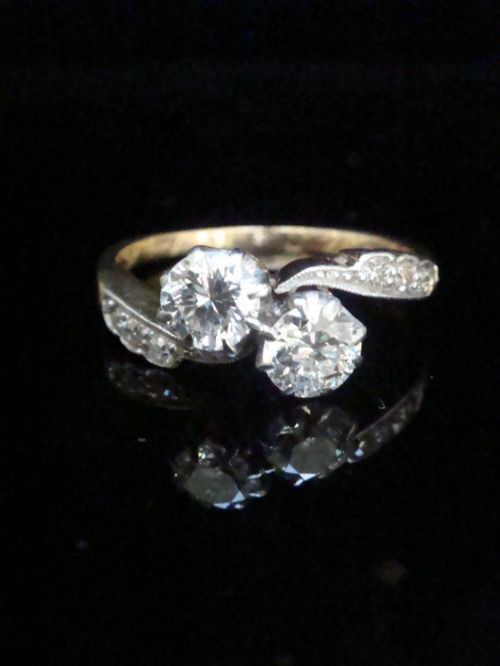
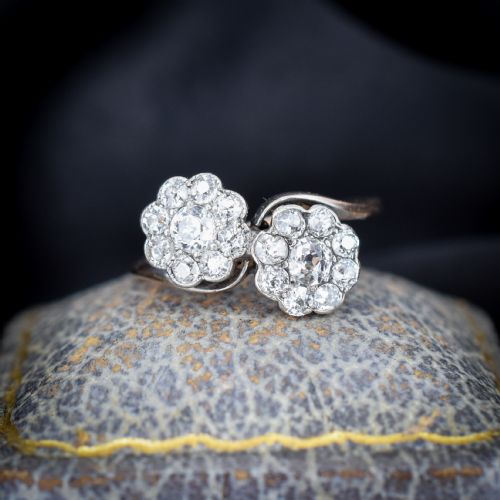


Double Stone Engagement Ring
A double stone engagement ring brings two gems together in a twist or cluster setting, offering a lasting symbol of connection.
Double Stone Engagement Ring
A double stone engagement ring unites two feature stones, frequently known as a toi et moi design, crossover, or twist configuration. These pieces span several decades from the early twentieth century through the mid-century era, encompassing Edwardian, Art Deco, and vintage periods.
The most common formats on this page pair diamonds with emeralds, rubies, sapphires, or aquamarines, set alongside single-stone diamond duos and multi-stone clusters. Yellow gold, white gold, and platinum provide the structural foundation for these varied gemstone pairings.
Makers across the Edwardian and Art Deco decades shaped these rings into distinct winding silhouettes, giving each piece an individual character based on the cut of the stones and the twist of the band.
Materials and construction methods
Goldsmiths utilised platinum and various carats of gold, including 18ct yellow gold and 14ct white gold, to mount the principal stones securely. Old cut diamonds frequently appear alongside vivid emeralds, rubies, sapphires, and aquamarines.
Techniques relied on precise metal twisting and cluster arrangements to position two main gems in close proximity, creating flowing lines that define the toi et moi and crossover styles.
Some rings manage to look like two friendly planets caught mid-orbit.
Assessing quality and craftsmanship
Quality rests upon the matching of the two primary stones and the fluidity of the metalwork in the twist or crossover. Superior pieces display harmonious proportions between the gems and clean lines in the platinum or gold setting.
The integration of old cut diamonds with coloured stones such as rubies or emeralds requires careful claw or bezel work, distinguishing finely constructed rings from simpler productions.
The Double Stone Engagement Ring Glossary
- Toi et Moi
- You and me. A ring style featuring two main stones positioned side by side or in a crossover embrace.
- Old cut
- A traditional diamond cutting style characterised by a smaller table, higher crown, and open culet, typical of earlier periods.
- Twist
- A band design where the metal curves around the finger to bring two stones together.
- Cluster
- An arrangement where a central stone or paired stones are surrounded by smaller gems.
Double Stone Engagement Ring: Frequently Asked Questions
How do I care for an antique ring?
Antique rings require gentle handling due to their age and delicate settings. Regular inspection of the claws helps secure the stones.
Storing each piece individually prevents scratching between different metals and gemstones.
What metals were used in vintage rings?
Planners and jewellers utilised platinum, 18ct yellow gold, and 14ct white gold across the periods represented here. Each metal offers a distinct tone that alters the overall appearance of the mounted gems.
Platinum provides high durability for intricate twists, while gold brings warmth to coloured stones.
Are these rings suitable for daily wear?
These rings serve as engagement jewellery and withstand daily wear provided they receive proper maintenance. Harder stones like diamonds resist scratching well.
Checking the setting periodically ensures the gems remain firmly fixed in their original mounts.