
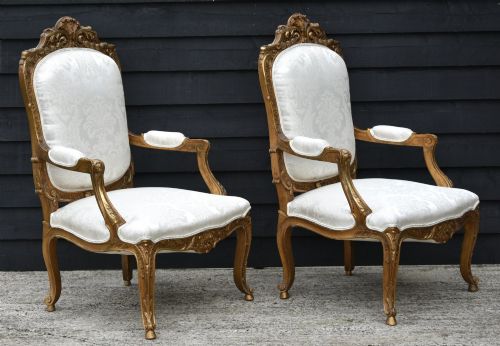
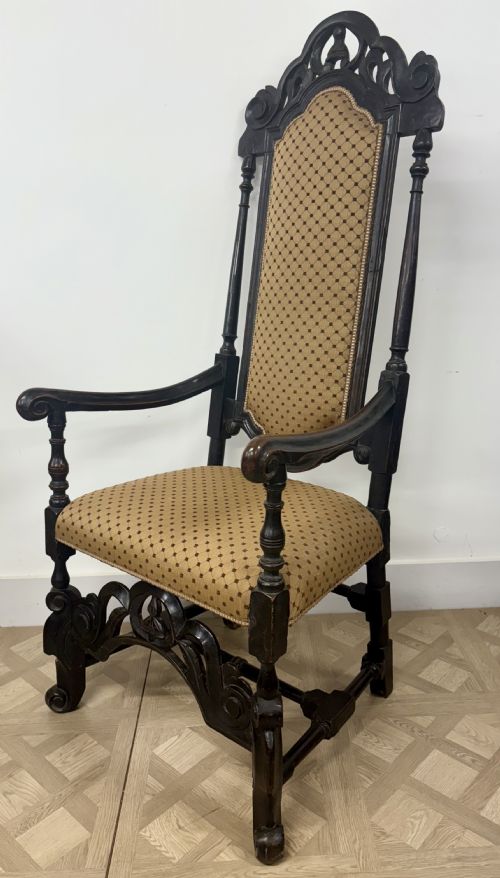
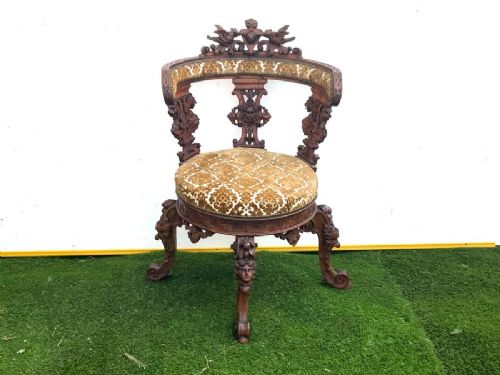
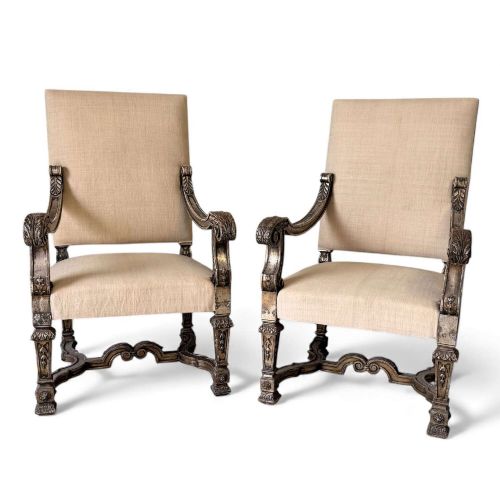
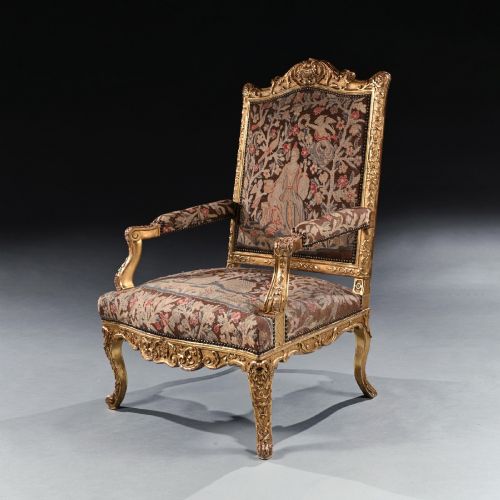
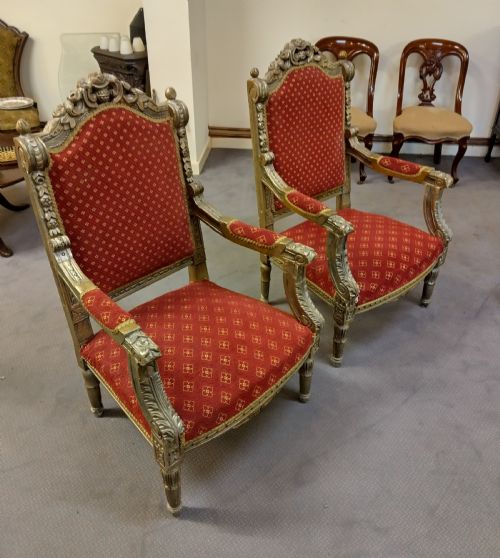
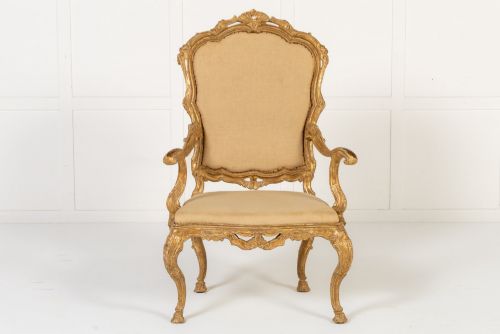


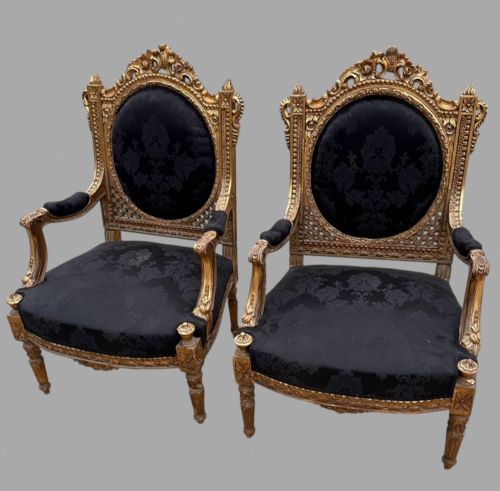


Gold Throne Chairs
Gold throne chairs are grand statement seating carved from timber and finished in giltwood, designed to command a room with historical presence.
Gold Throne Chairs
When buyers search for gold throne chairs, they encounter substantial seating designed to dominate a high-status interior. These pieces function as monumental armchairs, audience chairs, and ecclesiastical seats built to display authority.
The most common versions on this page originate from the nineteenth century, often executed in elaborate revival styles such as French Baroque and Italian Rococo. Earlier examples include seventeenth-century walnut armchairs and pre-Reformation ecclesiastical thrones.
Forms typically feature high backs, open arms, and heavy ornamentation. The selection ranges from French Regence fauteuils to Italian carved giltwood armchairs and pairs of large decorative elbow chairs.
Materials and construction
Construction relies upon solid timbers such as walnut and general wood substrates carved into elaborate scrolls, foliage, and structural frames. Artisans shaped these sturdy wooden frameworks to support imposing silhouettes.
Surfaces receive a gilt finish or layers of gold leaf applied over gesso to create a brilliant metallic sheen. This gilding elevates the underlying timber, turning structural frames into gleaming decorative centerpieces.
Upholstery incorporates heavy textiles including damask, velvet, linen, and decorative tapestry. These rich fabrics line the seats and tall backs, completing the high-status appearance of the throne.
Materials recorded across the inventory include solid walnut, giltwood, damask, velvet, and tapestry textiles.
Judging quality in gold throne chairs
Quality rests principally in the depth and sharpness of the wood carving. Superior pieces display crisp, deeply undercut details executed by skilled hands, whereas lesser items rely on shallow surface decoration.
The integrity of the gilding and the underlying preparation layers dictate visual success. Finishes that retain their warmth and texture indicate careful application, while flat or heavy surfaces obscure the carving beneath.
Proportion and scale separate ordinary seating from truly commanding thrones. The finest examples maintain a balanced architectural presence despite their massive proportions and heavy ornamentation.
The Gold Throne Chairs Glossary
- Giltwood
- Timber that has been coated with gold leaf or metallic powder over a prepared ground. This finish provides the characteristic brilliance seen on revival and baroque seating.
- Fauteuil
- An open-armed French armchair with upholstered back and seat, typically featuring exposed wooden framework. These items form a core component of continental seating styles.
- Baroque Revival
- A nineteenth-century design movement that reinterprets seventeenth and eighteenth-century baroque excess. Pieces in this style use dramatic curves and heavy ornamentation.
- Ecclesiastical throne
- A ceremonial seat designed for a high-ranking church official. These early timber seats carry strong architectural and historical significance.
- Regence
- A transitional French style bridging the louis xiv and louis xv periods. It introduces lighter, more curved lines while retaining formal grandeur.
Gold Throne Chairs: Frequently Asked Questions
How do I date a gold throne chair?
Dating relies upon examining the underlying timber construction, tool marks, and stylistic indicators. Nineteenth-century revival pieces often mimic earlier seventeenth and eighteenth-century forms closely.
Clues emerge from the joinery methods and the wear patterns on the giltwood surface. Comparing the carved details against documented periods helps establish precise origin.
Were these chairs used for daily seating?
Historical throne chairs served primarily ceremonial, judicial, or religious functions rather than everyday lounging. They occupied positions of authority in audience chambers and great halls.
Occupants sat in them to receive guests or preside over formal proceedings. Consequently, their construction prioritises visual dominance over casual comfort.
How do I care for giltwood furniture?
Giltwood surfaces require gentle maintenance to preserve the delicate gold leaf finish. Dusting should be performed softly with a dry, lint-free cloth without chemical polishes.
Direct sunlight and fluctuating humidity must be avoided to prevent the timber from warping and the gesso ground from cracking. Stable indoor conditions protect the metallic sheen over decades.
What is the difference between baroque and rococo styles?
Baroque design emphasises symmetry, monumental scale, and heavy architectural weight. Chairs from this movement project severe majesty through dense, formal carving.
1
Rococo style introduces asymmetry, playful C-scrolls, and lighter organic motifs. This later approach softens the rigidity of baroque seating with flowing, naturalistic curves.