
Gold Target Ring
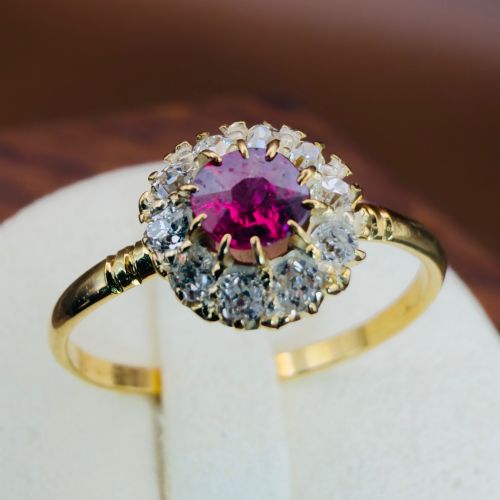
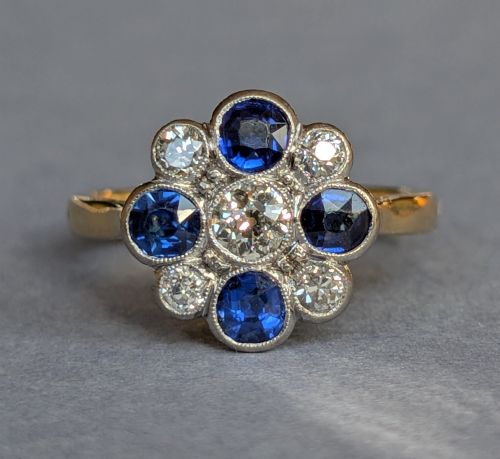
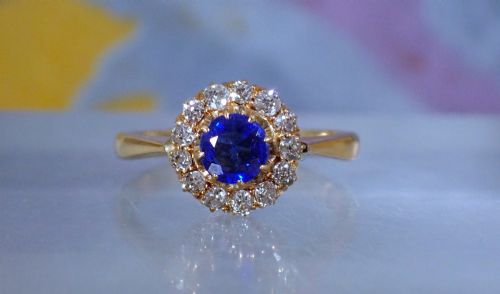
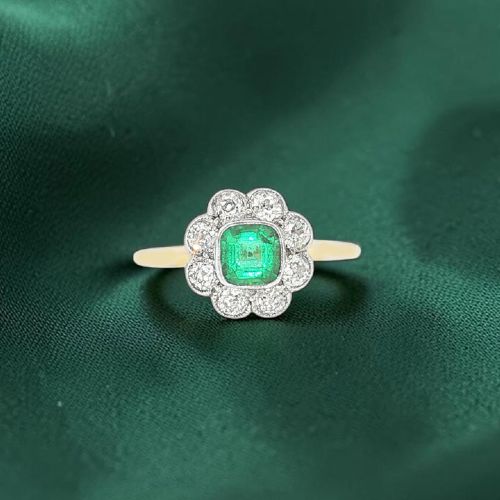
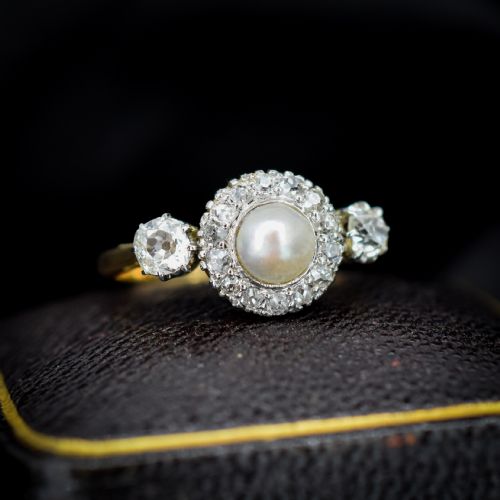
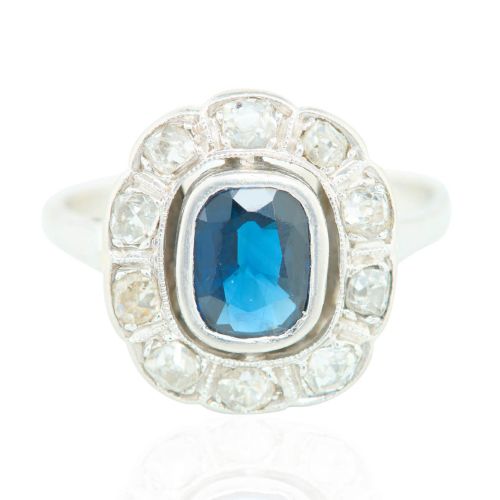
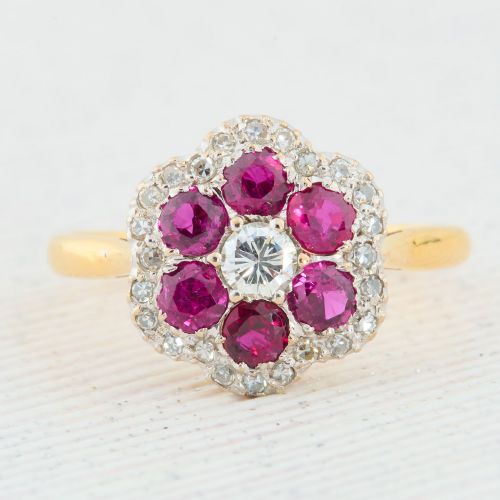
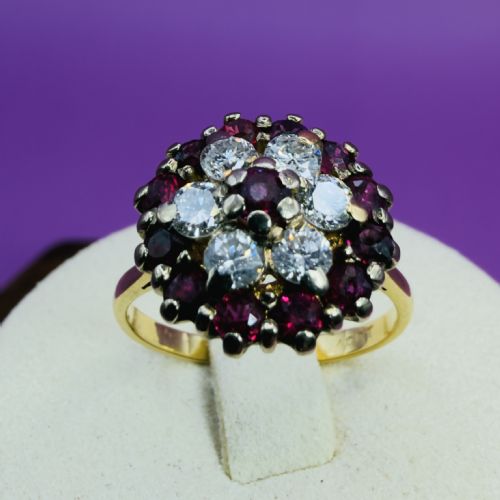
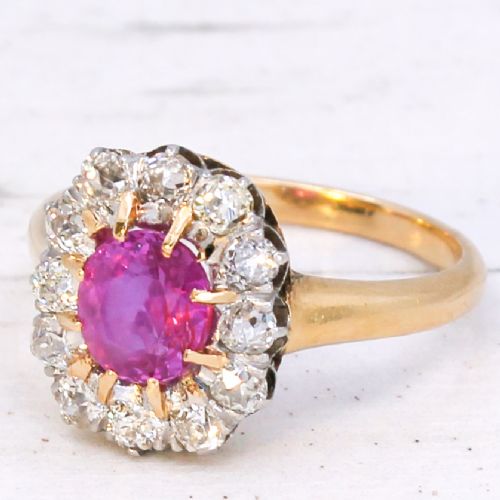
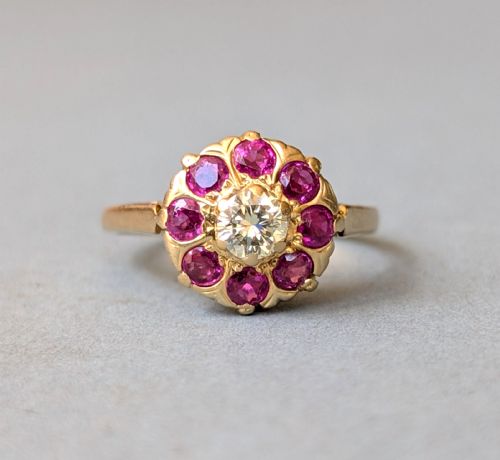
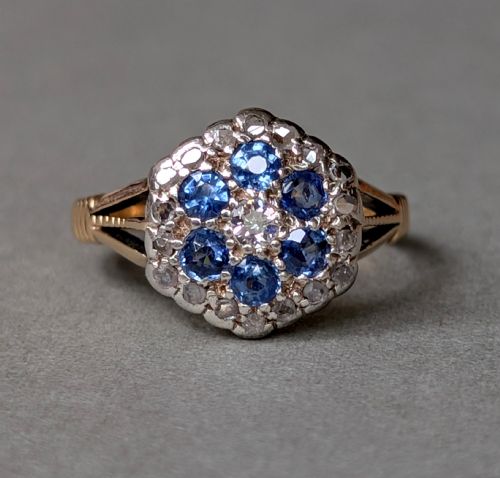
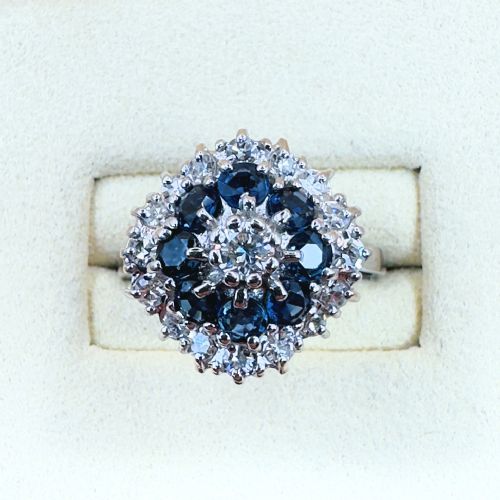
A gold target ring frames a central gem with concentric bands of contrasting stones, creating a precise circular focus upon the hand.
Gold Target Ring
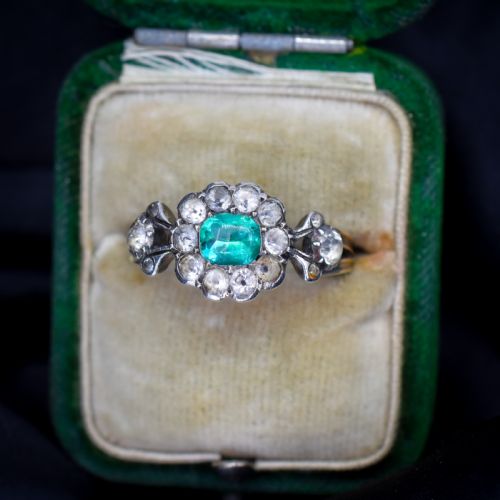
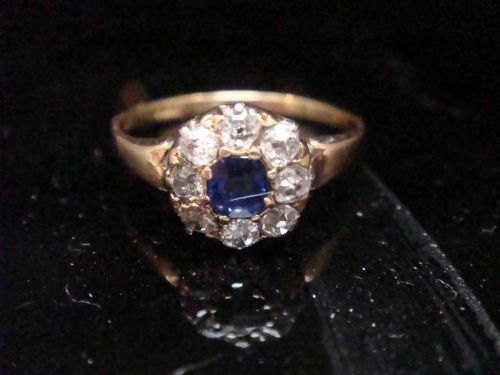
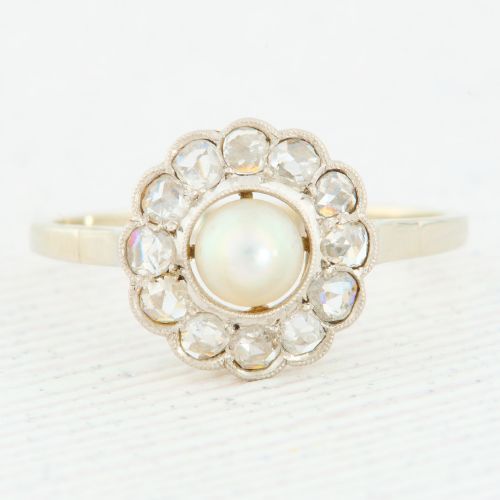
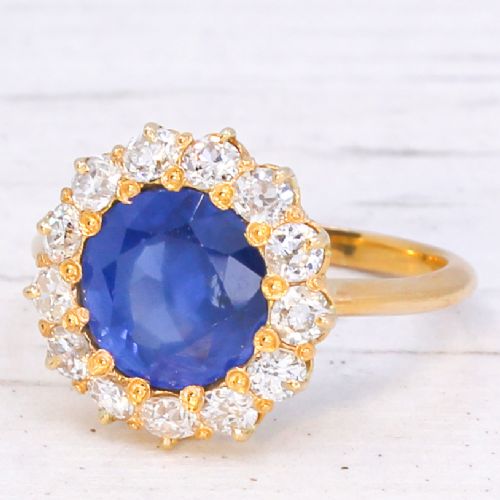
A gold target ring centres on a single gemstone, often a diamond, sapphire, ruby or emerald, surrounded by a distinct halo or concentric ring of smaller stones that gives the piece its circular name.
Most examples encountered on this page originate from the Edwardian era and the Art Deco period, spanning the early to mid-twentieth century with occasional Victorian and Georgian precursors.
These pieces function primarily as cluster or dress rings, utilising floral daisy motifs or geometric concentric tiers to maximise visual presence on the finger.
Materials and construction
Goldsmiths constructed these rings primarily in 18ct yellow gold, 18ct white gold, and platinum, frequently combining yellow gold shanks with platinum settings to enhance the whiteness around diamonds.
Gemstones such as old cut diamonds, calibre cut sapphires, rubies and natural pearls are set closely together to form the characteristic concentric layers of the target design.
The documented periods span from Georgian and Victorian times through Edwardian elegance and Art Deco geometry into Mid-Century design.
Assessing quality and proportion
Quality rests heavily on the precision of the concentric tiers and the matching of the central stone to its surrounding halo, where uniform sizing and tight stone spacing elevate a piece.
The choice of materials, from unheated Burmese sapphires to well-matched old cut diamonds set in platinum-topped gold, dictates the distinction between standard production and exceptional fine jewellery.
The Gold Target Ring Glossary
- Target ring
- A ring style featuring a central gemstone enclosed by one or more concentric rings of contrasting stones, resembling a target or bullseye.
- Cluster ring
- A ring design where multiple smaller gemstones are grouped closely around a larger central stone to create a unified focal point.
- Old cut diamond
- A diamond cut by hand before the mid-twentieth century, characterised by a small table, high crown, and large open culet that produces a softer candlelit sparkle.
- Calibre cut
- Gemstones shaped into precise geometric forms, often square or rectangular, and custom-fitted edge-to-edge to form continuous lines in Art Deco jewellery.
- Platinum
- A dense, durable white metal frequently utilised in Edwardian and Art Deco settings to hold delicate stones securely with minimal visible metal.
Gold Target Ring: Frequently Asked Questions
What is a gold target ring?
A gold target ring is a specific type of cluster ring defined by concentric circles of stones surrounding a central gem. The design creates a distinct bullseye pattern on the hand.
These rings gained immense popularity during the Edwardian and Art Deco periods. They combine colourful gemstones like sapphires and rubies with sparkling diamonds.
How do I date an antique target ring?
Dating relies on the materials, setting styles, and cut of the gemstones. Edwardian pieces often feature delicate yellow gold and platinum-topped settings with floral motifs.
Art Deco examples shift toward sharp geometric lines, white gold, and platinum. Calibre cut stones and symmetrical concentric tiers strongly point to the 1920s and 1930s.
Are target rings suitable for daily wear?
Most antique target rings constructed in 18ct gold and platinum are durable enough for regular wear. However, their intricate settings require sensible care.
Because these rings often contain older stones like old cut diamonds or natural pearls, owners should remove them during heavy manual tasks to protect the delicate concentric tiers.
What is the difference between a cluster ring and a target ring?
While all target rings are a form of cluster ring, not all cluster rings form a target. A cluster can take organic shapes like floral daisy motifs or irregular groupings.
A target ring specifically requires precise, circular concentric bands of contrasting colour or stone type around a defined centre.