


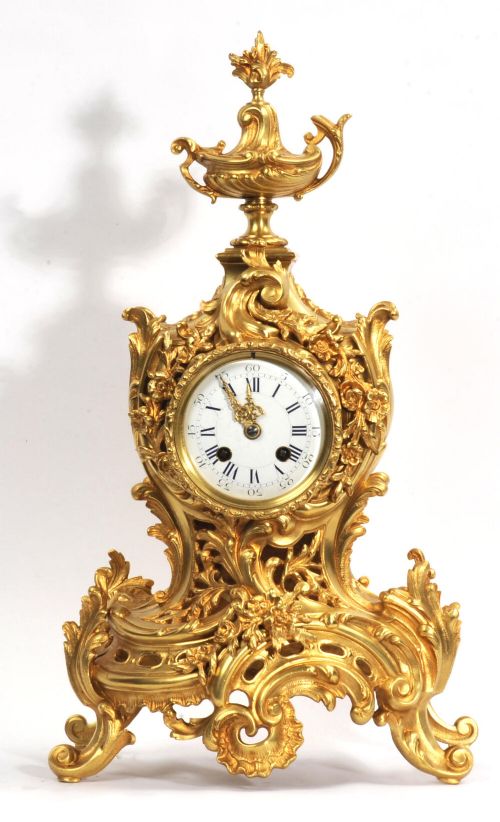

Gold Tabletop Clock
A gold tabletop clock brings precision engineering and ornate brass or gilt metal to a desk or mantel.
Gold Tabletop Clock
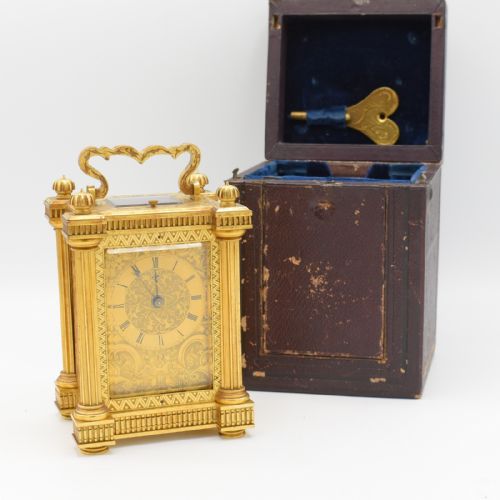
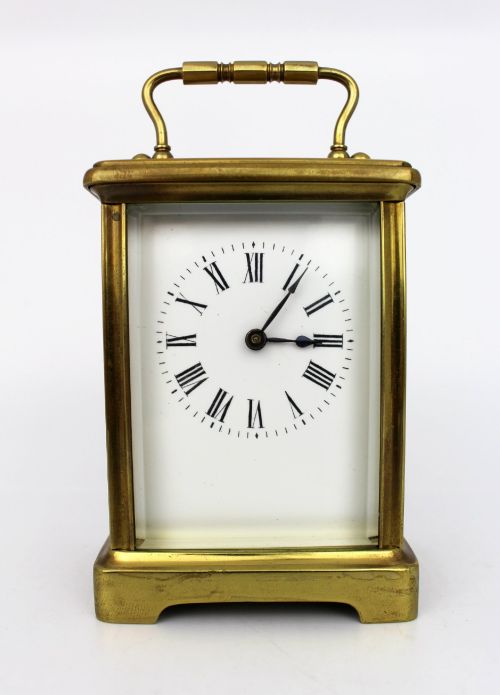
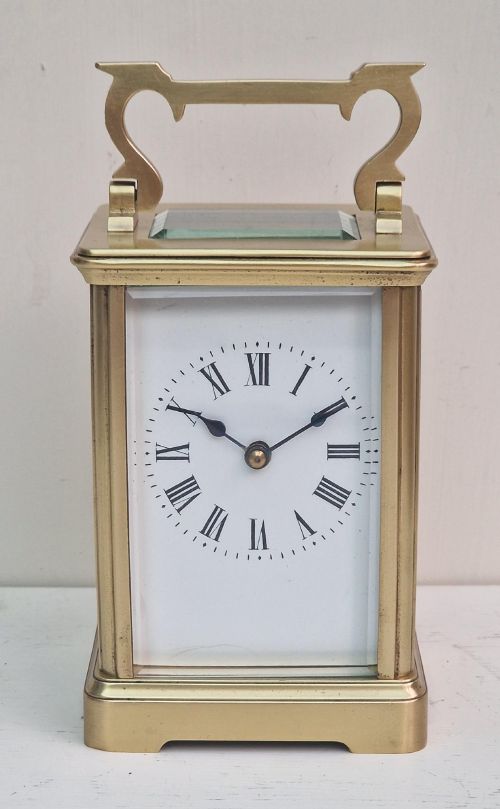
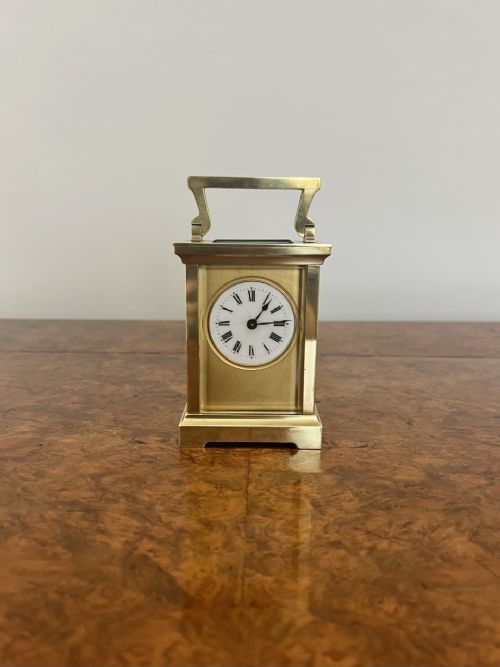
A gold tabletop clock serves as both a timekeeper and an ornamental centrepiece for a desk or mantel. When exploring gold tabletop clock options, buyers typically encounter portable carriage clocks, striking mantel clocks, and desk timepieces originating from the nineteenth and twentieth centuries.
The selection ranges from heavy French gilt bronze and ormolu designs to English brass carriage clocks housed in leather travel cases. Victorian and Edwardian examples dominate the offerings, alongside mid-century Swiss timepieces.
Makers such as Howell & James, Dent, and Jaeger LeCoultre appear among the pieces, representing both English workshops and French horology. These objects combine mechanical clockwork movements with decorative metalwork cases designed to sit flat upon surfaces.
Materials and Construction
Casings are primarily constructed from brass, gilt brass, gilt bronze, and ormolu, often polished or gilded to achieve a bright golden appearance. Glass panels frequently enclose the mechanism, allowing the escapement and gears to remain visible from the exterior.
Enamel dials provide the face for numerals, sometimes complemented by intricate filigree masks or side panels. Specialist techniques such as champlevé enamel decorate specific nineteenth-century mantel models with coloured vitreous pastes set into recessed metal channels.
Movements rely on precision metal gears, springs, and escapements, with mechanical complexities ranging from simple timepieces to repeating strike mechanisms and complex Atmos systems.
Some carriage clocks travelled with their own custom leather cases, ready for Victorian railway journeys.
Quality Variations
The standard of a gold tabletop clock rests upon the crispness of the cast metal ornamentation and the reputation of the maker. Finer examples display deeply chased gilt bronze or ormolu with sharp relief, whereas lesser pieces show softer, simpler brass castings.
Movement complexity separates standard timepieces from high-end examples featuring repeating strike mechanisms or grande-sonnerie complications. The inclusion of signed dials, original leather travel cases, and documented maker names elevates the standing of individual pieces.
Howell & James London·Jaeger LeCoultre·Alfred Hollinge·Penlington & Batty·Dent
The Gold Tabletop Clock Glossary
- Carriage clock
- A small, portable spring-driven clock designed for travel, typically featuring a glass-panelled brass case and a folding handle on top.
- Ormolu
- Gilt bronze produced by applying a finely ground high-carat gold-mercury amalgam to a bronze object, which is then fired.
- Champlevé
- An enamelling technique where artist-carven troughs in a metal surface are filled with enamel powder and fired until fused.
- Grande-sonnerie
- A complex striking mechanism that automatically chimes both the hours and the quarters on every quarter-hour.
- Atmos clock
- A mechanical timepiece manufactured by Jaeger-LeCoultre that is powered by minute temperature fluctuations in the ambient air.
Gold Tabletop Clock: Frequently Asked Questions
What is a carriage clock?
A carriage clock is a portable spring-driven timepiece created for travellers during the nineteenth century. These clocks typically feature brass cases with glass panels and a hinged handle.
They were designed to withstand movement while maintaining accurate time on journeys.
How do Atmos clocks work?
Atmos clocks operate without human winding by utilising a hermetically sealed capsule containing a gas and liquid mixture. Temperature changes cause the mixture to expand and contract, winding the mainspring continuously.
This ingenious mechanism allows the clock to run indefinitely using only ambient warmth.
How should I care for a vintage desk clock?
Keep mechanical desk clocks away from direct sunlight, extreme temperature shifts, and high humidity to protect the metal and enamel. Regular professional servicing ensures the delicate gear trains and escapements continue functioning smoothly.
Avoid using harsh chemical polishes on gilt surfaces to preserve the original finish.