

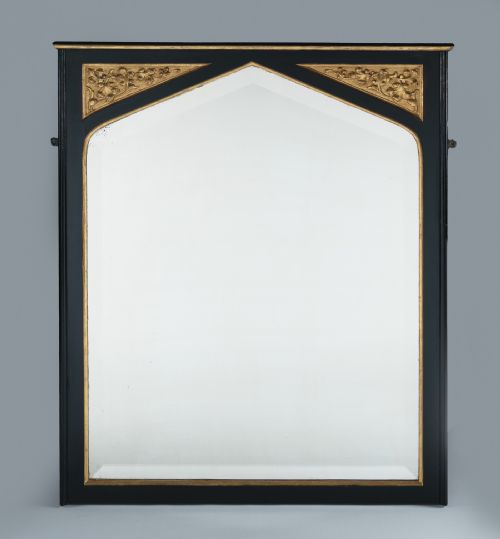
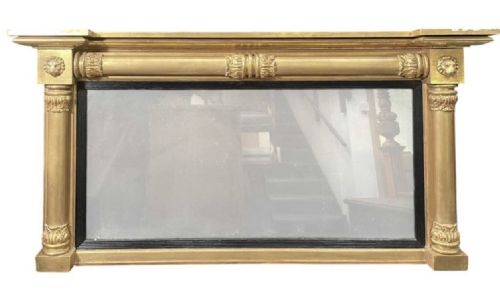
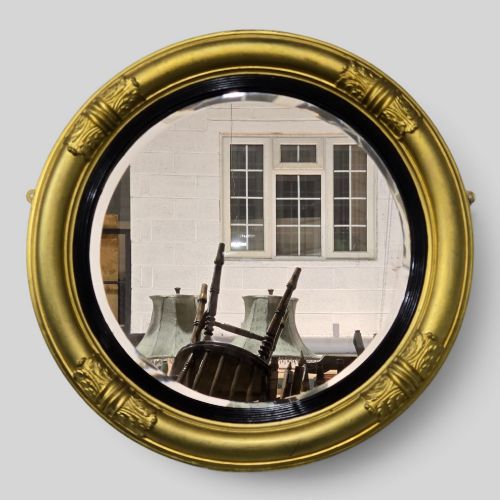
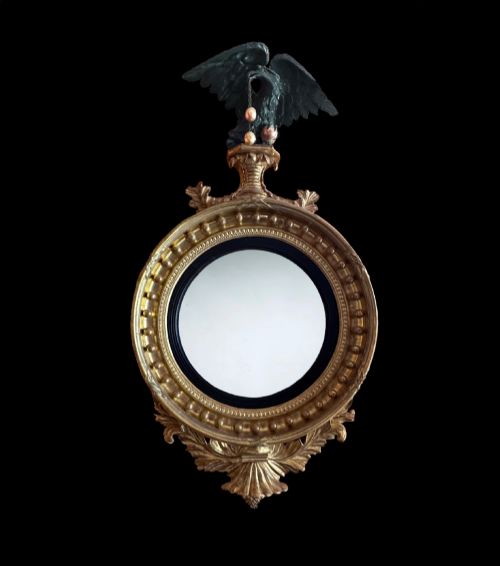
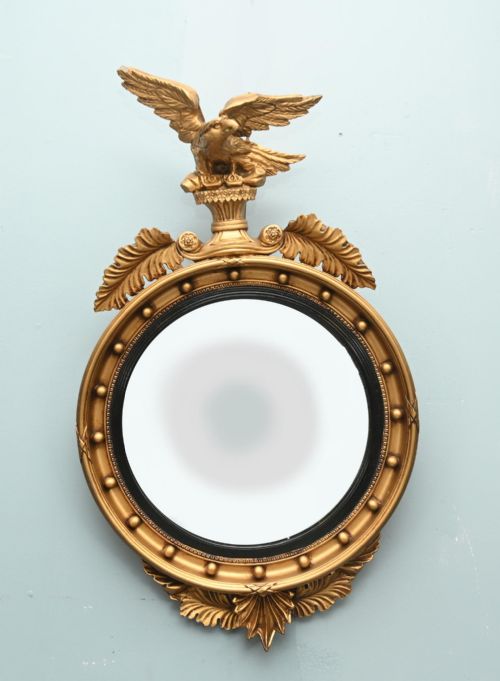


Gold Slip Mirror
A gold slip mirror brings bright, curved reflection into a room, framed in gilded wood and ebonised depth.
Gold Slip Mirror
A gold slip mirror is essentially a convex or overmantel wall glass designed to brighten interior spaces through curved reflection. When searching for a gold slip mirror, the buyer encounters circular convex glasses alongside large triptych overmantels.
The Regency period dominates these listings, appearing alongside Victorian and early twentieth-century revivals. Circular frames with ebonised slips sit alongside grander mantel pieces decorated with eagles or acanthus columns.
Most examples rely on giltwood frames, sometimes enhanced by composition ornamentation over pine carcasses. The combination of circular glass and a dark inner slip defines the visual character of these objects.
Materials and construction
Makers constructed these frames from pine carcasses, applying gesso and layers of gold leaf to create the characteristic giltwood surface. Ebonised wood formed the inner slip, providing a dark contrast against the shining exterior.
Convex mirror glass was set within the rebate, often accompanied by brass elements or decorative eagles mounted to the top of the frame. Composition mouldings were frequently used for detailed ornamentation like acanthus leaves.
Gold Slip Mirror Retail Price Guide 2026
Typical asking prices for gold slip mirror among the pieces listed under this phrase on Sellingantiques today, from the lower quarter to the upper quarter. They describe what is for sale here now, not the wider market.
Listings feature periods spanning from Georgian and Regency through to the Victorian era and the early twentieth century.
Judging quality in execution
Quality rests upon the crispness of the carved or moulded decoration, from eagle crests down to acanthus columns. Finer examples display deep, clear gilding and well-proportioned ebonised slips that frame the convex plate cleanly.
The scale of the mirror and the integrity of the original mirror glass heavily influence the piece. Heavy gesso ornamentation retains sharper detail on superior frames compared to worn or heavily restored surfaces.
The Gold Slip Mirror Glossary
- Giltwood
- Wood covered with thin sheets of gold leaf. This finish defines the reflective warmth of the frame.
- Ebonised
- Wood stained or painted to imitate ebony. The dark inner slip creates a sharp border around the glass.
- Convex
- Curved outward like the exterior of a sphere. This spherical glass provides a wide-angle view of the room.
- Overmantel
- A mirror designed to hang above a fireplace. These frequently feature triptych glass plates and architectural columns.
- Gesso
- A plaster mixture applied to wood frames. Artisans carved and gilded this base to form intricate ornamental details.
Gold Slip Mirror: Frequently Asked Questions
What is a gold slip mirror?
A gold slip mirror refers to a wall glass featuring a gilded frame with a contrasting dark inner slip. These pieces are primarily convex circular mirrors or rectangular overmantels.
Originating largely from the Regency period, they utilise curved glass to reflect light across a room.
Where were these mirrors placed?
These mirrors hung in principal reception rooms, parlours and above fireplaces to maximise natural daylight. Their convex plates allowed occupants to monitor activity across the entire space.
Overmantel variations sat specifically above hearths, anchored by decorative columns and architectural moulding.
How do I date a convex mirror?
Dating relies upon frame construction, carving style and the materials used for the slip and gesso. Regency examples often feature eagle crests and crisp acanthus decoration.
Later Victorian and twentieth-century revivals copy these earlier forms but utilise different framing techniques and composition details.
How do I care for giltwood frames?
Giltwood requires gentle dusting with a soft brush to protect the delicate gold leaf surface. Moisture and chemical cleaners must be avoided entirely.
Maintaining a stable room temperature prevents the underlying gesso and pine carcass from cracking or shifting.