
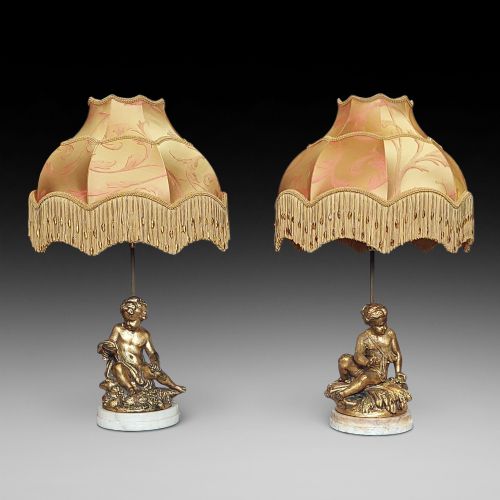


Gold Shade Table Lamps
Gold shade table lamps bring warmth to a room through gilded metal surfaces, lacquered finishes and fabric shades.
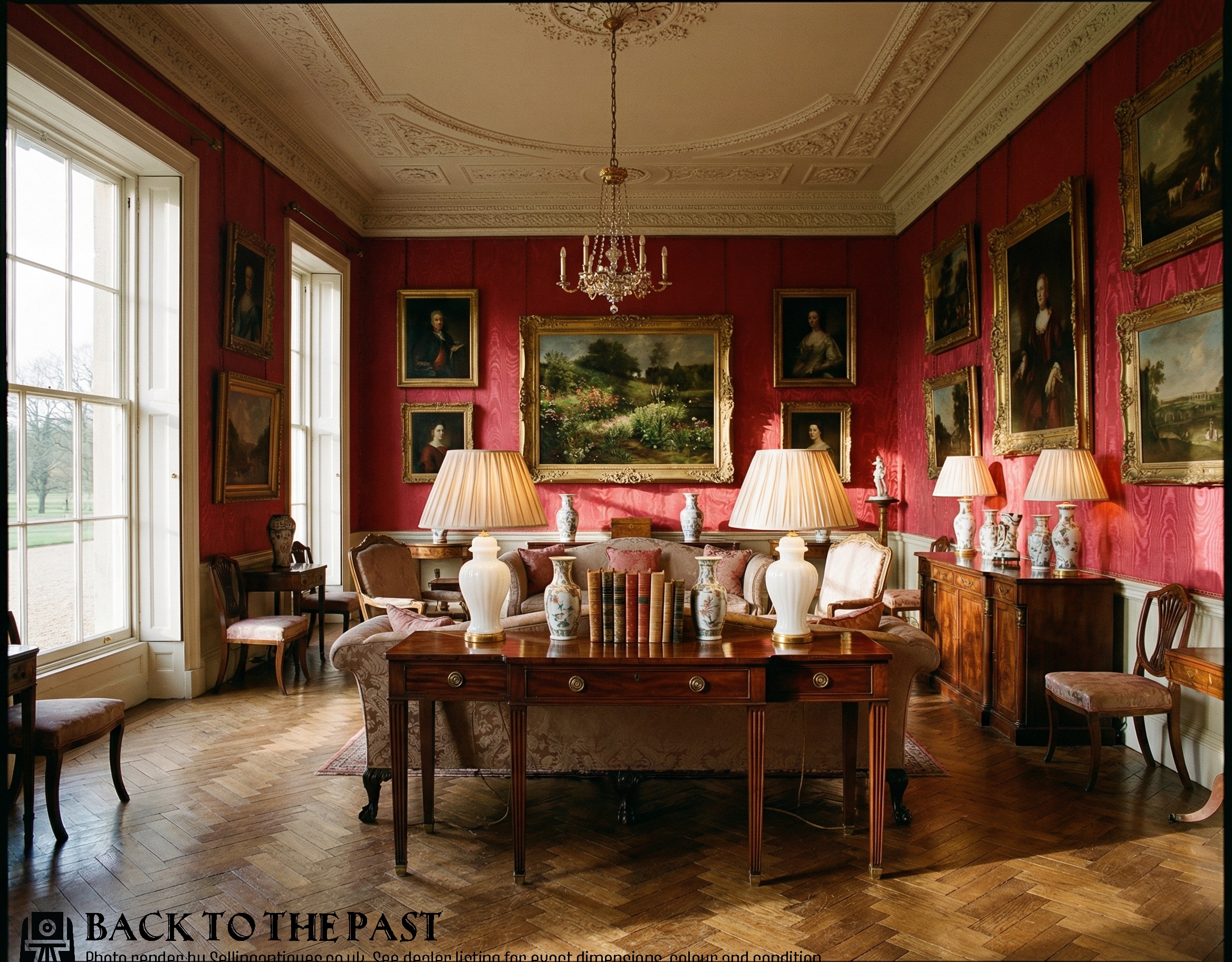
Gold Shade Table Lamps
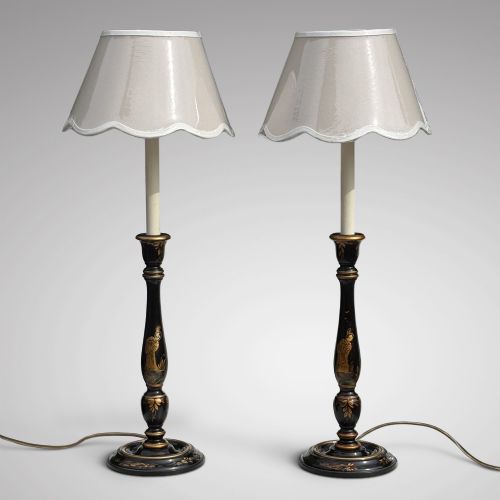
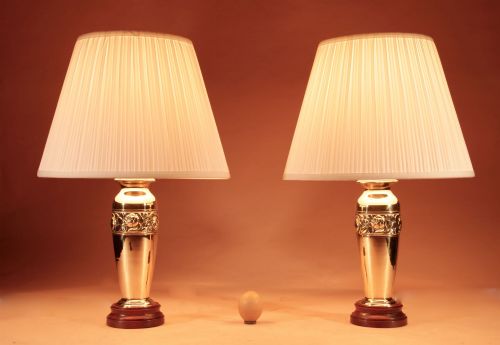
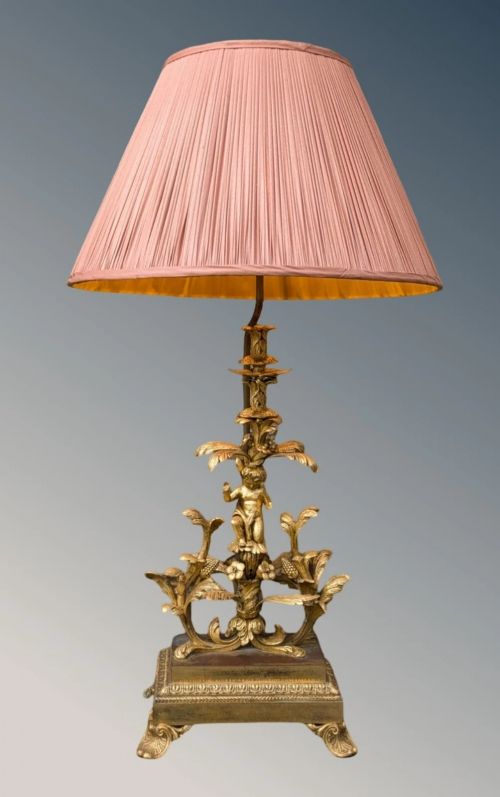
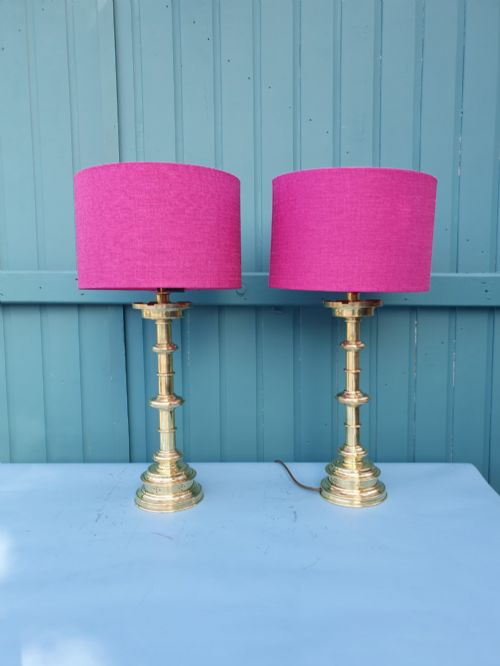
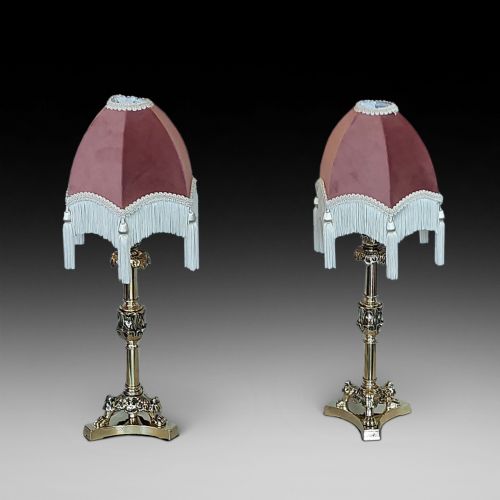
These pieces combine functional illumination with decorative metalwork, spanning periods from the nineteenth century through the Art Deco era. Buyers seeking gold shade table lamps will encounter converted candlesticks, oil lamps, desk lamps and decorative figural bases originating from English, French and continental workshops.
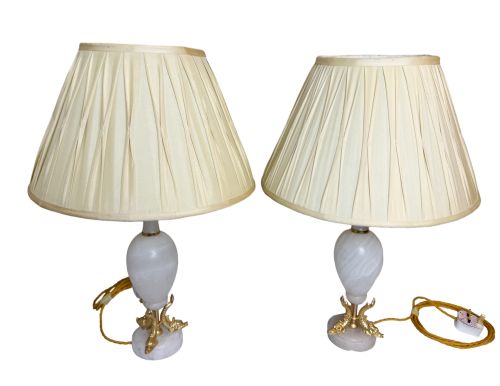
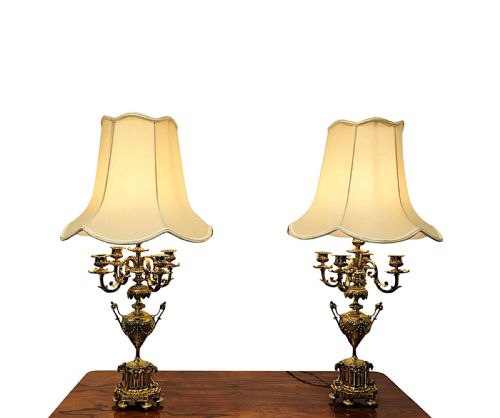
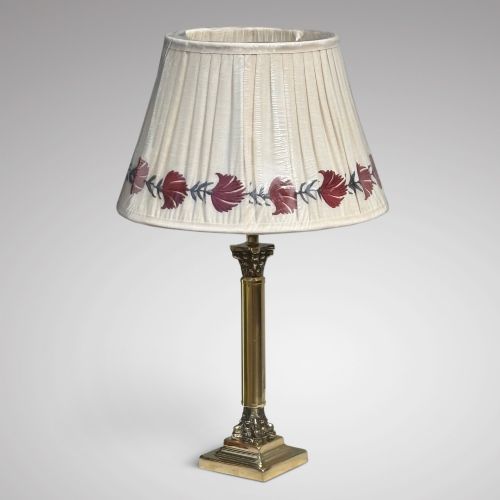
The selection ranges from Victorian brass columns and Edwardian adjustable designs to French ormolu and lacquered Chinoiserie forms. Many examples integrate gilt bronze, brass or gilded wood with contrasting elements such as onyx, marble, porcelain and opaline glass.
Materials and construction methods
Metal components rely on traditional casting, turning and carving techniques, utilising brass, gilt bronze, ormolu and gilded metal. Wood elements receive hand-applied lacquered finishes or surface gilding, while other pieces incorporate carved alabaster, onyx and toleware.
Many older lighting fixtures began as nineteenth-century candlesticks, oil lamps or tea canisters before undergoing conversion to electricity in subsequent decades. Fabric and glass shades complete these constructions, matching the golden tones of the primary bases.
Several lamps incorporate fierce serpents and mythical griffins guarding the illumination.
Assessing quality and craftsmanship
Quality rests in the crispness of the metal casting, the depth of the original gilding and the integrity of the underlying materials like carved wood, onyx or heavy brass. Superior examples exhibit refined detailing in figural elements, such as corinthian capitals, cherubs or classical mounts.
The presence of original components, uncompromised patination and authentic period shades distinguish finer pieces from later adaptations. Heavier weight and precision in the turned columns or cast mounts separate standard production from exceptional work.
The Gold Shade Table Lamps Glossary
- Ormolu
- Gilded bronze cast and chased to produce decorative mounts and fixtures. This technique gained widespread use in French decorative arts during the eighteenth and nineteenth centuries.
- Chinoiserie
- European artistic style reflecting Chinese aesthetic influences, commonly expressed through lacquered surfaces and painted motifs on furniture and lamps.
- Corinthian Capital
- The uppermost member of a column, characterised by ornate carved acanthus leaves. This classical architectural detail appears frequently on brass and bronze lamp standards.
- Opaline Glass
- Translucent white glass popular in nineteenth-century decorative objects and lighting. It diffuses light softly while complementing gilt mounts.
Gold Shade Table Lamps: Frequently Asked Questions
How do I date an antique brass lamp?
Dating relies on manufacturing techniques, screw threads, switch types and the style of the metal casting. Earlier pieces often display heavier construction and components originally made for candles or oil.
Stylistic cues such as neoclassical columns, Art Deco geometric lines or Victorian ornamentation help narrow the production decade.
Can converted candlesticks be safely wired?
Most converted candlesticks accept modern internal wiring through the existing central shaft without altering the antique metalwork. Professional rewiring ensures compliance with current electrical safety standards.
Retaining the original candle cups and patination preserves the character of the piece during conversion.
What is the difference between ormolu and brass?
Ormolu consists of cast bronze treated with a gold amalgam finish, producing a rich and reflective surface texture. Brass is an alloy of copper and zinc that maintains a uniform metallic composition throughout.
Ormolu typically appears on finer continental decorative objects, whereas brass served structural and utilitarian functions.
How do I clean gilded metal lamps?
Dusting with a soft, dry cloth protects delicate gold leaf and gilded bronze surfaces from abrasion. Liquid cleaners and harsh chemicals strip historical patination and damage the metal finish.
Specialist conservation waxes applied sparingly can guard against oxidation without altering the appearance.