
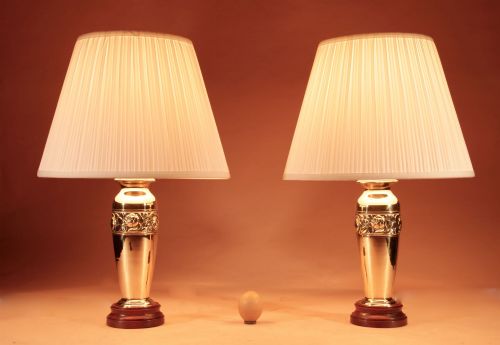
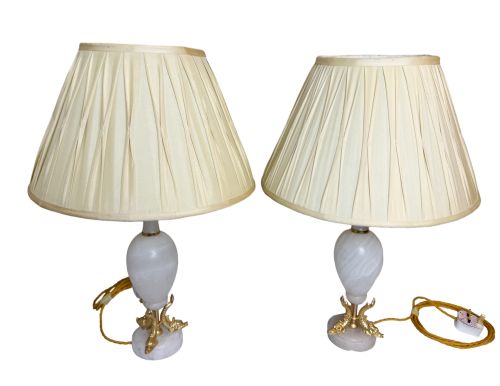
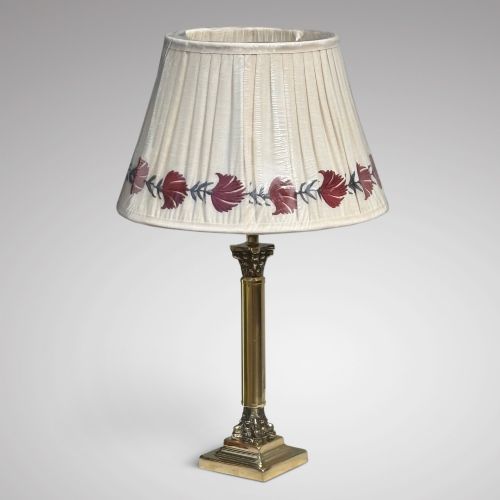


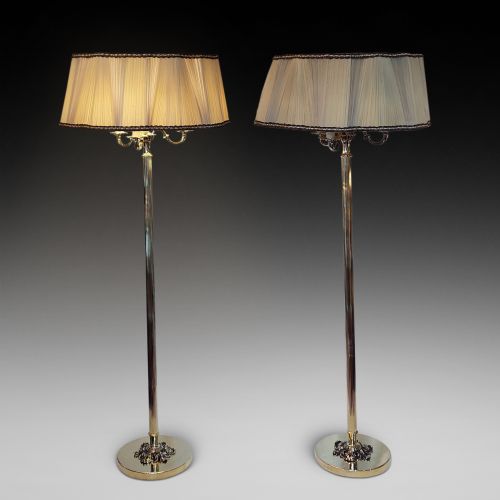


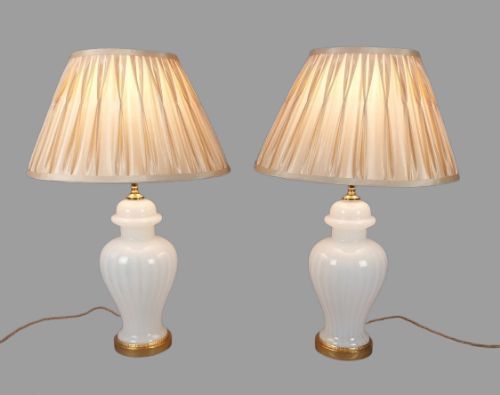


Gold Pleated Lamp Shade
A gold pleated lamp shade crowns period lighting with warm directional glow, bringing historic warmth to an interior.
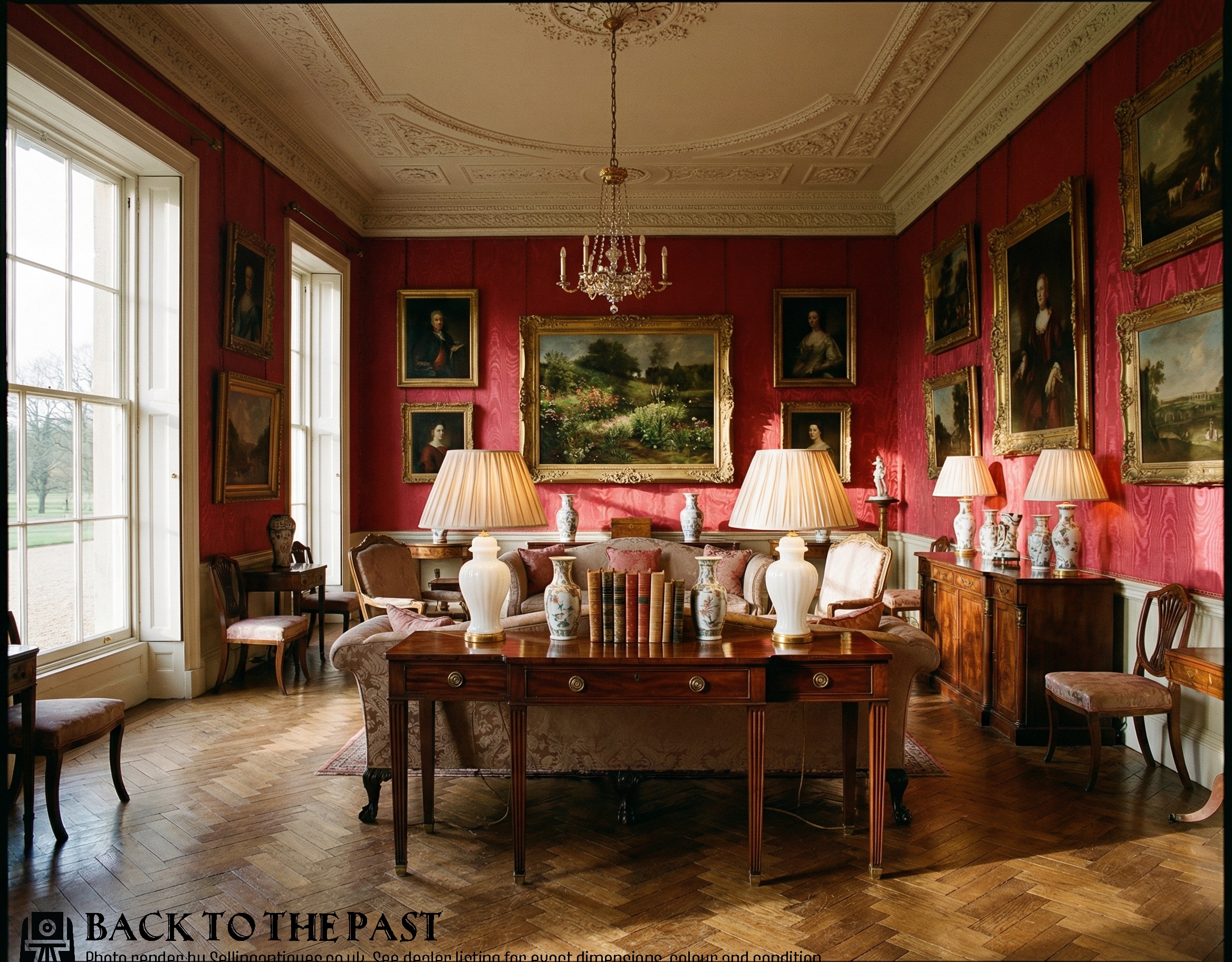
Gold Pleated Lamp Shade
When you search for a gold pleated lamp shade, you enter a field of antique and vintage lighting grounded largely in table and standard floor lamps from the nineteenth and twentieth centuries. The inventory comprises diverse forms, including pairs of French brass table lamps, carved giltwood standards, and occasional conversions from earlier vases or tea canisters. Styles span the Neo-Classical, Art Deco, and Edwardian eras, reflecting both British and continental European design sensibilities.
The version you are most likely to meet on this page is a nineteenth-century or early twentieth-century brass, gilt bronze, or ormolu lamp, frequently paired with textile or glass shades. These range from substantial Arts and Crafts tripod floor lamps to delicate boudoir pieces adorned with marble or gilt metal trim. Origins lean heavily toward French workshops and British domestic production, capturing periods from the late Victorian years through the Art Deco era.
Materials and construction
The bodies of these lamps rely on cast metals such as brass, gilt bronze, ormolu, and spelter, often combined with carved wood, giltwood, marble, or ceramic bases. Metal components are cast, chased, and gilded, while wooden elements receive hand-carved detailing and traditional gilding techniques. These robust structural materials provide the necessary weight to support standard lighting hardware and fabric or glass shades.
Fabric elements and specialised glass, such as opaline white glass, complete the constructions alongside traditional lacquer work and hand-painted Chinoiserie finishes. Craftsmanship from the periods represented relies on manual assembly, visible in the joinery of carved standards and the fine chasing on French ormolu mounts.
A gilt-bronze figure of a young girl blowing a kiss stands ready to illuminate the room.
Markers of quality
The refinement of decorative motifs - such as Neo-Classical urns, Corinthian capitals, or Louis XVI style mounts - distinguishes finer workshop production from standard commercial output. Original mounts, intact marble bases, and untouched surface finishes further elevate the standing of an individual piece.
The Gold Pleated Lamp Shade Glossary
- Ormolu
- Gilded bronze, typically produced by applying a mixture of gold and mercury to a bronze base and firing it. This French technique yields a deep, lasting metallic lustre seen on fine nineteenth-century mounts.
- Spelter
- A zinc alloy used as a less expensive substitute for bronze in decorative figures and lamp bases. It takes patination well but lacks the structural weight and crisp detail of genuine bronze.
- Opaline glass
- A translucent, milky white glass popular in nineteenth and early twentieth-century lighting. It diffuses light softly and appears frequently in period shades and bodies.
- Louis XVI style
- A French design movement characterised by straight lines, classical symmetry, and restrained ornamentation. Pieces in this style often feature laurel wreaths, fluted columns, and gilt metal mounts.
- Standard lamp
- A British term for a tall floor-standing lamp designed to illuminate a room from standing height. These often incorporate heavy weighted bases and adjustable brass columns.
Gold Pleated Lamp Shade: Frequently Asked Questions
What periods do these lamps cover?
The lighting fixtures listed span from the eighteenth century through the Edwardian era and into the Art Deco period of the 1920s. You will encounter Victorian designs alongside continental European pieces from the nineteenth century.
Earlier examples often take the form of converted vases or tea canisters, while later twentieth-century pieces embrace streamline styling and opal glass.
How do I identify French Empire lighting?
French Empire style lamps rely heavily on heavy cast ormolu, gilt bronze, and classical motifs drawn from antiquity. Look for symmetry, military trophies, acanthus leaves, and figures of young girls or classical profiles.
These pieces typically date from the nineteenth century and display meticulous metal chasing on the base and column.
Where were standard lamps used?
Standard floor lamps were designed to provide ambient or reading light in principal reception rooms of period homes. Their height allowed them to sit beside armchairs or sofas.
Many nineteenth-century examples feature adjustable mechanisms to direct illumination as required.
Are these lamps original conversions?
Many antique vases, figures, and tea canisters were adapted into lamps during the nineteenth and early twentieth centuries. This practice of conversion was common in period interior decoration.
Such pieces combine historical bodies, such as Japanese Satsuma ceramics or Mandarin vases, with period electrical or burner fittings.