




Gold Settee
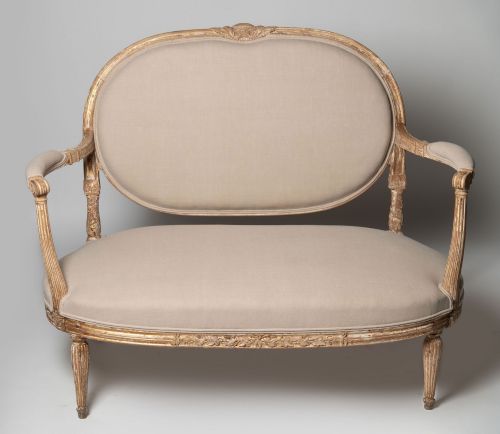
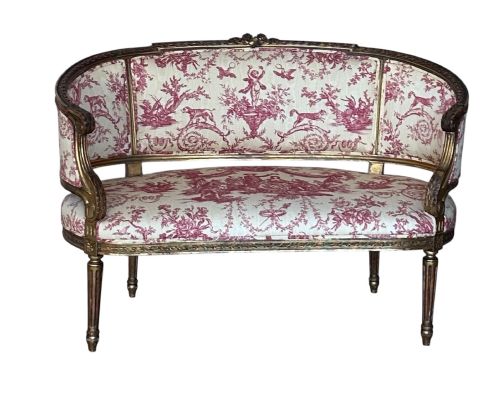
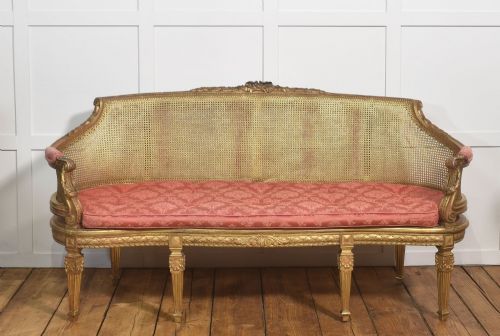
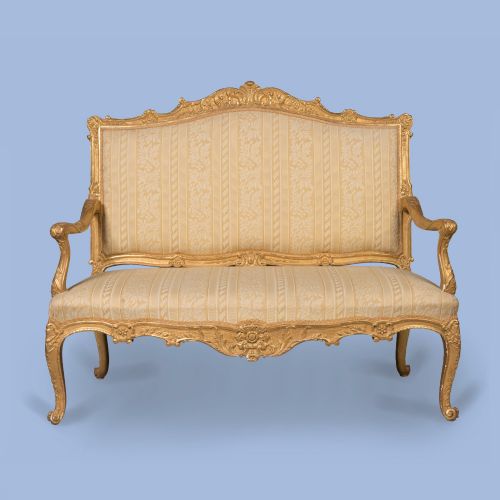
A gold settee brings carved giltwood, painted frames, and velvet upholstery together in seating designed for grand salons and period drawing rooms.
Gold Settee
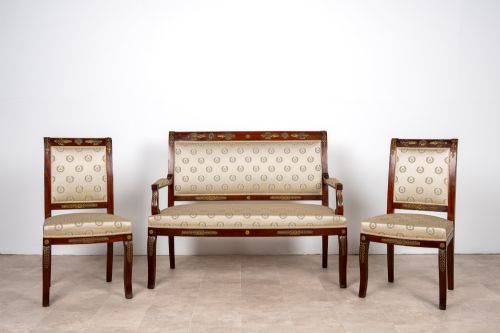
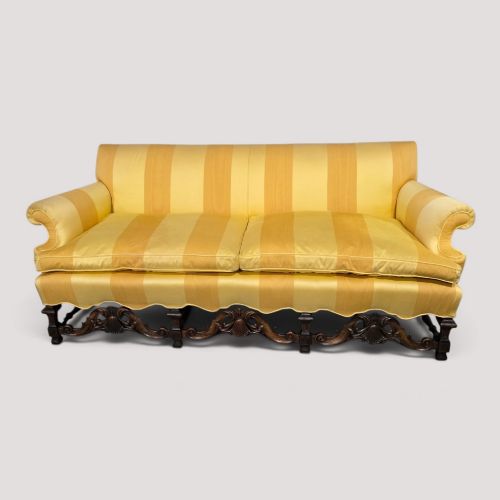
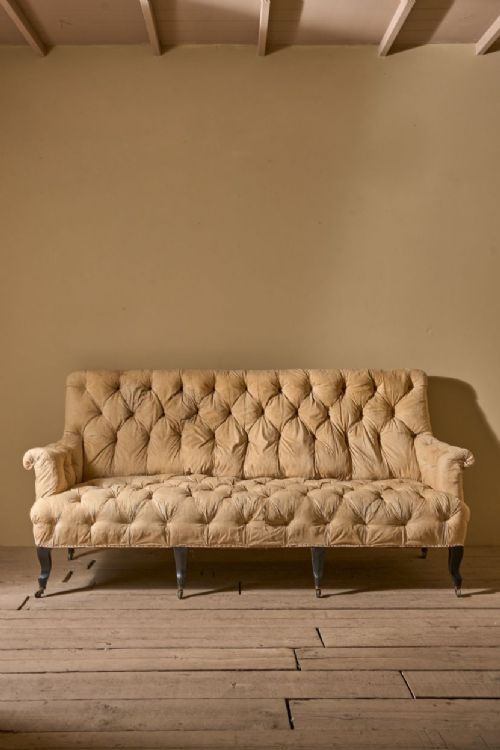
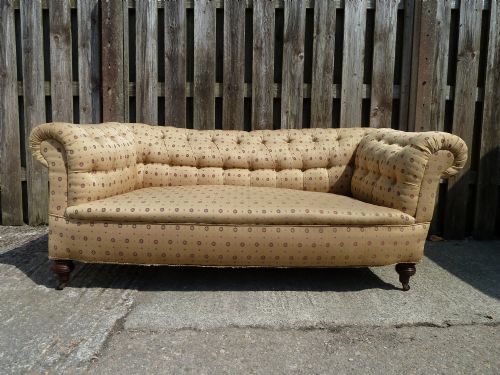
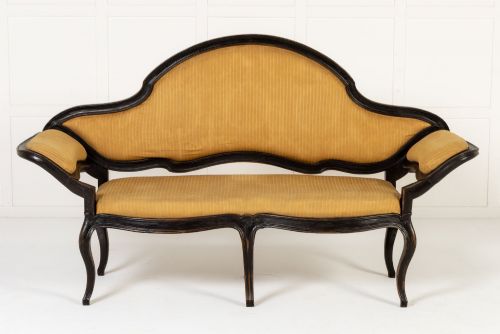
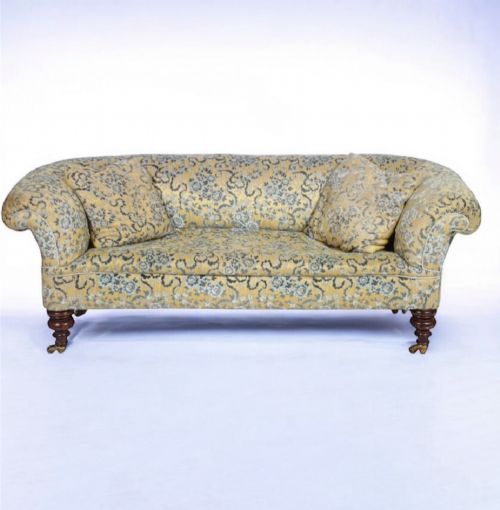
A gold settee encompasses a variety of French and English seating forms designed for formal reception rooms and parlours. When buyers search for a gold settee, they encounter pieces ranging from substantial Victorian Chesterfields and buttoned nineteenth-century models to slender French salon suites and window sofas.
The selection on this page relies heavily on nineteenth-century craftsmanship, alongside eighteenth-century examples and early twentieth-century revivals. Frames stretch from carved giltwood and ebonised wood to mahogany, walnut, and fruitwood, often adopting Louis XV, Louis XVI, or Baroque revival styles.
Materials and construction
Makers shaped structural frames from solid hardwoods like mahogany, walnut, oak, and fruitwood, sometimes applying gesso before laying fine gold leaf. Giltwood surfaces require meticulous hand-carving, while other frames utilise paint, ebonising, or simple polished wood veneers.
Upholstery relies on traditional stuffing methods contained beneath textiles such as silk, velvet, damask, fabric, and cane panels. Buttoned backs, rolled arms, and carved scroll ends demand precise stitching and robust internal webbing to support the generous proportions of these two and three-seater sofas.
Gold Settee Retail Price Guide 2026
Typical asking prices for gold settee among the pieces listed under this phrase on Sellingantiques today, from the lower quarter to the upper quarter. They describe what is for sale here now, not the wider market.
One Austro-Hungarian shell-shaped sofa waits here to remind everyone that seating can double as a giant velvet mollusc.
Evaluating craftsmanship and proportion
The distinction between standard seating and superior examples rests in the depth and clarity of the frame carving. Hand-chased giltwood ornament, crisp floral motifs, and balanced structural proportions separate modest regional work from pieces commissioned for country houses and French chateaux.
Material integrity also dictates worth, observed in the retention of original gilding against later repaint, the stability of joined mahogany or walnut frames, and the preservation of period textiles like damask or silk alongside cane inserts.
The Gold Settee Glossary
- Canapé
- An upholstered French sofa featuring an exposed wooden frame, often carved and gilded in the manner of Louis XV or Louis XVI styles.
- Giltwood
- Timber coated with a thin layer of gold leaf over a prepared gesso ground, frequently seen on formal nineteenth-century salon furniture.
- Chesterfield
- A deep-buttoned upholstered sofa traditionally characterised by low arms and a back of the same height, popular during the Victorian period.
- Directoire
- A transitional French style bridging Louis XVI and Empire, defined by cleaner classical lines and restrained ornamentation.
- Damask
- A reversible figured fabric woven on a jacquard loom, frequently utilised in heavy patterns for period upholstery and drapery.
Gold Settee: Frequently Asked Questions
How do I place a gold settee in a modern room?
A gold settee functions effectively as a focal point in a neutral living space, pairing polished wood and gilded frames with understated contemporary walls.
Positioning the piece away from direct sunlight preserves fragile silk, velvet, and damask textiles while highlighting the carved giltwood details.
What is the difference between a settee and a sofa?
The terms are often used interchangeably in historical listings, though settee historically denotes a lighter, two-seat wooden or upholstered frame with an exposed back and arms.
Larger nineteenth-century pieces, such as Chesterfield models or salon suites, lean towards the heavier proportions associated with standard sofas.
How do I identify French revival styles?
French revival pieces from the nineteenth and early twentieth centuries replicate the curved cabriole legs and floral crests characteristic of original Louis XV and Louis XVI furniture.
Examining the construction methods, wood ageing, and fastener types helps distinguish these later interpretations from eighteenth-century originals.
How should I care for giltwood frames?
Giltwood requires gentle dusting with a dry, soft brush to prevent microscopic abrasion to the delicate gold leaf surface.
Moisture and harsh cleaning chemicals must be avoided entirely, as liquids can dissolve the underlying gesso and preparation layers.