


Gold Safety Chain Bracelet
A gold safety chain bracelet combines secure daily wear with period charm, offering a collectible link to Victorian and Edwardian craftsmanship.

Gold Safety Chain Bracelet
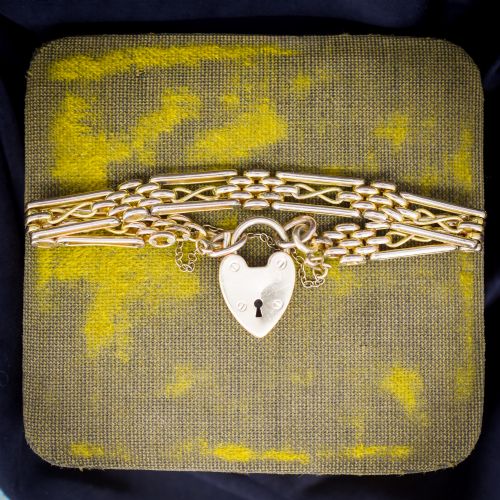
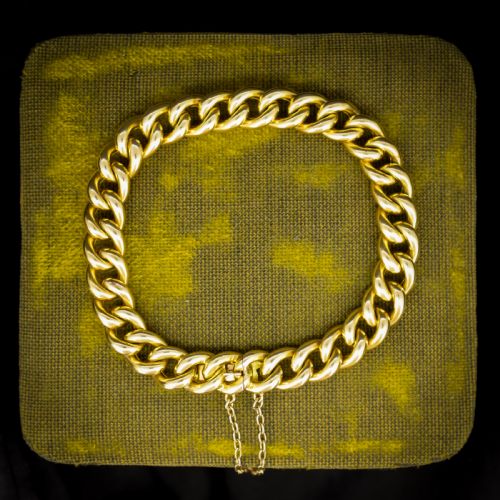
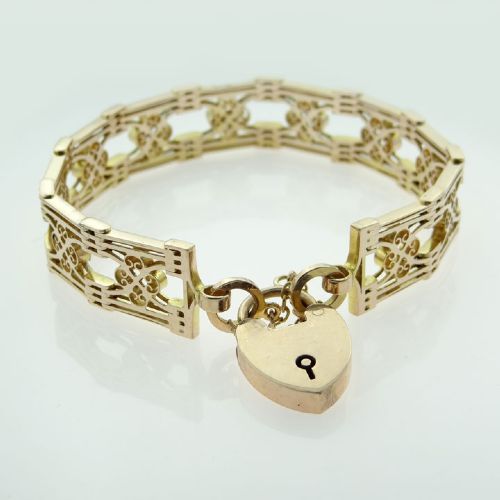
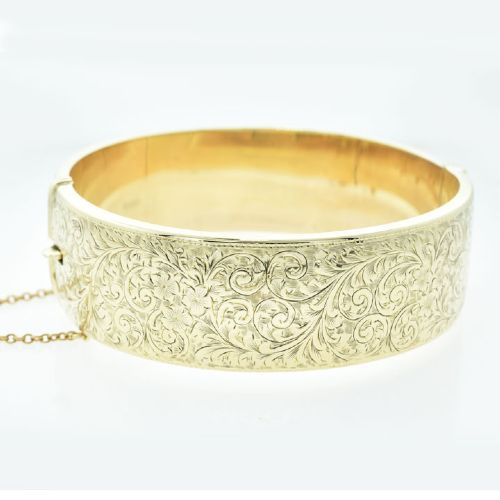
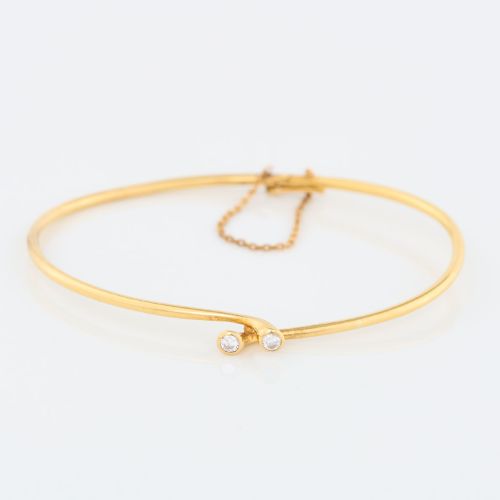
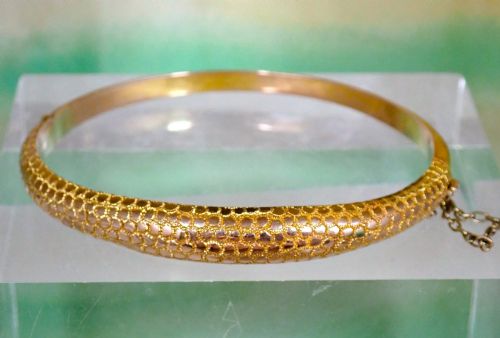
A gold safety chain bracelet is a wrist ornament designed with an additional retaining link to prevent loss, frequently found in gate, curb, and bangle forms.
The pieces seen here span the Victorian, Edwardian, and mid-century periods, capturing eras when ornate padlocks and concealed clasps dominated jewellery design.
Gate links and solid bangles represent the primary configurations, often incorporating gemstones such as amethyst, pearl, turquoise, and diamond alongside yellow and rose gold.
Materials and construction methods
Construction relies heavily on 9ct, 15ct, and 18ct gold, shaped into hollow or solid links, gate panels, and rigid hinged bangles.
Goldsmiths integrated precious stones like rubies, sapphires, and rose-cut diamonds via claw or star settings, alongside hand-engraved surface patterns.
Safety chains were soldered securely to the main body adjacent to spring rings or heart padlocks, providing practical insurance for daily wear.
Gold Safety Chain Bracelet Retail Price Guide 2026
Typical asking prices for gold safety chain bracelet among the pieces listed under this phrase on Sellingantiques today, from the lower quarter to the upper quarter. They describe what is for sale here now, not the wider market.
Gemstones recorded on these bracelets include turquoise, amethyst, ruby, diamond, and pearl.
Distinguishing quality across periods
Quality rests in the substantial weight of the gold links, the crispness of hand-engraving on bangles, and the structural integrity of hinges and box clasps.
Superior examples feature fully intact hallmarking, secure gemstone settings, and original matching safety chains rather than later replacements.
Smith and Pepper
The Gold Safety Chain Bracelet Glossary
- Gate link
- A flattened, openwork link style resembling traditional garden gates, popular in Victorian and Edwardian bracelets.
- Curb link
- A chain design composed of interlocking uniform links that lie flat against the wrist.
- Safety chain
- A short auxiliary chain attached to a bracelet or bangle to catch the piece if the primary clasp fails.
- Heart padlock
- A heart-shaped clasp mechanism frequently utilised as the primary fastening on antique gate and curb bracelets.
- Rolled gold
- A manufacturing method where a thin layer of gold is mechanically bonded to a base metal core.
Gold Safety Chain Bracelet: Frequently Asked Questions
What periods do these bracelets cover?
The pieces span from the late Victorian and Edwardian eras through to the mid-century period. You will find items dated from the 1890s up to the 1960s.
Victorian and Edwardian examples often feature ornate heart padlocks, while mid-century items lean towards solid bangles and different clasp styles.
What golds are used in these pieces?
The listings show a range of gold purities including 9ct, 15ct, and 18ct varieties. Both yellow and rose gold are common, alongside rolled gold alternatives.
Some Edwardian designs also incorporate platinum elements, particularly when housing diamonds and pearls in the setting.
How do safety chains work?
A safety chain is a short length of metal chain attached near the main clasp. It loops around the wrist before fastening, catching the piece if the primary lock opens.
This addition provides practical security for heavier gate links and gemstone-set bangles during wear.
Which gemstones appear on these bracelets?
Common stones include amethyst, turquoise, pearl, ruby, sapphire, and diamond. These are often flush-set into bangles or clustered around central clasps.
Victorian and Edwardian pieces frequently pair pearls and turquoise with yellow gold work or intricate engraving.
Are these pieces hallmarked?
Many items feature period hallmarks or stamps indicating the gold purity, maker marks, and assay office locations such as Chester or London.
Rolled gold items and older pieces may rely on specific construction traits and stylistic markers rather than full modern hallmarks.