
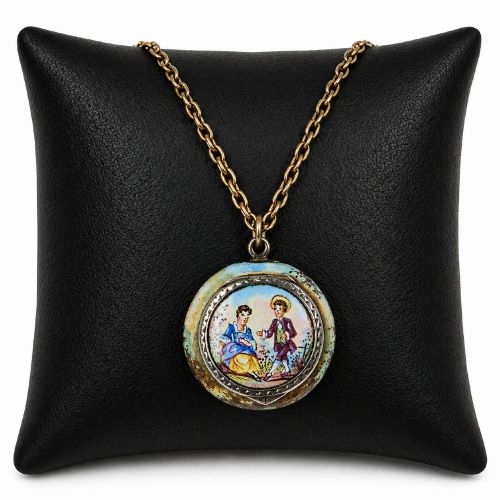


Gold Portrait Medallion
These gold portrait medallion pieces offer intimate likenesses framed in precious metal, capturing centuries of artistry from Georgian miniatures to Victorian sculpture.
Gold Portrait Medallion
A gold portrait medallion brings together personal likenesses and precious metal frames, spanning forms from pendants and lockets to wall plaques and curtain tie backs. When searching for a gold portrait medallion, buyers encounter works executed across the eighteenth, nineteenth, and twentieth centuries in Georgian, Victorian, Regency, and Art Nouveau styles.
The objects take many shapes, including delicate portrait miniatures on ivory or agate panels, enamel depictions, and cast metal plaques. Pieces range from British naval officer portraits and royal subjects to French religious medals and literary figures like Charles Dickens.
Materials and construction methods
Makers utilised yellow gold, ranging from eighteen to twenty-two carats, alongside gilt metal, enamel, and glass to house these detailed works. Portrait surfaces vary from watercolour on ivory and agate panels to porcelain plaques and enamel painting.
Frames and pendants incorporate fine metalwork techniques, enclosing delicate hand-painted subjects or moulded porcelain and enamel pieces. Mounting methods secure these fragile portrait panels within protective bezels, lockets, and sculptural ormolu frames.
Hold onto your drapes with eighteenth-century enamel and gilt curtain tie backs that keep a watchful eye on the room.
Factors of distinction
Quality rests upon the fineness of the portrait painting and the integrity of the surrounding metalwork. A delicate miniature executed with precision on ivory or agate displays greater skill than a simpler moulded form.
The harmony between the portrait medium, such as polychrome enamel or fine watercolour, and the weight and purity of the gold mount determines the piece's overall execution.
George Engleheart·Henry Pierce Bone
The Gold Portrait Medallion Glossary
- Portrait miniature
- A small, highly detailed painting of a person, typically executed in watercolour on ivory, enamel, or vellum.
- Enamel
- A glassy substance fused to a metal surface through firing, providing durable colour and a glossy finish for portrait work.
- Ormolu
- Gilt bronze or metal mounted as decorative framing or hardware, frequently seen on nineteenth-century plaques and panels.
- Locket
- A small hinged metal case worn on a chain, designed to hold a miniature portrait, hair, or a small memento.
- Agate panel
- A polished slice of chalcedony stone used as a stable, decorative backing for miniature portrait paintings.
Gold Portrait Medallion: Frequently Asked Questions
What periods do these pieces span?
The selection covers items from the eighteenth and nineteenth centuries, alongside mid-twentieth-century examples.
Styles progress from Georgian and Regency eras through Victorian, French Art Nouveau, and later twentieth-century religious revivals.
How were these items worn or displayed?
Many examples function as lockets and pendants suspended from chains, holding personal likenesses close to the wearer.
Others take the form of wall sculptures, plaques, or functional decorative items like gilt curtain tie backs.
What materials appear in the frames?
Construction relies heavily on yellow gold of varying carats, alongside gilt metal and ormolu.
Enamel work and glass crystals frequently protect and enhance the central portrait elements.
How do portrait mediums differ?
Portraits are rendered in fine watercolour on ivory, detailed enamel work, painted porcelain plaques, or directly onto agate stone panels.
Each medium dictates the level of fine detail and the preservation requirements of the piece.