
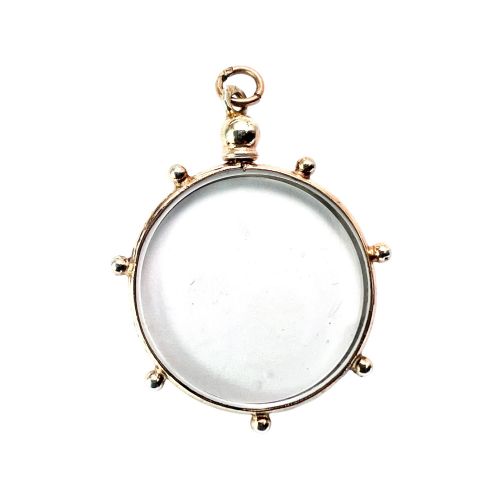

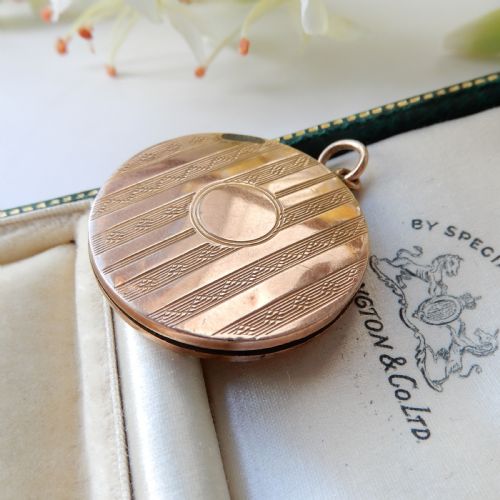


Gold Photo Locket Pendant
A gold photo locket pendant holds a miniature portrait or keepsake close to the heart, combining personal history with fine precious metal work.
Gold Photo Locket Pendant
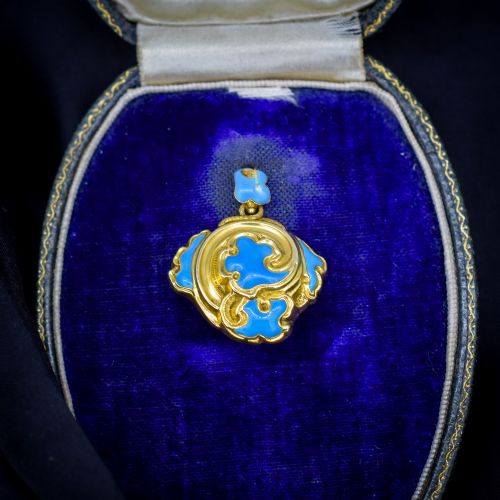
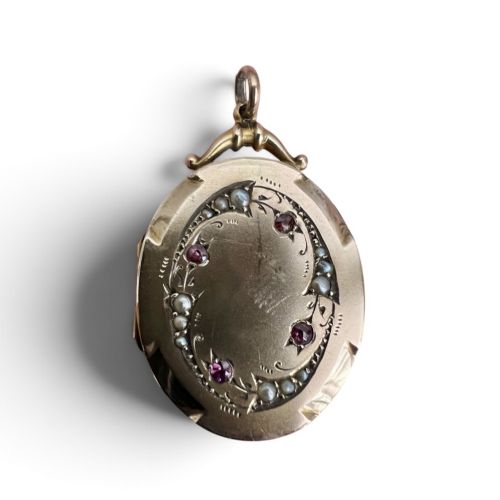
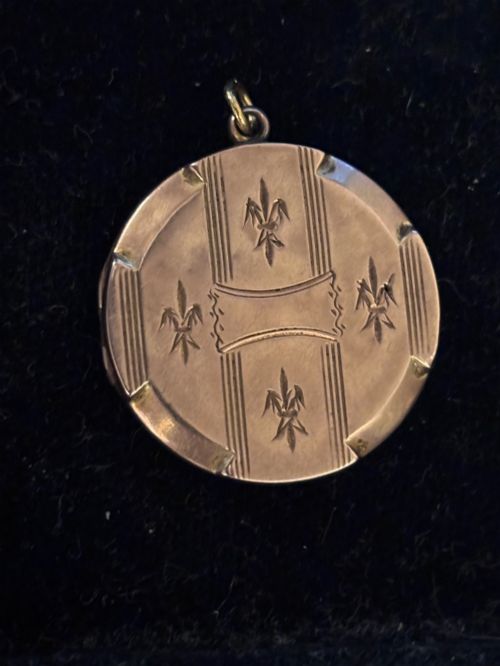
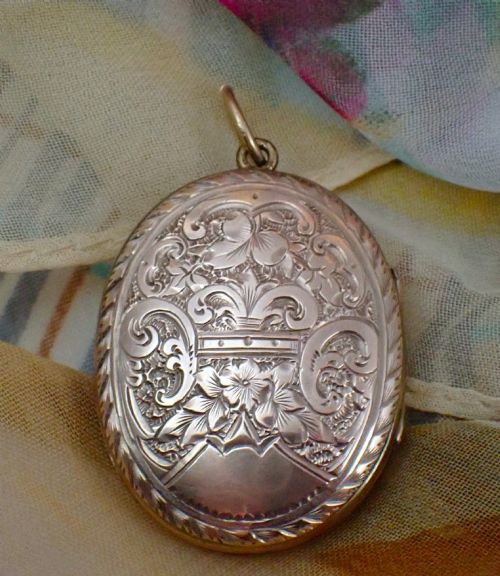
A gold photo locket pendant is a hinged miniature case designed to contain portraits, locks of hair, or small mementos within a precious metal shell. When you search for this phrase, you encounter wearable keepsakes spanning the Georgian, Victorian, and Edwardian eras through to the mid-twentieth century.
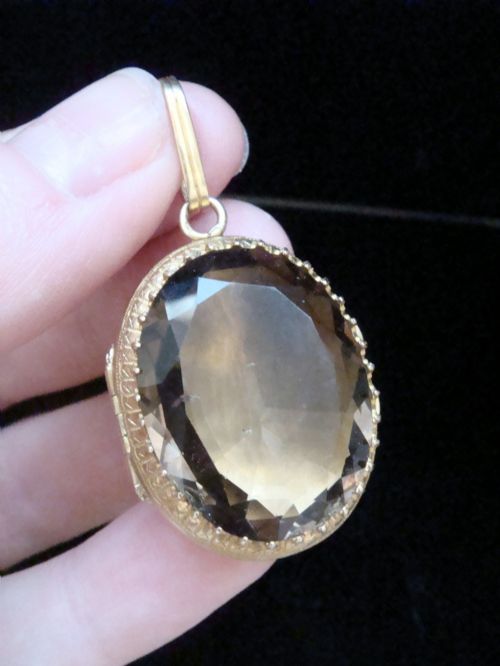
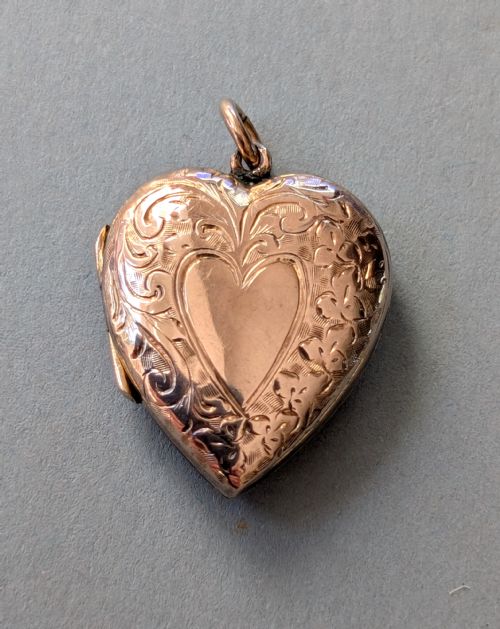
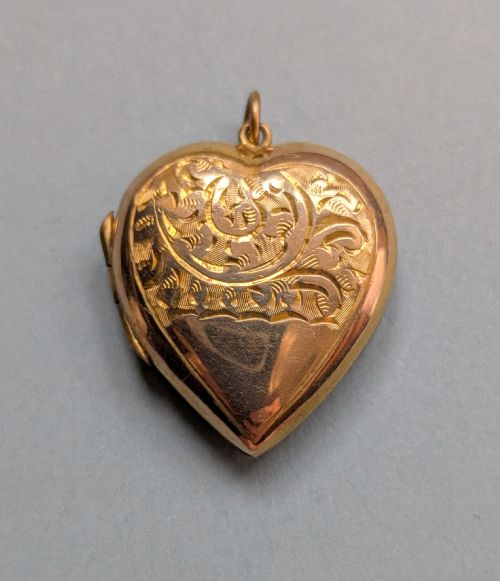
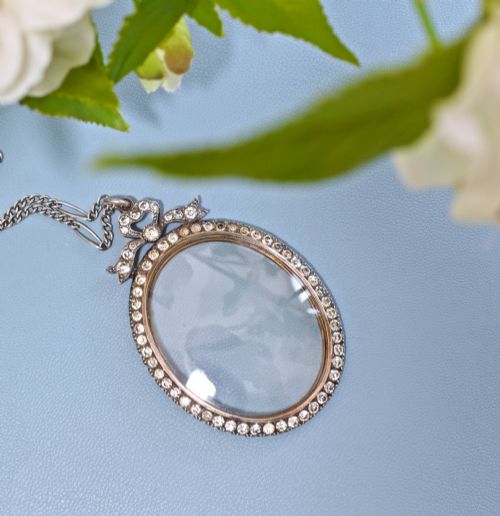
The pieces appearing on this page range from simple engine-turned circular designs to elaborate diamond, pearl, and enamel-set hearts or sunbursts. Solid gold versions share space with gold back-and-front constructions and rolled gold alternatives, reflecting the diverse manufacturing methods of their respective periods.
Mourning items, pocket watch style cases, and multi-photo family lockets demonstrate the wide variety of utilitarian and sentimental functions these pendants served. French examples often feature distinctive high-carat yellow gold work alongside faceted glass or painted miniatures.
Materials and Technique
Makers shaped these pendants from 9ct, 15ct, and 18ct yellow and rose gold, frequently employing high-carat alloys in French workshops and solid or back-and-front constructions in British pieces. Back-and-front pieces utilised thin gold sheets applied to a base metal core to provide the appearance and wear of solid gold with greater structural rigidity.
Surface decoration combined hand engraving, engine-turning, and applied wirework with delicate gem-setting involving diamonds, seed pearls, turquoise, garnets, citrines, and paste. Enamel work, glass fronts, and painted miniatures added colour and personal detail to hinged frames designed to secure internal photographs.
Some lockets doubled as functional watch fobs or contained hidden spaces for four separate family photographs.
The Spectrum of Quality
Quality rests in the weight of the metal, the crispness of the hand engraving or engine-turned detail, and the integrity of the hinge and closing snap. Superior examples display secure bezel settings for stones like diamonds and pearls, alongside intact internal glass frames that hold photographs firmly in place.
Lower tiers often show wear on back-and-front plating, sluggish hinges, or missing internal rims, while exceptional pieces exhibit meticulous gem clusters, substantial high-carat gold weight, and complex pictorial motifs such as swallows, flowers, or star motives.
The Gold Photo Locket Pendant Glossary
- Back and front
- A construction method where the outer shell of the locket is made of solid gold while the internal frames and structural linings utilise base metal or lower-cost alloys. This technique provided durability and affordability during the Victorian and Edwardian periods.
- Engine-turned
- A mechanical decoration technique producing intricate geometric patterns of precise, intersecting lines on the metal surface. It was widely used on Georgian and Victorian pieces to catch the light.
- Mourning locket
- A piece created to commemorate a deceased person, frequently incorporating braided hair, black enamel, or pearls under glass. These items formed an important part of nineteenth-century social custom.
- Puff heart
- A swollen, three-dimensional heart-shaped pendant popular during the Edwardian era. These pieces often contained hollow spaces inside to hold small photographs or keepsakes.
- Paste
- Hand-cut and polished lead glass used to imitate gemstones in antique jewellery. High-quality paste work was prized for its brilliance rather than its material cost.
Gold Photo Locket Pendant: Frequently Asked Questions
What fits inside these lockets?
These pieces were designed to hold small paper photographs, painted miniatures, woven hair, or fabric keepsakes behind internal glass or metal frames. Many items accommodated single portraits, while larger or double-sided examples held multiple family photographs.
The internal compartments often retain their original gold bezels or glass covers to keep the contents securely separated from the wearer's skin.
How do I date an antique locket?
Dating relies upon stylistic cues, material standards, and hallmarks stamped into the metal loops or interior rims. Victorian pieces frequently display naturalistic motifs, seed pearl borders, or heavy rose gold, while Edwardian examples favour lighter high-carat yellow gold, platinum accents, and diamond clusters.
Changes in photographic formats also assist with chronology, as round and oval bezels evolved to fit the standard portrait sizes of the nineteenth and twentieth centuries.
Are back and front lockets solid gold?
Back and front lockets feature solid gold front and back covers bonded to a base metal interior structure. This method allowed Victorian and Edwardian makers to produce larger, sturdier pendants at a lower cost than solid gold construction.
Such pieces bear stamps indicating the gold portions while offering the same visual appearance and wear resistance on the exterior surfaces.
Can I wear a locket every day?
These pendants tolerate regular wear provided you handle the hinges and clasps with care. Older settings involving seed pearls or glass panels require gentle treatment to avoid impact damage during daily activities.
Removing the pendant before swimming, bathing, or sleeping protects the delicate inner photographs and preserves the structural integrity of the gold work.