
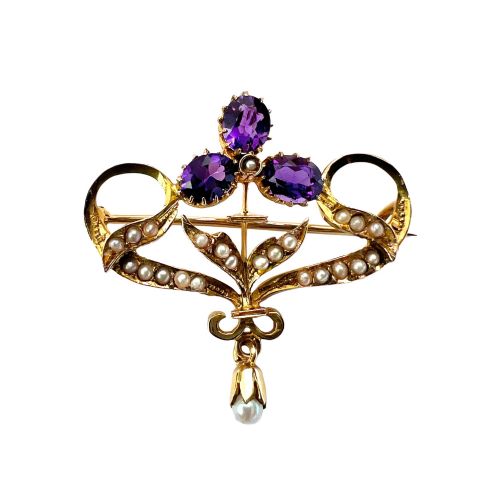
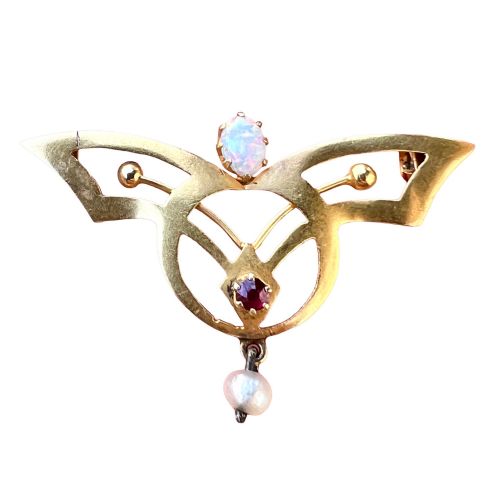


Gold Pearl Pendant Brooch
When you search for gold pearl pendant brooch, you encounter versatile jewels designed to pin to garments or suspend from chains.
Gold Pearl Pendant Brooch
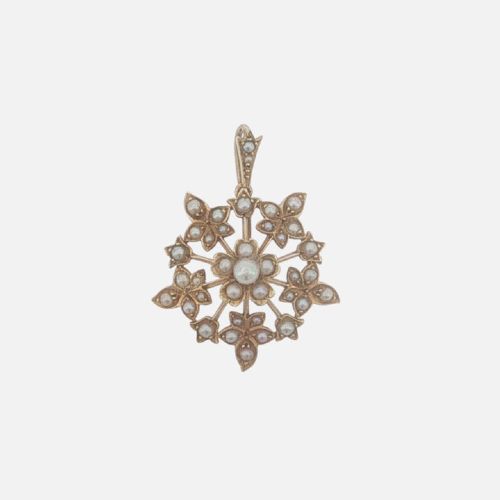
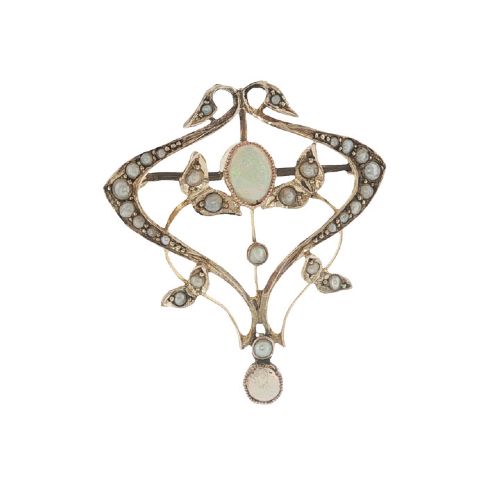
A gold pearl pendant brooch is a dual-purpose piece of jewellery engineered to function both as a breast ornament and a neck pendant, reflecting the adaptable accessorising habits of the nineteenth and early twentieth centuries. These convertible jewels appear frequently in Victorian and Edwardian iterations, spanning the decades from the 1870s through to 1910.
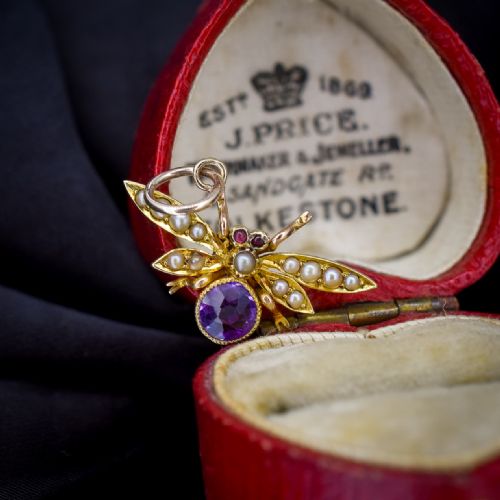
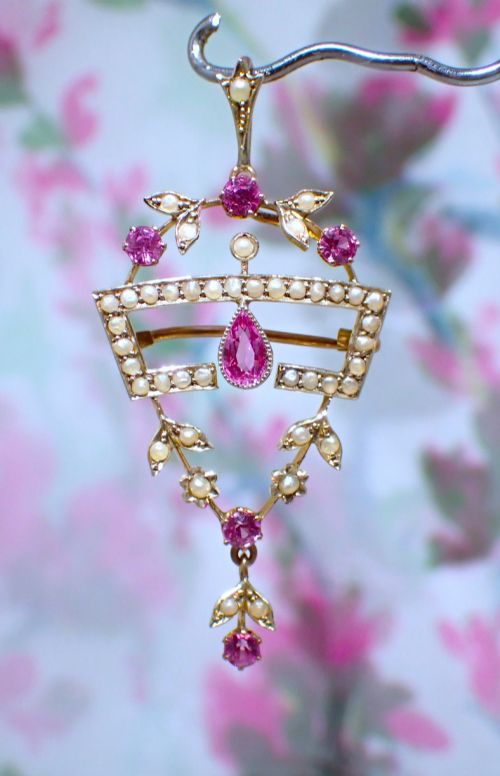
The prevailing forms on this page include celestial starbursts, floral clusters, intricate bows, and whimsical animal motifs such as insects and turtles, often incorporating detachable loops or hidden bails. Gemstones such as amethyst, peridot, turquoise, opal, and diamond regularly accompany the central pearls, mounted in varied carats of yellow and rose gold.
Originating predominantly from the Victorian and Edwardian eras, these pieces showcase the stylistic shifts from Renaissance Revival and heavy geometric designs toward the fluid, naturalistic lines of Art Nouveau. Buyers encounter everything from delicate seed pearl ribbon sliders to substantial multi-carat gemstone clusters framed in gold.
How They Were Made
Goldsmiths utilised varying purities of yellow and rose gold, predominantly 9ct, 15ct, and 18ct, alongside silver-gilt settings to house the gemstones and structural elements. Metalwork techniques combined casting, wire-work, and hollow stamping to create dimensional frames without excessive weight.
Pearls and seed pearls were meticulously set using claw mounts, bezel settings, or delicate seed-pegging onto gold backplates, frequently complemented by rose-cut or old-cut diamonds. Enamel work, including guilloche techniques, added colour accents to the metallic structures of specific butterfly, bird, and geometric designs.
Listings feature items spanning Victorian, Edwardian, and nineteenth-century periods, constructed primarily in 9ct, 15ct, and 18ct gold.
What Varies in Quality
The standard of execution depends heavily on the complexity of the gold smithing and the uniformity of the seed pearls employed in pavé or fringe arrangements. Pieces featuring integrated mechanisms for switching between brooch pins and pendant loops without compromising structural rigidity demonstrate superior craftsmanship.
Gemstone selection dictates the upper tier of the range, where natural pearls paired with calibrated diamonds, high-grade amethysts, or vibrant peridots elevate the piece above standard commercial production. The preservation of original components, such as matching safety chains, fitted boxes, and pin assemblies, further distinguishes finer examples.
The Gold Pearl Pendant Brooch Glossary
- Seed pearl
- A very small, naturally occurring pearl, typically under two grains, often drilled and threaded onto fine gold wire or glued onto pegs in clusters.
- Pendant brooch
- A dual-purpose jewel fitted with both a pin mechanism for garments and a suspension loop for wearing on a neck chain.
- Guilloche
- An ornamental engine-turning technique engraved into metal beneath a transparent layer of coloured enamel.
- Old-cut diamond
- A hand-faceted diamond shape predating modern brilliant cuts, characterised by a smaller table, higher crown, and open culet.
- Lavalier
- A necklace featuring a pendant drop suspended from a central link, popular during the Edwardian and Art Nouveau periods.
Gold Pearl Pendant Brooch: Frequently Asked Questions
How do I convert a brooch into a pendant?
Most convertible jewels feature a hinged pin and a separate, retractable or removable loop tucked near the top edge. You simply thread a chain through the loop and secure the sharp pin safely against the reverse.
Some older examples utilise a screw-in bail that unscrews entirely when pinned to heavy lapels or fabrics.
Are these pearls natural or cultured?
The pearls found in these Victorian and Edwardian pieces are predominantly natural saltwater or freshwater pearls, harvested long before modern cultured pearl farming became widespread in the 1920s.
Seed pearls used in intricate starbursts and floral clusters were also sourced naturally, accounting for their subtle variations in shape and creamy lustre.
How do I date a piece safely?
Dating relies on a combination of stylistic markers, such as the flowing asymmetrical lines typical of Art Nouveau versus the strict symmetry of mid-Victorian design. Metal standards also offer clues, as British items frequently display specific gold carats like 15ct alongside maker marks and date letters.
Pin mechanisms and fastener styles on the reverse provide additional physical evidence of manufacturing eras.