






Diamond Flower Pendant
A diamond flower pendant brings together botanical motifs and precious stones, spanning centuries of craftsmanship from Victorian designs to mid-century creations.
Diamond Flower Pendant
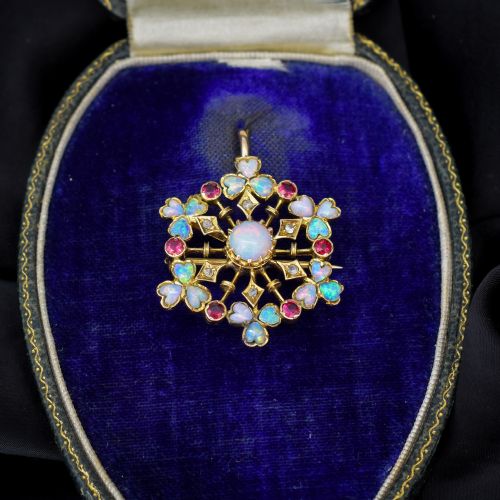
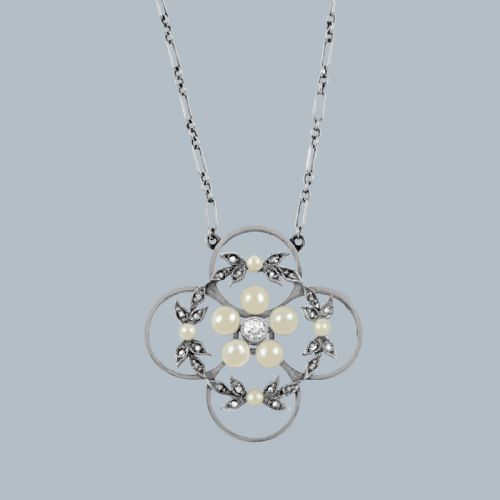
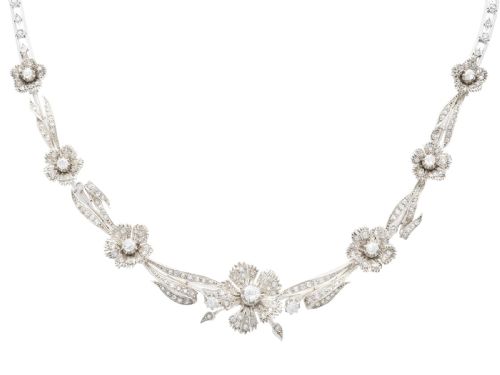
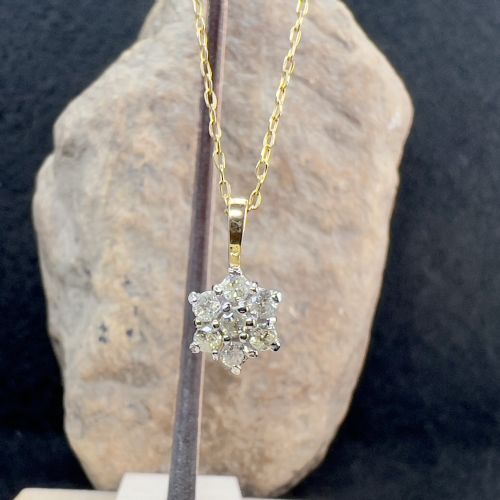
A diamond flower pendant takes the natural form of blossoms and leaves, rendered in precious metals and gemstones. Buyers exploring this category encounter a range of forms, from cluster designs to convertible brooch and pendant combinations.
The pieces on this page stem from the Victorian and Edwardian eras, alongside mid-century and contemporary work. Victorian and Edwardian examples frequently combine old-cut or rose-cut diamonds with pearls, rubies, or enamel, while later decades favour yellow gold and structured cluster settings.
Many items function as both pendants and brooches, reflecting historical versatility in how jewellery was worn. The floral motif remains central across all periods, utilising rubies, sapphires, peridot, or jade alongside the primary diamonds.
Materials and construction
Maker construction relies on combinations of gold, silver, and platinum. Victorian and French pieces frequently set diamonds in silver-topped gold, a technique that kept the metal bright against dark stones before platinum gained popularity in the Edwardian period.
Metals span 9ct, 14ct, 15ct, and 18ct yellow, rose, and white gold. Gemstone selection includes rubies, sapphires, pearls, and jade, paired with old-cut, rose-cut, and modern diamonds.
Listings span periods from the 1860s through the 1960s, incorporating platinum, silver, and gold alongside diamonds, pearls, rubies, and jade.
What separates quality in these pieces
The fineness of the lapidary work and metal setting defines the standard across these pieces. Hand-carved details, matched stone sizes, and integrated mechanisms for convertible brooches show superior workshop execution.
The integration of secondary stones, such as rubies or pearls within the petal structure, affects the overall balance of the design. Secure claw or foil-backed settings that maintain their integrity over time indicate careful period manufacture.
Merrin
The Diamond Flower Pendant Glossary
- Old-cut diamond
- A hand-faceted diamond shape typical of older jewellery, featuring a smaller table and larger culet than modern cuts. These stones display a softer, deeper candlelit sparkle.
- Rose-cut diamond
- A stone style featuring a flat base and a domed crown with triangular facets. This cut predates modern brilliant stones and produces a subtle shimmer.
- Convertible piece
- An item designed with a detachable bale or folding pin, allowing it to function as both a brooch and a pendant. This flexibility was common in the nineteenth century.
- Cluster setting
- An arrangement where smaller gemstones cluster tightly around a central stone to form a floral motif. This technique maximises the visual impact of smaller diamonds and coloured gems.
Diamond Flower Pendant: Frequently Asked Questions
How do I wear a convertible pendant brooch?
Convertible pieces feature a detachable bale or a hinged pin on the reverse. You can thread a chain through the bale to wear the piece as a necklace or remove it to fasten the item to a lapel as a brooch.
Ensure the pin clasp or bale mechanism is secure before wearing the item in either configuration. Many Victorian and Edwardian designs incorporate this dual functionality.
What is the difference between Victorian and mid-century flower pendants?
Victorian flower pendants frequently use silver-topped gold settings with old-cut or rose-cut diamonds, often incorporating pearls, enamel, or rubies. These pieces sometimes double as brooches.
Mid-century examples tend to utilise 9ct or 14ct yellow gold with structured cluster designs, sometimes featuring single or round brilliant-cut diamonds alongside peridot or sapphires.
How are old-cut diamonds different from modern stones?
Old-cut diamonds were shaped by hand during the eighteenth, nineteenth, and early twentieth centuries. They possess higher crowns, smaller tables, and large culets that create a distinct, warmer glow under ambient light.
These stones lack the standardised symmetry of modern brilliant-cut diamonds, reflecting the individual hand of the lapidary who cut them.
Can I attach these pendants to any chain?
Most pendants on this page accept standard fine chains through their integrated loops or bales. Some Edwardian and Victorian pieces feature larger or detachable bales designed for specific collar thicknesses.
Check the dimensions of the bale before pairing the pendant with a heavy chain to ensure proper fit and movement.