








Vintage Love Token
A vintage love token carries a private inscription or romantic symbol in gold, glass, or wood, offering a tangible record of devotion that you can wear or display.
Vintage Love Token
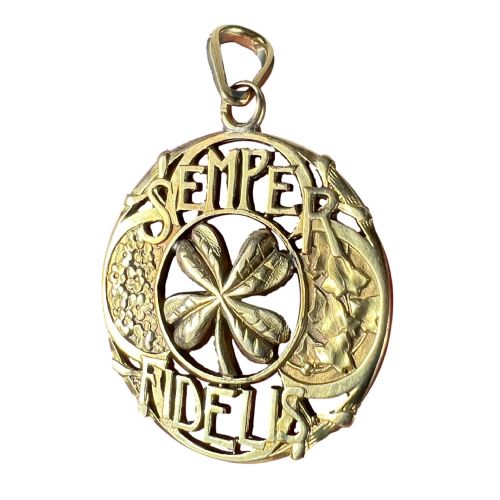
A vintage love token encompasses a range of sentimental objects, from gold pendants and charms to brooches and decorative items created to mark affection. When you examine this selection, you encounter pieces designed to convey devotion through motifs like hearts, clovers, and inscribed messages.
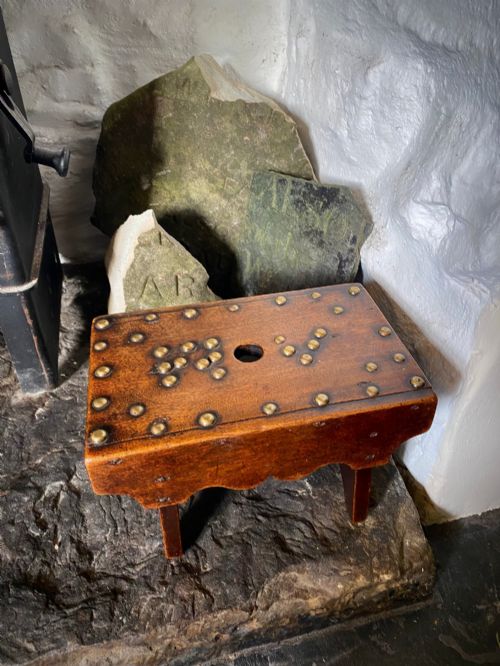
The objects span multiple eras, including Georgian, Victorian, Art Deco, and mid-century periods, alongside distinct examples of nineteenth-century folk art. You are most likely to meet French gold medals and pendants bearing romantic phrases alongside British folk art objects and nineteenth-century glass.
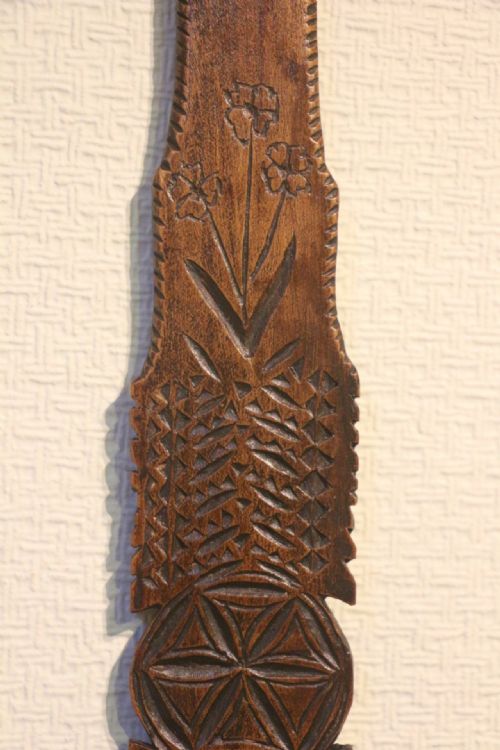
Makers such as Augis, Monier, and Merrin appear among the gold pendants, bringing specific twentieth-century interpretations to traditional romantic sentiments. Alongside these jewelled pieces, the selection includes treen and folk art objects like knitting sheaths and rolling pins.
Materials and construction
Gold forms the primary metal for the pendants and charms, utilising eighteen-carat and fourteen-carat yellow gold to provide a warm setting for inscriptions and stones. Vitreous enamel frequently adds colour to the gold surfaces, highlighting letters and decorative borders.
Diamonds appear set within gold charms and pendants, adding points of light to floral and heart motifs. Glass and hardwood serve distinct functions in the non-jewellery pieces, forming Nailsea rolling pins or carved folk art distaffs and knitting sheaths.
Vintage Love Token Retail Price Guide 2026
Typical asking prices for vintage love token among the pieces listed under this phrase on Sellingantiques today, from the lower quarter to the upper quarter. They describe what is for sale here now, not the wider market.
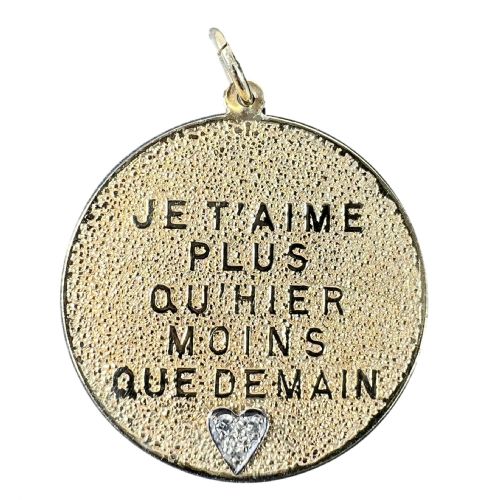
French gold medals from the twentieth century utilise algebraic wordplay to express love increasing daily.
Distinguishing quality
The standard of execution in the metalwork and engraving separates simpler items from finer examples in gold and enamel. Crisp lettering on French medals and precise stone setting indicate superior workshop output.
In folk art and treen, the depth and clarity of the carving determine the merit of the piece. Well-defined turned wood and preserved surface patination elevate utilitarian objects into accomplished expressions of folk craftsmanship.
Augis·Monier·Merrin
The Vintage Love Token Glossary
- Vitreous enamel
- Glass fused to metal under high heat to create a coloured decorative surface. This technique adds permanent colour to gold charms and pendants.
- Treen
- Small handmade wooden household objects created before mass production. Items like knitting sheaths and distaffs fall into this category.
- Nailsea glass
- Glassware produced in the village of Nailsea, typically recognised by opaque white looped patterns on coloured grounds. Rolling pins made in this style served as sentimental tokens.
- Distaff
- A tool used in spinning to hold flax or wool before it is spun into thread. Carved wooden examples often served as tokens of affection given by makers to spinners.
Vintage Love Token: Frequently Asked Questions
What is a vintage love token?
A vintage love token is an object given to express affection, ranging from inscribed gold pendants to folk art made of wood and glass.
These pieces often feature romantic phrases, hearts, or symbols intended to communicate permanent devotion between the giver and the recipient.
How were love tokens worn or used?
Jewellery love tokens were typically worn as pendants, charms, or brooches close to the heart on chains or fastened to garments.
Utilitarian tokens like carved wooden sheaths and glass rolling pins functioned as practical household items imbued with sentimental meaning.
How do I date a love token?
Dating relies on stylistic clues, gold carat standards, and specific maker signatures associated with known mid-century or earlier periods.
Folk art and glass pieces are dated through traditional regional forms and the wear patterns visible on the natural materials.