

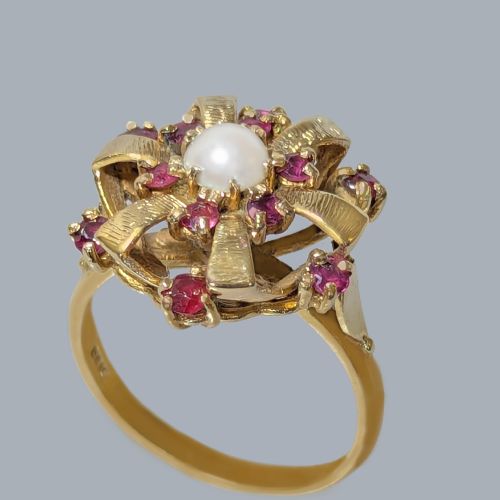


Gold Pearl Cluster Ring
A gold pearl cluster ring brings together lustrous organic nacre and sparkling gemstones in a timeless floral or halo arrangement.

Gold Pearl Cluster Ring
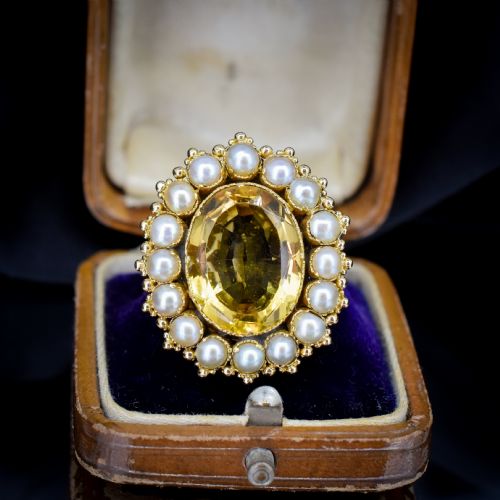
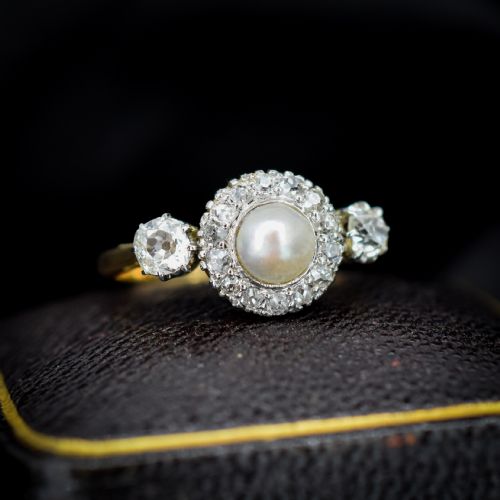
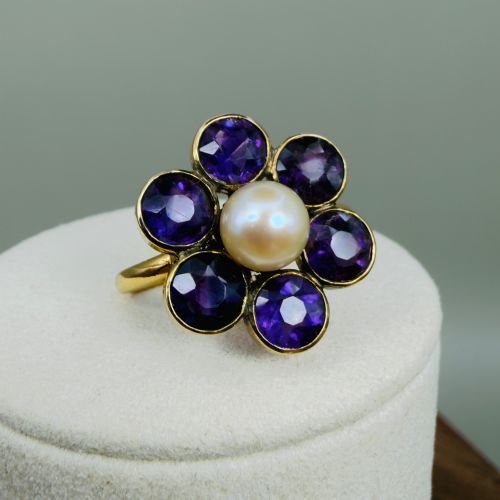
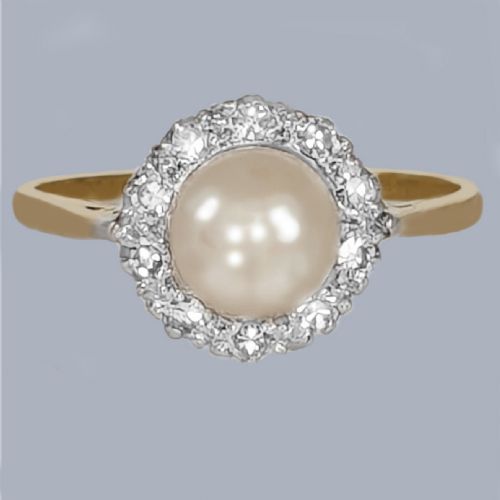
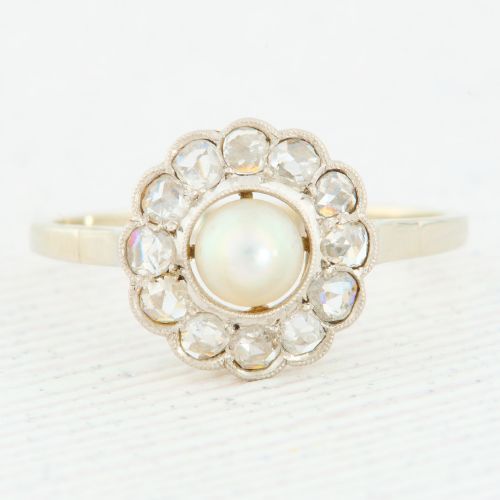
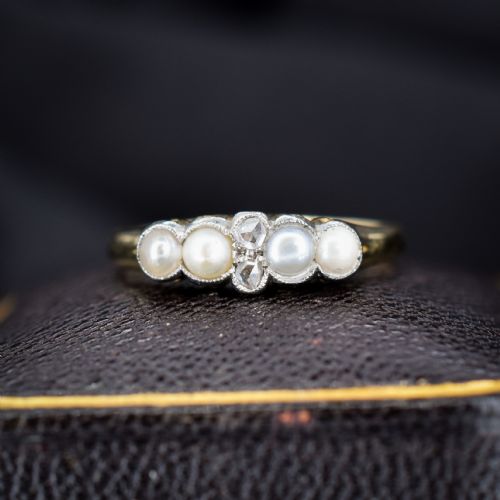
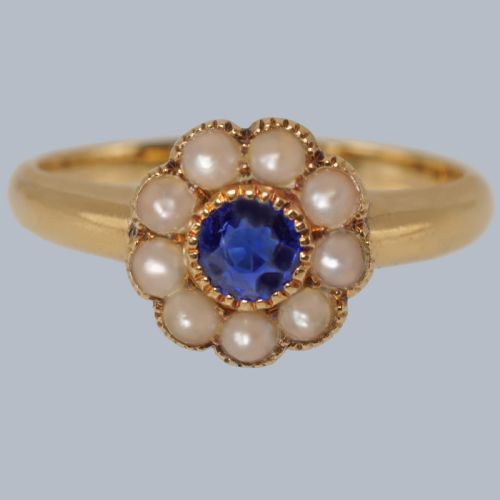
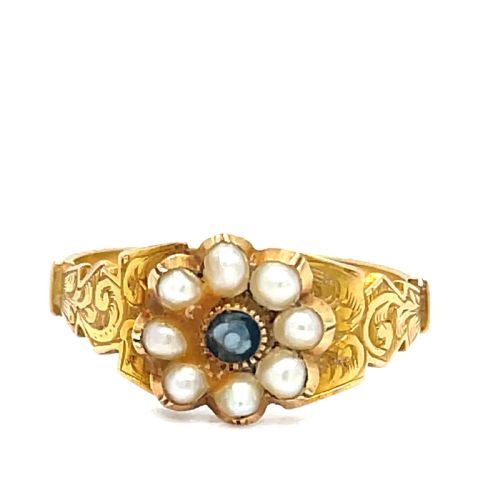
A gold pearl cluster ring centres on a pearl surrounded by a tight ring of accent stones, creating a distinct floral or halo silhouette. This configuration appears frequently across Georgian, Victorian, Edwardian, and mid-century periods, showcasing various design motifs from simple daisy clusters to elaborate navette shapes.
Buyers exploring this selection encounter pieces utilising yellow, rose, and white gold, alongside occasional platinum settings. The central pearl is frequently paired with diamonds, amethysts, turquoise, garnets, or rubies, reflecting the decorative preferences of the specific era in which the jewellery was manufactured.

Materials and construction
Goldsmiths utilised varying purities of gold, predominantly 9ct, 15ct, 18ct, and occasional 14ct settings, shaped by hand or cast to house the central pearl and surrounding gems. Platinum mounts also emerge in later Edwardian and Art Deco examples to provide a bright, durable border for diamonds.
The pearls, ranging from natural specimens to seed pearls and cultured varieties, were secured with pins, bezels, or prongs alongside old-cut diamonds, rose-cut diamonds, and coloured gemstones. Enamelwork and detailed gold wire scrollwork frequently supplemented the cluster formations in Georgian and Victorian examples.
Gold Pearl Cluster Ring Retail Price Guide 2026
Typical asking prices for gold pearl cluster ring among the pieces listed under this phrase on Sellingantiques today, from the lower quarter to the upper quarter. They describe what is for sale here now, not the wider market.
Some Victorian mourning rings hide woven hair beneath a crystal back, proving that Victorians really did put sentiment into everything.
Assessing craftsmanship and condition
Quality depends heavily on the uniformity and lustre of the pearl, the secure seating of the surrounding gemstones, and the preservation of delicate claw or bezel work. Higher-tier examples display well-matched, high-lustre pearls paired with clean, well-cut diamonds or vibrant coloured stones.
The integrity of the gold shank and the precision of the cluster arrangement dictate the overall robustness of the piece. Evidence of heavy resizing, replacement stones, or excessive wear to the pearl surface alters the original character and desirability of the ring.
The Gold Pearl Cluster Ring Glossary
- Cluster ring
- A ring featuring a central stone or pearl encircled by a group of smaller accent stones. This arrangement maximises visual impact and light reflection.
- Seed pearl
- Very small natural or cultured pearls, often half-drilled and threaded or glued onto pegs in antique jewellery. They create delicate, uniform borders in Victorian and Edwardian designs.
- Old-cut diamond
- A hand-faceted diamond shape predating modern brilliant cuts, characterised by a smaller table, higher crown, and open culet. These stones display a softer, candlelit sparkle.
- Rose-cut diamond
- A historic gemstone cut featuring a domed top with triangular facets and a flat base. It allows light to pass through with a subtle, translucent shimmer.
- Navette
- A boat-shaped or marquise cluster design that tapers to points at either end. This elongated silhouette sits gracefully along the finger.
Gold Pearl Cluster Ring: Frequently Asked Questions
How do I date my ring?
Dating relies on hallmarks, metal purity standards, gemstone cuts, and overall structural motifs characteristic of specific eras. Georgian and Victorian pieces often show distinct hand-craftsmanship, whilst Edwardian designs favour platinum-topped gold settings.
Comparing the style of the cluster work and the specific gold karatage against known historical periods helps narrow down the decade of manufacture.
Are these pearls natural?
The listings contain a mix of natural pearls, seed pearls, and cultured pearls depending on the period of origin. Earlier Georgian and Victorian pieces frequently feature natural or seed pearls.
Mid-century and later examples more commonly incorporate cultured pearls, which can be identified through gemological examination of the nacre layers.
How should I care for my ring?
Pearls are organic gems with a softer surface rating than diamonds or gold, requiring gentle cleaning with a soft, damp cloth. Avoid harsh chemical cleaners, ultrasonic baths, and prolonged immersion in water.
Putting the ring on after applying cosmetics and perfumes protects the delicate nacre from chemical degradation over time.
Can I wear this daily?
Daily wear is possible with careful handling, though the delicate nature of pearls requires mindfulness regarding knocks and abrasions. Removing the ring during strenuous physical activities prevents damage to the setting and the soft pearl surface.
Inspecting the prongs and security of the central pearl regularly ensures the cluster remains intact through regular use.