


Edwardian Pearl Halo Ring
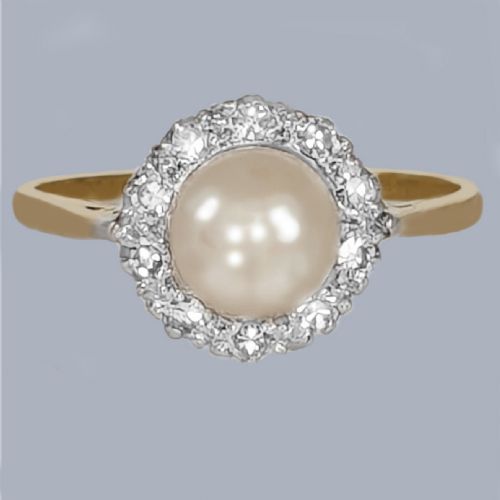
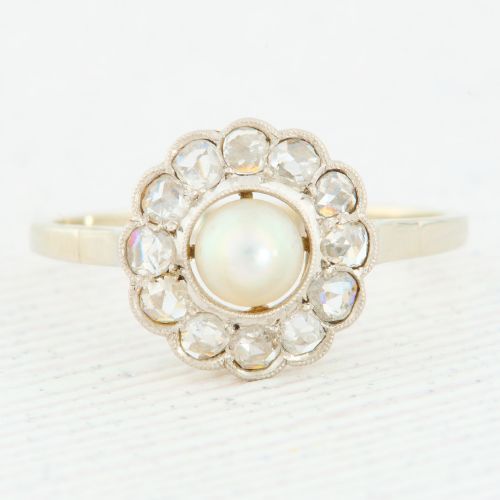
An edwardian pearl halo ring brings together a central lustrous pearl encircled by sparkling diamonds in a delicate precious metal setting.
Edwardian Pearl Halo Ring
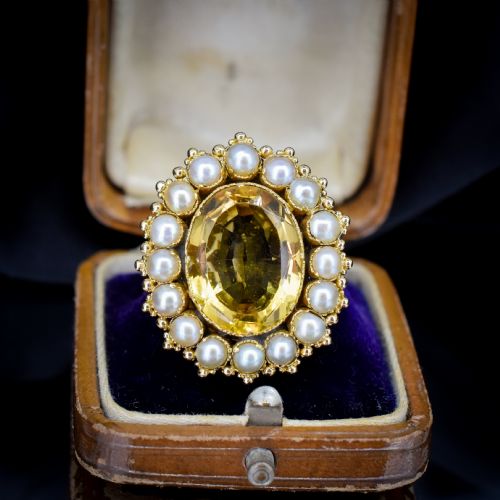
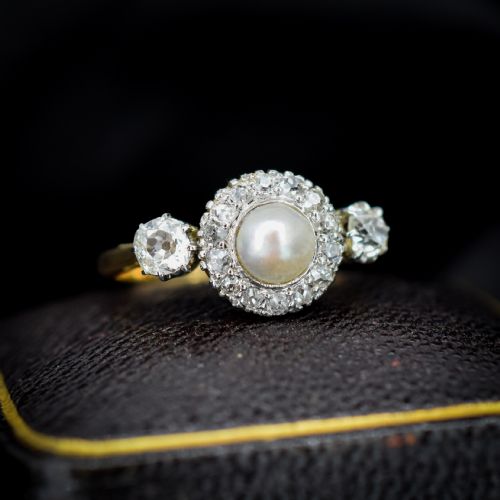
An edwardian pearl halo ring is a cluster ring featuring a central pearl surrounded by a border of smaller stones, most frequently diamonds. These pieces frequently pair pearls with old cut diamonds or coloured gems such as amethyst, garnet, and citrine.
The selection on this page spans the Edwardian era alongside Victorian, Art Deco, and mid-century examples. While true Edwardian pieces dominate, you will also encounter nineteenth-century items and later twentieth-century iterations.
Most examples present a circular or oval cluster formation set upon bands of yellow gold, rose gold, white gold, or platinum. The central pearl remains the focal point, framed by its radiant halo.
How they were made
Goldsmiths of the period utilised combinations of 18ct gold, 9ct gold, and platinum to fabricate these delicate mountings. Platinum often appears in the top settings of Edwardian pieces to securely hold diamonds while maintaining a bright white appearance against the stones.
Gems were shaped by hand, notably featuring old cut diamonds with characteristic high crowns and small tables. Pearls were meticulously selected and secured within claw or bezel settings alongside seed pearls and larger cultured varieties.
Listings feature items spanning the Victorian, Edwardian, Art Deco, and mid-century periods, utilising 18ct gold, platinum, and seed pearls.
What varies in quality
The distinction between tiers rests upon the matching and lustre of the pearls and the quality of the surrounding gemstones. Well-matched stones and crisp metalwork distinguish finer workshop output.
Subtleties in proportion and the delicacy of the gallery wirework separate standard production from superior pieces. The integrity of the original settings and hallmarking further influence the character of each ring.
The Edwardian Pearl Halo Ring Glossary
- Halo
- A concentric ring of smaller gemstones encircling a larger central stone. This arrangement maximises the visual impact and perceived size of the primary gem.
- Old Cut
- A precursor to the modern brilliant cut diamond, characterised by a smaller table, higher crown, and large culet facet. These stones display a softer candlelit sparkle under lower light conditions.
- Seed Pearl
- A very small natural or cultured pearl, often measuring under two millimetres in diameter. They are frequently used in clusters or delicate pavé arrangements.
- Cluster Ring
- A ring style featuring a central gem surrounded by a cluster of smaller stones. This design was particularly favoured during the Georgian, Victorian, and Edwardian periods.
Edwardian Pearl Halo Ring: Frequently Asked Questions
Can I wear an Edwardian pearl ring daily?
Pearls are softer than diamonds and require gentle care during regular wear. Removing the ring before rigorous tasks helps protect the central pearl.
Storing the piece separately from harder jewellery prevents surface scratching on both the pearl and the surrounding metal.
How do I clean an antique pearl ring?
Wipe the pearl gently with a soft, damp cloth after wearing to remove natural oils and cosmetics. Avoid harsh chemical cleaners and ultrasonic baths.
Harsh substances can damage the delicate nacre of the pearl and weaken the integrity of older settings.
What is the difference between seed pearls and cultured pearls?
Seed pearls are naturally occurring tiny pearls, whereas cultured pearls are grown with human intervention by inserting a nucleus into the mollusc. Both types appear across various periods in these listings.
Examination under magnification often reveals the subtle structural differences between natural formations and cultured varieties.
How do I identify an Edwardian ring?
Edwardian rings typically exhibit platinum-topped gold settings, intricate filigree, and old cut diamonds arranged in light, airy motifs. The overall aesthetic prioritises grace and delicate ornamentation.
Hallmarks, when present, help confirm the specific period and the assay office responsible for testing the precious metal content.