


Edwardian Pearl Engagement Ring
An edwardian pearl engagement ring brings together soft lustre and old cut sparkle, defining the delicate elegance of early twentieth-century jewellery.
Edwardian Pearl Engagement Ring
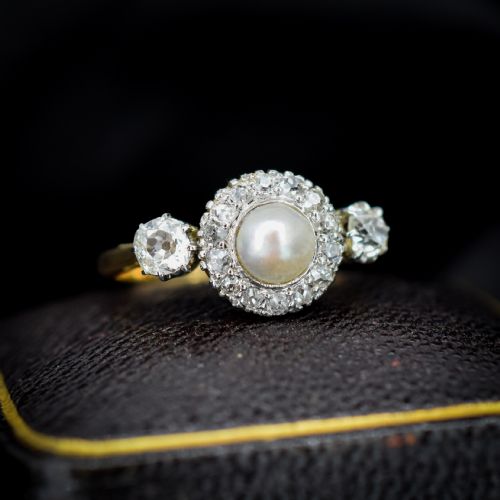
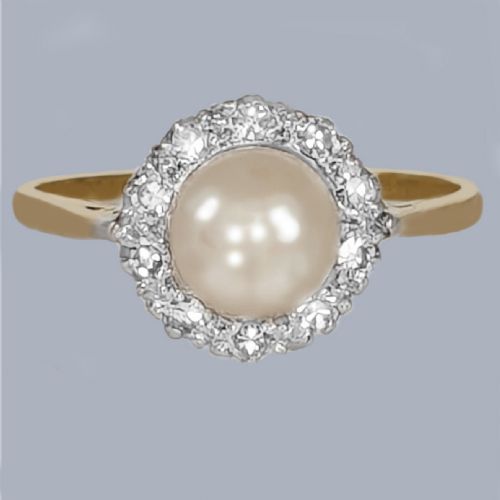
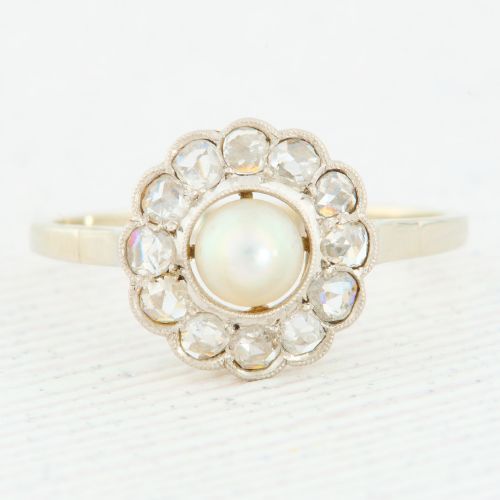
An edwardian pearl engagement ring combines luminous pearls with shimmering diamonds set in delicate gold and platinum mountings. These pieces primarily date from the Edwardian period and the early twentieth century, though examples stretch into Art Deco and later decades.
Cluster and crossover designs dominate the selections available, often pairing central pearls with old cut diamonds in floral or geometric arrangements. Buyers encounter yellow gold bands alongside platinum-topped settings that maximise the brilliance of the stones.
While the core aesthetic belongs to the Edwardian era, related pieces span from late Victorian origins to mid-century revivals. The enduring appeal lies in the contrast between organic pearl nacre and faceted diamond sparkle.
Materials and Construction
Goldsmiths utilised eighteen-carat yellow gold and emerging platinum techniques to fabricate intricate wirework and secure claw or bezel settings. Platinum toppings allowed artisans to use finer metal strands while maintaining structural strength for holding diamonds.
Natural and saltwater pearls sit alongside older gems, accented by hand-faceted old cut and rose cut diamonds. Rubies and sapphires occasionally appear as secondary stones in multi-stone clusters and trilogy configurations.
Some French rings hid tiny secrets inside the band, reminding us that romance required a touch of stealth a century ago.
Evaluating Quality and Craftsmanship
The refinement of the metalwork and the harmony of the stone proportions determine the tier of an edwardian pearl engagement ring. Superior examples display delicate piercing and balanced symmetry that enhance the natural lustre of the pearl.
The origin and skin quality of the pearl, whether natural or cultured, heavily influence the standing of a piece within its period. Fine matches between diamond cut grades and pearl orient separate standard workshop output from exceptional jewellery.
The Edwardian Pearl Engagement Ring Glossary
- Old cut diamond
- A hand-faceted diamond shape characteristic of the nineteenth and early twentieth centuries, featuring a smaller table and higher crown than modern brilliant cuts. These stones produce a warm, candlelit sparkle.
- Toi et Moi
- A French term meaning you and me, describing a ring style featuring two main gems side by side, often a pearl and a diamond in a crossover shank. This design gained immense popularity during the Edwardian era.
- Cluster ring
- A ring design where a central stone is surrounded by a border of smaller gems, typically diamonds encircling a pearl. This arrangement creates maximum visual impact on the finger.
- Natural pearl
- A pearl formed organically within a mollusc without human intervention, highly prized by collectors for its formation and rarity. These contrast with cultured varieties introduced later.
Edwardian Pearl Engagement Ring: Frequently Asked Questions
How do I care for pearl rings?
Pearls are organic gems with a softer surface than diamonds, requiring gentle cleaning with a soft cloth rather than harsh chemical dips. Avoid exposing them to perfumes, cosmetics, and ultrasonic cleaning.
Storing the ring separately from harder gemstone jewellery prevents scratching the nacre. Regular checks by a jeweller ensure the pearl remains secure in its setting.
Are these rings suitable for daily wear?
While many people wear an edwardian pearl engagement ring every day, pearls require mindful care due to their lower hardness on the Mohs scale. Removing the ring during heavy manual work or swimming protects the pearl and the delicate platinum settings.
Historic mountings benefit from gentle treatment to preserve their intricate wirework. Proper maintenance ensures these antique pieces survive for future generations.
How do I identify an Edwardian ring?
Edwardian rings typically feature platinum-topped gold settings, delicate millegrain edges, and old cut diamonds arranged in floral or garland motifs. The use of natural pearls alongside intricate openwork gallery construction points directly to this period.
Maker marks, French control stamps, and stylistic cues help confirm the manufacturing era. Comparing the mounting techniques against known period examples clarifies the date.
What is millegrain decoration?
Millegrain refers to a decorative technique featuring tiny raised beads of metal along the edges of a setting. This subtle border frames the stones and adds a refined texture to the jewellery.
Common in Edwardian and Art Deco design, millegrain work softens the transition between metal and stone. Skilled artisans applied these minute beads using specialised rolling tools.