


Gold Paste Stone Pendant
A gold paste stone pendant combines bright metallic warmth with glittering glass brilliance, offering an accessible route to historical jewellery that catches the eye.
Gold Paste Stone Pendant
A gold paste stone pendant is a wearable ornament featuring faceted glass set into precious metal, designed to mimic genuine gemstones with remarkable visual depth. These pieces span Victorian, Edwardian, and mid-twentieth-century periods, capturing changing aesthetic tastes across generations.
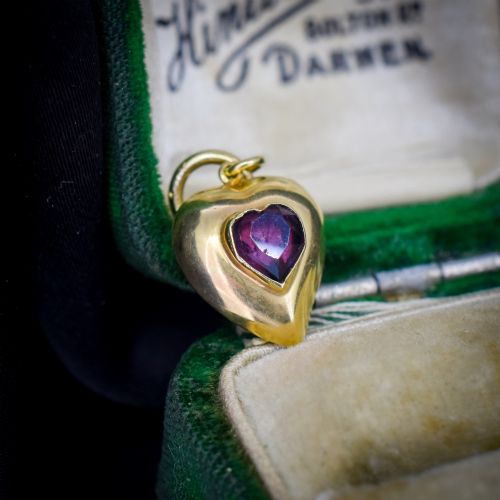
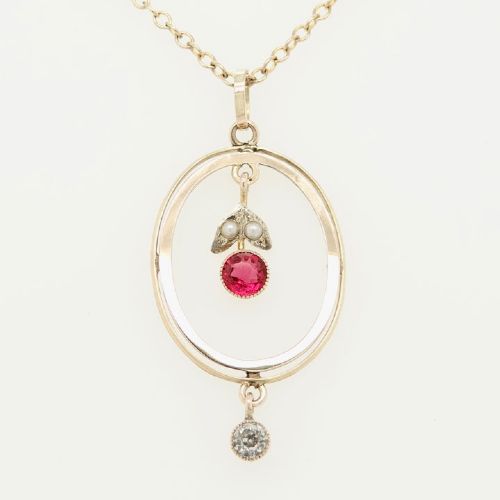
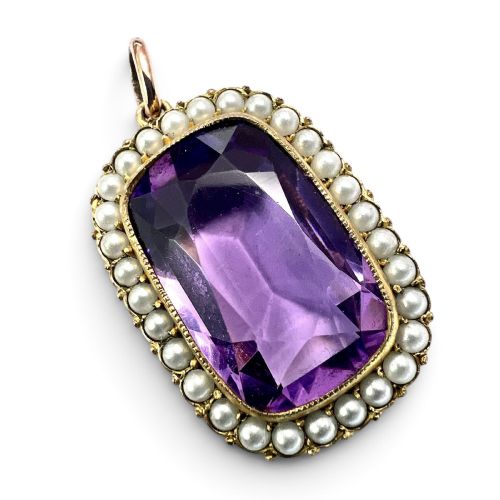
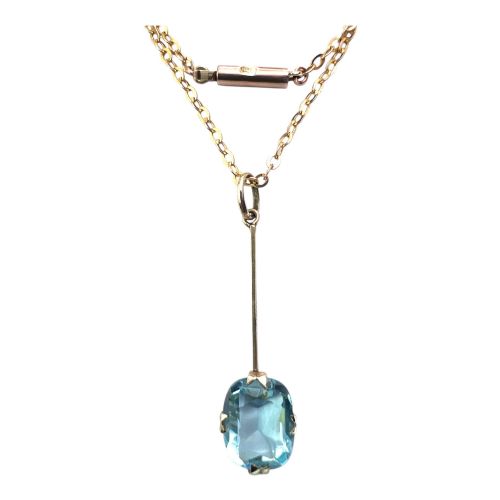
The most common examples on this page are Victorian and Edwardian drops and lockets, frequently combining warm yellow gold with coloured glass pastes in hues resembling amethyst, garnet, and aquamarine.
Makers utilised various forms, including hearts, ovals, crosses, and bows, sometimes incorporating seed pearls or enamel alongside the central paste stones to create intricate decorative arrangements.
How they were made
Goldsmiths shaped low and high karat gold, alongside sterling silver and rolled gold, to form secure settings for hand-cut glass stones. These glass pastes were carefully shaped and polished to imitate natural precious gems.
Detailed work involved mounting seed pearls, enamel, or additional small stones around the central paste feature, utilising techniques characteristic of Victorian Etruscan Revival and Edwardian styles.
Some past jewellers added secret compartments to hold tiny locks of hair, turning simple glass pendants into miniature memory vaults.
What varies in quality
The skill of the stone cutter dictates how sharply the paste reflects light, separating simpler glass inserts from pieces with deep, convincing brilliance. Metalwork precision also plays a role, as finely wrought settings demonstrate greater artisanal care.
Design complexity influences the overall character of the piece, with multi-component constructions involving seed pearls, enamel, or specific thematic motifs showing a higher level of decorative ambition.
The Gold Paste Stone Pendant Glossary
- Paste
- Hand-cut and polished glass utilised to imitate precious gemstones. It has been used for centuries to create affordable high-style ornaments.
- Seed Pearl
- Very small natural pearls often threaded or set in clusters around a central stone. They add a delicate, textured border to antique pendants.
- Rolled Gold
- A sheet of gold mechanically bonded to a base metal core. This technique provided the appearance of solid gold at a lower production cost.
- Locket
- A hinged pendant designed to hold a small portrait or lock of hair. These hollow vessels often feature decorated front panels set with stones.
Gold Paste Stone Pendant: Frequently Asked Questions
How do I wear a paste pendant?
These pendants suspend easily from delicate gold or silver chains, resting near the collarbone or lower depending on the chain length. They work well as standalone pieces or paired with matching historic items.
Because glass pastes have softer surfaces than diamonds or sapphires, pairing them thoughtfully prevents unnecessary friction against other hard necklaces.
How do I identify a Victorian pendant?
Victorian pieces often display heavier gold work, Etruscan revival motifs, or intricate arrangements involving seed pearls and enamel. The construction methods reflect nineteenth-century handcrafting traditions.
Examining the metal colour, clasp types, and overall design style helps place the piece within the Victorian era or neighbouring Edwardian period.
Are paste stones real gemstones?
Paste stones are not natural gemstones, but rather specialised lead glass cut and polished by hand. Craftsmen shaped these glasses specifically to reproduce the rich colours of amethysts, garnets, and aquamarines.
Historical paste jewellery is valued today for its own lapidary artistry and distinct historical charm rather than mineral worth.