

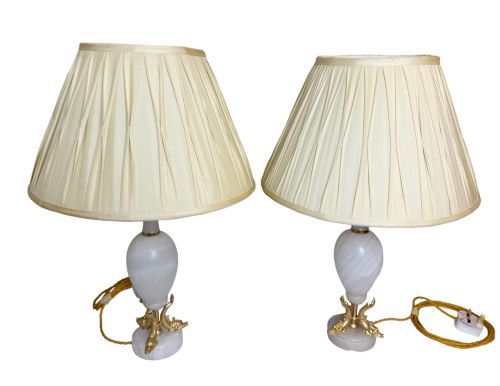
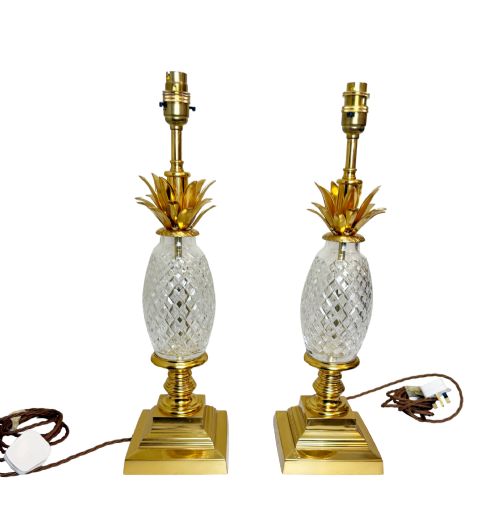
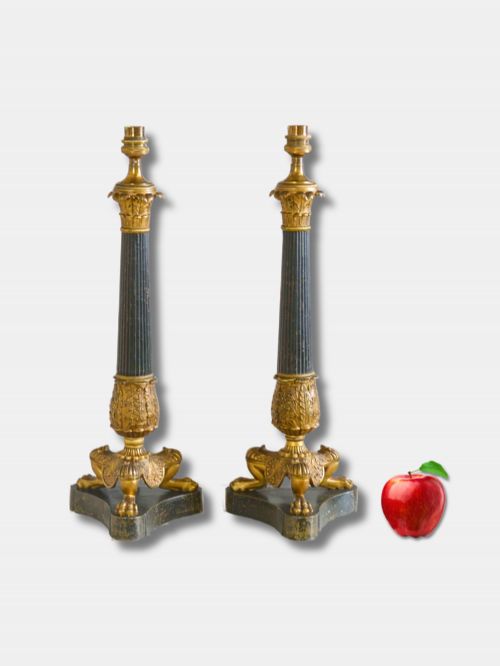


Gold Ormolu Table Lamp
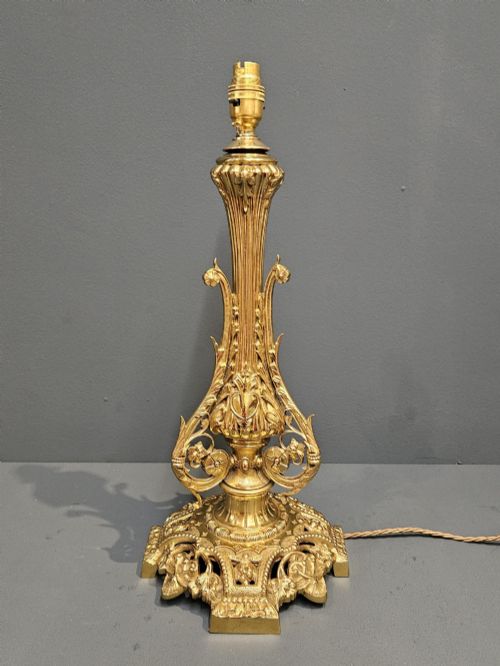
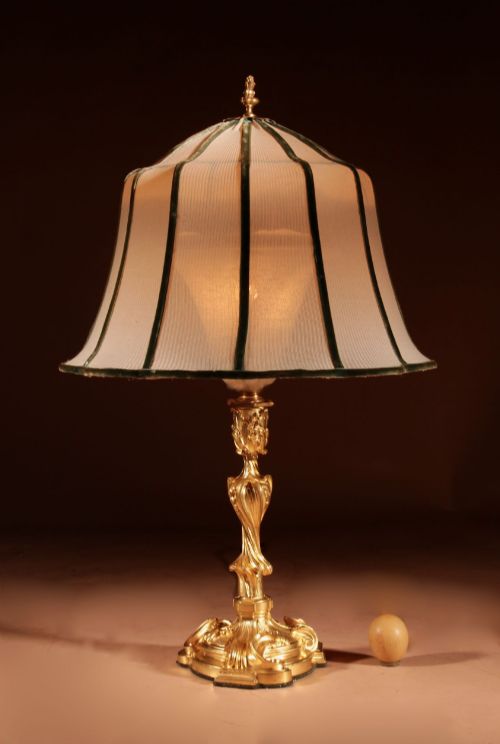
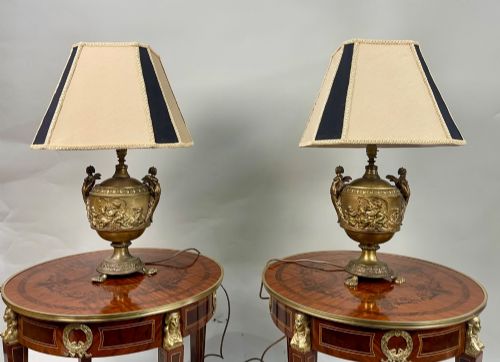
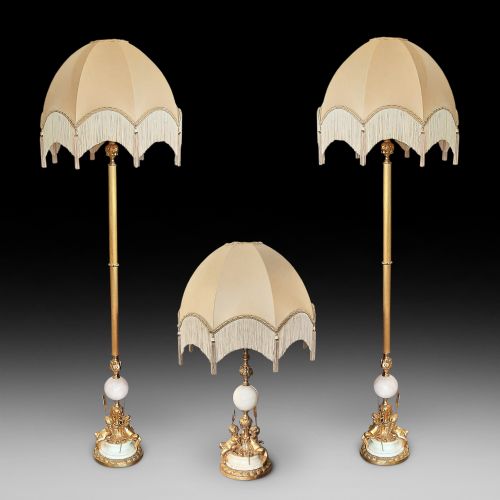
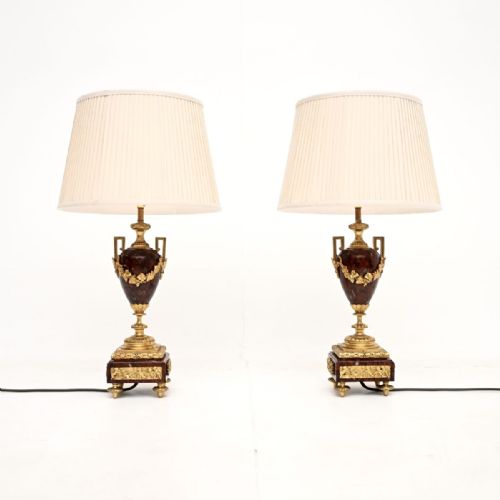
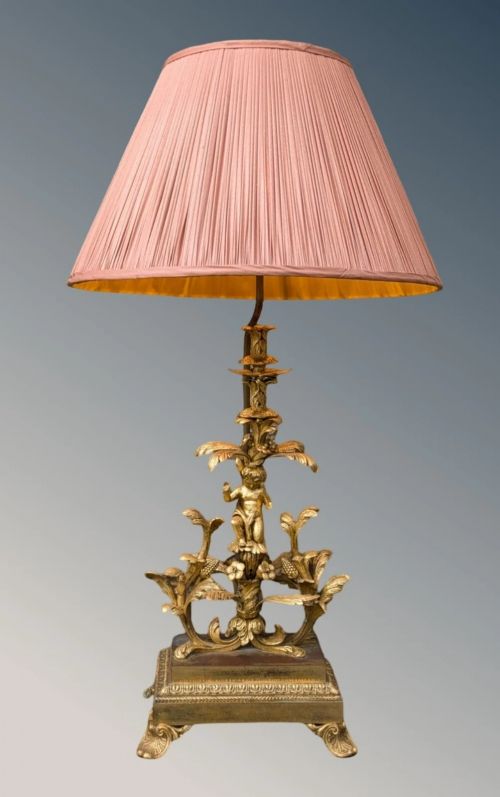
These gold ormolu table lamps bring nineteenth-century French and English grandeur to a room, cast in gilded bronze and brass.
Gold Ormolu Table Lamp
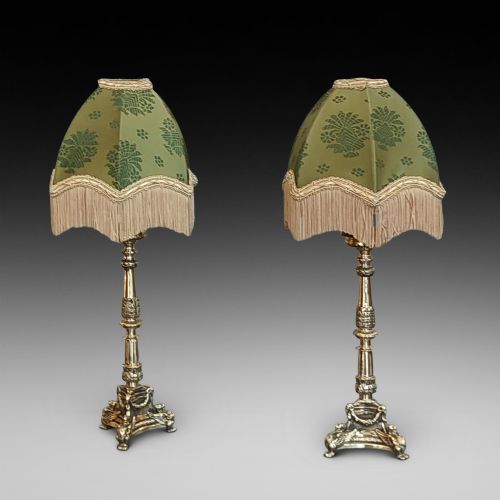
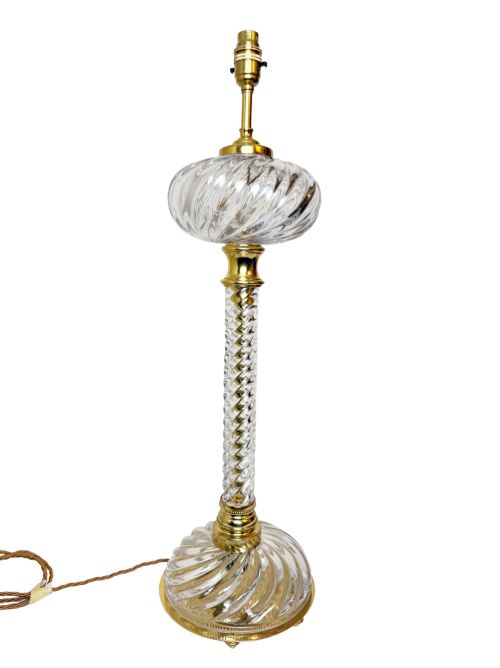
A gold ormolu table lamp combines cast metalwork with functional lighting, originating primarily across nineteenth-century French and English workshops. When searching this phrase, a buyer encounters heavy metal bases frequently paired with marble, onyx, crystal or porcelain elements. The most common survivals on this page take the form of columnar designs, figural cherubs or converted candelabra dating from the Victorian era up to the nineteen-thirties.
Stylistically, these pieces draw heavily on historical revivals, displaying Rococo, Neoclassical, Louis XVI and Empire motifs. Many items began life as candlesticks or vases before receiving electrical wiring in later decades, while others were built specifically as lamp bases. Pairs appear alongside single examples, offering distinct symmetrical options for mantelpieces or side tables.
How they were made
The foundation of these pieces relies on bronze or brass, shaped through intricate casting and chasing before receiving an application of gold ormolu. Artisans also integrated contrasting natural materials such as white marble, green onyx and imported porcelain into the metal armature. Fabric shades complete the construction, though these are typically modern replacements.
Gilding techniques involved mercury amalgamation to bond gold leaf to bronze, creating a durable and luminous surface finish. Detail work was carved by hand into the metal after casting to sharpen foliage, animal paws and human figures.
Gold Ormolu Table Lamp Retail Price Guide 2026
Typical asking prices for gold ormolu table lamp among the pieces listed under this phrase on Sellingantiques today, from the lower quarter to the upper quarter. They describe what is for sale here now, not the wider market.
Listings feature periods spanning from the eighteenth century to nineteen-thirty, with nineteenth-century Victorian pieces forming the core selection.
What varies in quality
Proportion and structural integrity define the architectural success of the object. Heavier bases with integrated lions' paw feet or solid marble plinths provide stability and indicate a higher tier of nineteenth-century manufacture.
Dugourc
The Gold Ormolu Table Lamp Glossary
- Ormolu
- A method of applying finely ground high-carat gold to a bronze object using a mercury paste. The process was largely banned due to health hazards, making period examples distinct in their surface lustre.
- Gilt Bronze
- Metal alloy coated with a thin layer of gold, synonymous with ormolu in many nineteenth-century French inventories. It provides the heavy structural core for these lamps.
- Rococo Revival
- A nineteenth-century design movement favouring asymmetrical scrolls, floral motifs and shell shapes. It heavily influences the decorative program of many listed bases.
- Neoclassical
- A style rooted in classical antiquity, featuring columns, urns, rams heads and strict symmetry. Pieces from this tradition often utilise architectural marble and bronze pairings.
- Ewer
- A large jug with a wide spout and handled body, frequently converted into a striking lamp base during the Victorian period.
Gold Ormolu Table Lamp: Frequently Asked Questions
Are these lamps converted antiques?
Many gold ormolu table lamps started as nineteenth-century candlesticks, urns or vases before being adapted for electricity in the twentieth century. This conversion process is standard for period lighting.
Buyers should expect modern wiring housed within antique metal or ceramic bodies, preserving the outer decorative surface while meeting current safety standards.
How do I clean ormolu?
Ormolu requires gentle maintenance using a soft dry cloth to remove dust. Water and chemical polishes will strip the delicate historic gold layer.
Professional restoration is recommended if the gilt surface shows severe tarnish or accumulation of old wax.
How do I date a lamp?
Dating relies on stylistic clues such as the severity of Neoclassical columns versus the fluid asymmetry of Rococo revival scrolls. Material combinations like French porcelain and gilt bronze also point to specific decades.
Cast marks, screw types and the composition of the underlying bronze or brass help confirm whether an item originates from the Victorian era or later.
Do matching pairs exist?
Symmetrical pairs frequently appear among nineteenth-century listings, often originating from grand salons where they stood on side tables or mantelpieces. These matching sets carry higher demand for formal interior schemes.
Single lamps also feature prominently, offering versatile focal points for smaller spaces.