
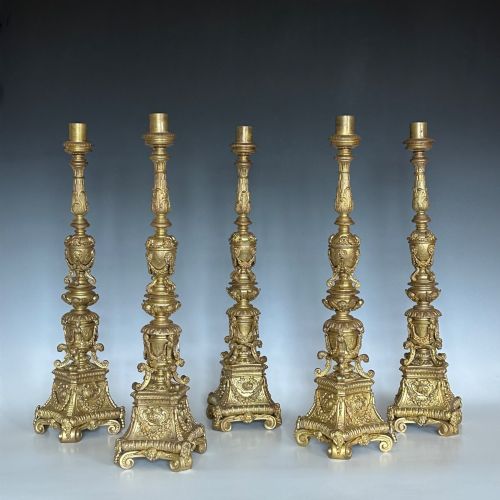
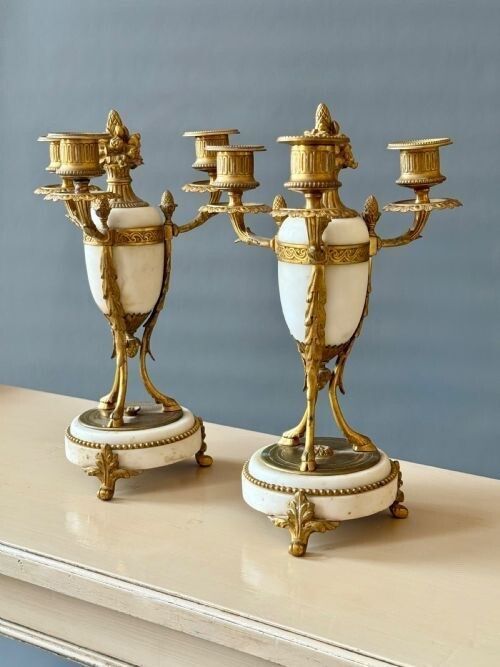
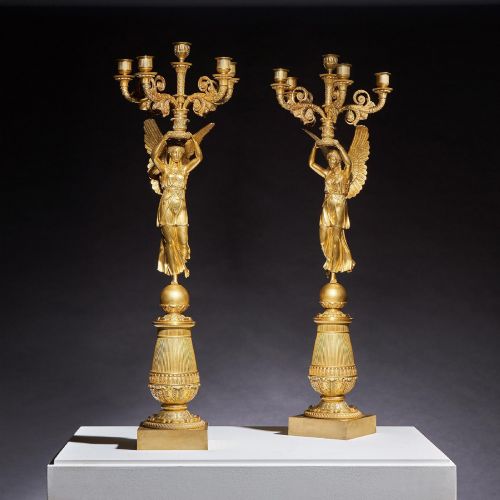
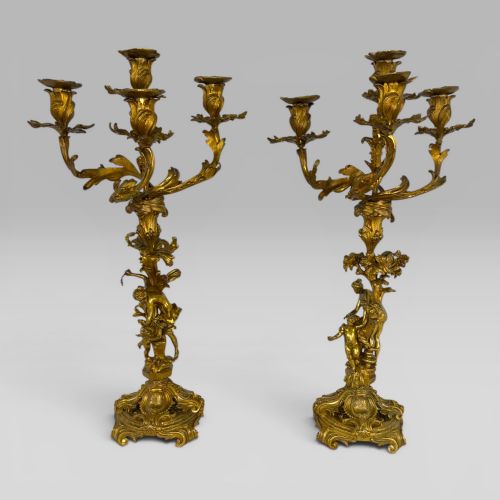
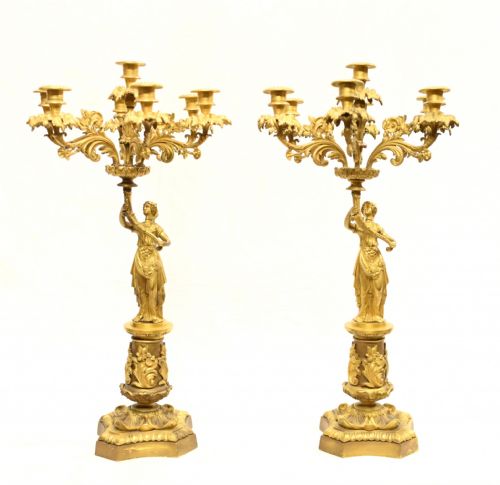


Gold Ormolu Candleholder
A gold ormolu candleholder brings heavy French metalwork and gilt surface into a room to catch the evening light.
Gold Ormolu Candleholder
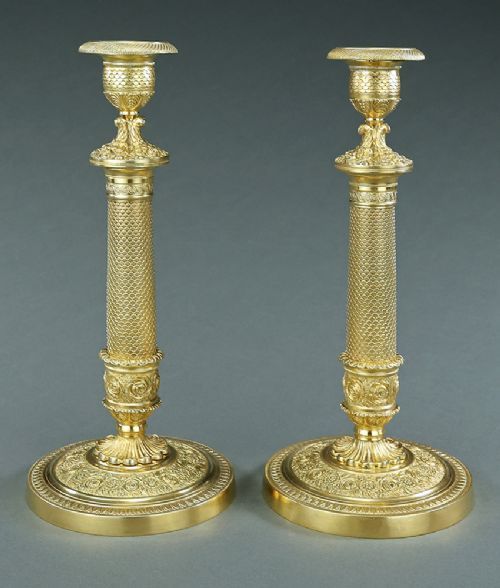
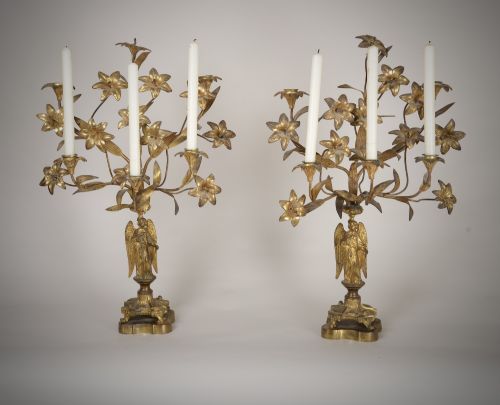
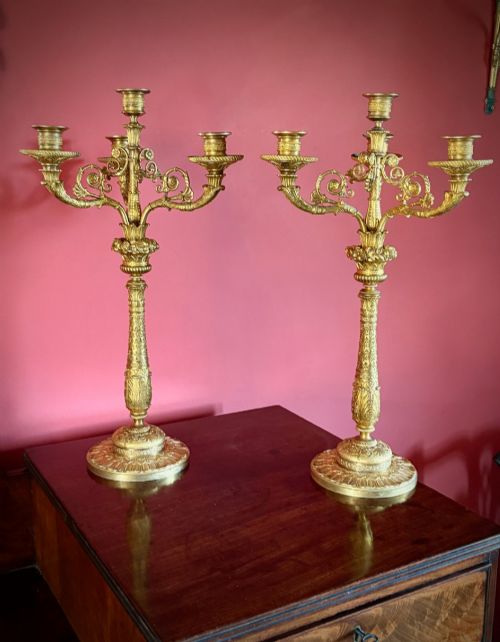
A gold ormolu candleholder search draws together heavy metal lighting, from single candlesticks to multi-arm candelabra and wall sconces. The pieces met here span the eighteenth century through the Victorian era and the Regency period, with a strong showing of nineteenth-century French manufacture.
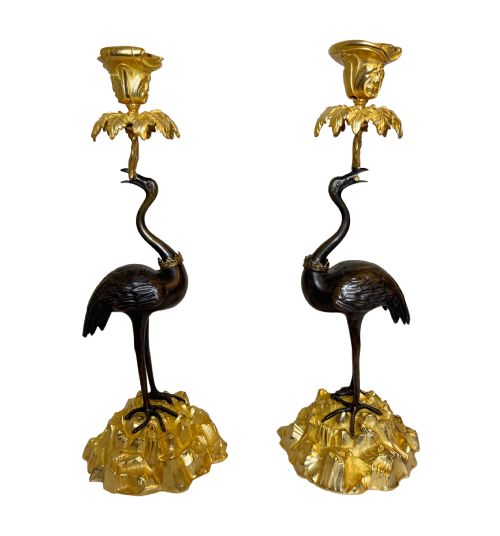
Makers and workshops produced pairs and garnitures incorporating figural motifs, animal subjects, and architectural details. Forms range from simple drum holders to elaborate candelabra carrying cherubs, birds, dolphins, and flamingos.
Stylistic influences divide broadly into French Empire, Louis XVI, Rococo Revival, Neoclassical, and Gothic Revival. Many items combine gilt metal with contrasting bases of white marble or porphyry.
Design and Finish
The integrity of the mercury gilding or fire-gilt surface determines how light plays across the metal. Secondary elements such as marble bases and bronze mounts show greater refinement when joints sit flush and proportions remain balanced.
Materials span gilt bronze, patinated bronze, ormolu, brass, marble, and porphyry across nineteenth-century styles.
Pierre Philippe Thomire·Rabiat·Claude Clodion
The Gold Ormolu Candleholder Glossary
- Ormolu
- A gold-coloured alloy of copper, zinc, or nickel, or the technique of applying finely ground gold-mercury amalgam to bronze. The mercury is driven off by heat, leaving a durable golden coating.
- Candelabra
- A branched lighting fixture designed to hold multiple candles at once. These examples often feature removable arms to convert a multi-light fixture into a single candlestick.
- Patinated bronze
- Bronze that has been treated with chemical solutions to alter its surface colour to dark brown, green, or black. This contrast highlights the brighter gilt elements placed beside it.
- Grand Tour
- A traditional trip through Europe undertaken by upper-class young men in the eighteenth and nineteenth centuries. Souvenirs bought along the way included decorative bronzes and small lighting pieces.
- Porphyry
- An igneous rock with large crystals embedded in a fine-grained groundmass, typically deep purple or red. It appears frequently as a dense, decorative base material for nineteenth-century bronzes.
Gold Ormolu Candleholder: Frequently Asked Questions
What is ormolu?
Ormolu refers to gilded bronze, where a layer of gold is applied to a base metal object using a mercury amalgam process. This technique gives the metal a warm, lasting yellow sheen.
Makers in the eighteenth and nineteenth centuries utilised this finish to decorate lighting and ornamental objects for wealthy interiors.
How do I date a candelabra?
Dating relies on stylistic clues, casting methods, and the combination of materials. Pieces styled in the French Empire or Louis XVI taste often date from revival periods in the nineteenth century rather than the original reigns.
Examining the underside, screw types, and mounting construction helps distinguish nineteenth-century interpretations from earlier work.
What is the difference between a candlestick and a candelabra?
A candlestick holds a single candle in an individual socket. A candelabra carries multiple candle nozzles on branching arms extending from a central stem.
Many period pieces were constructed with removable branches so owners could use them in either configuration.
How should I clean gilt bronze?
Dusting gently with a soft, dry brush is the safest way to maintain the surface. Moisture and chemical cleaners can strip the delicate gold layer or damage the underlying patination.
Professional conservation is recommended if heavy grime obscures the detail of the chased metal.