



Gold Openwork Pendant Necklace
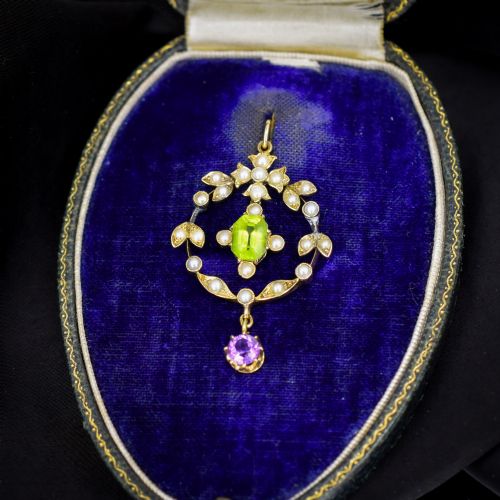
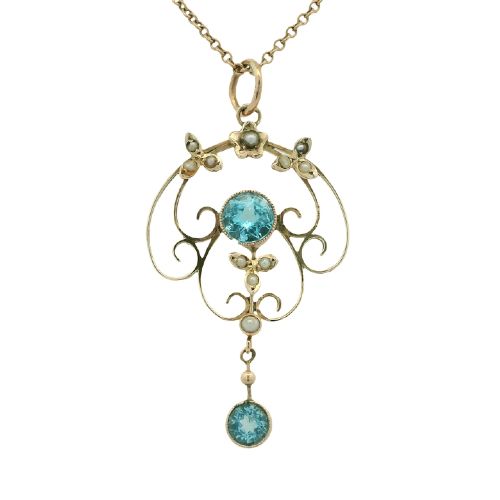
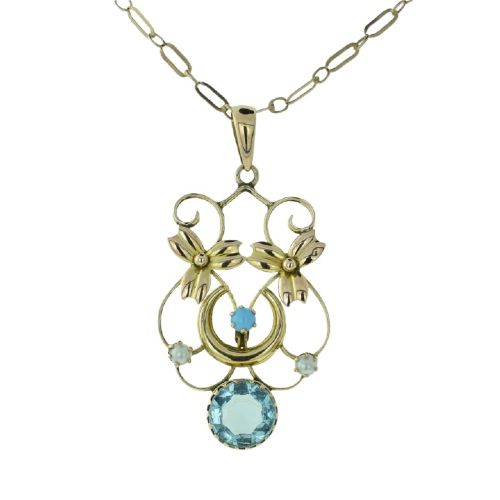
A gold openwork pendant necklace brings together intricate wirework and precious stones, offering a delicate piece of wearable history.
Gold Openwork Pendant Necklace
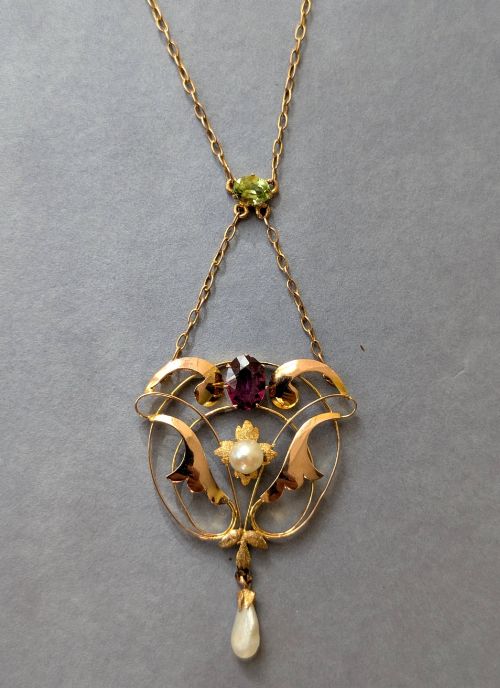
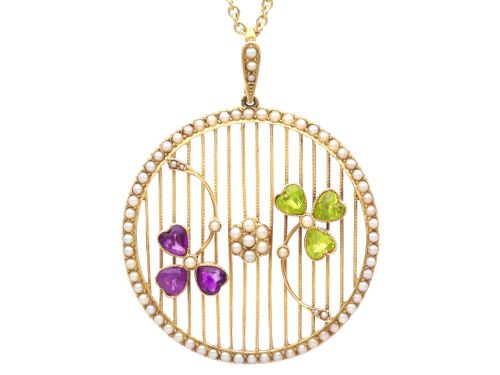
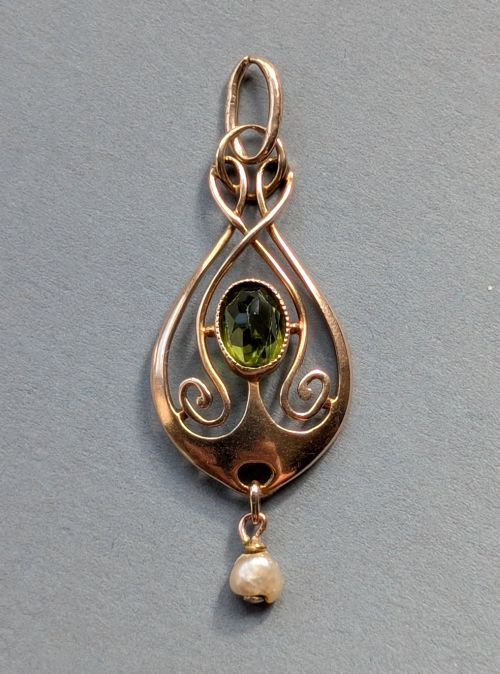
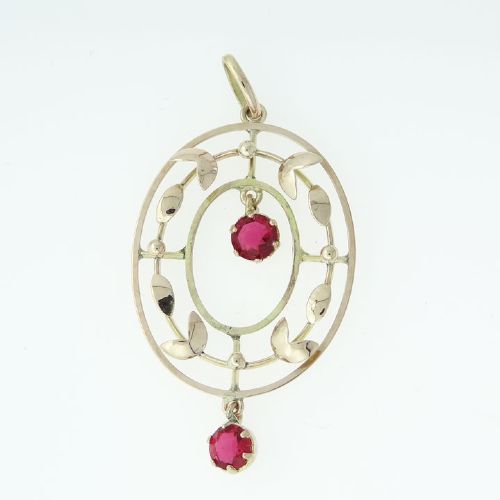
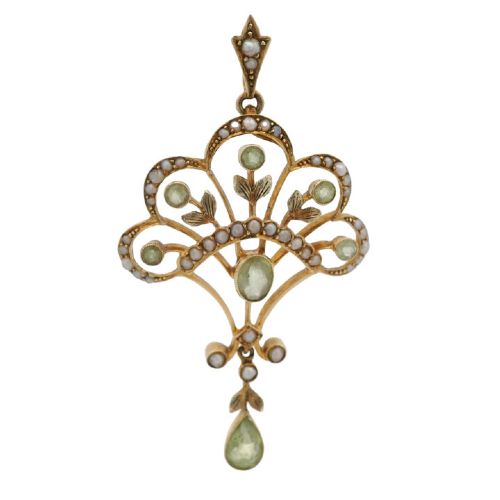
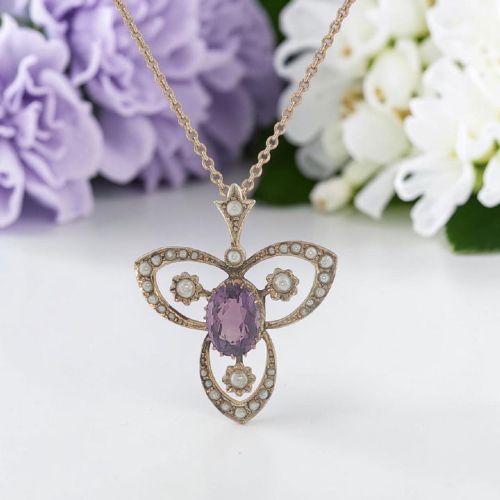
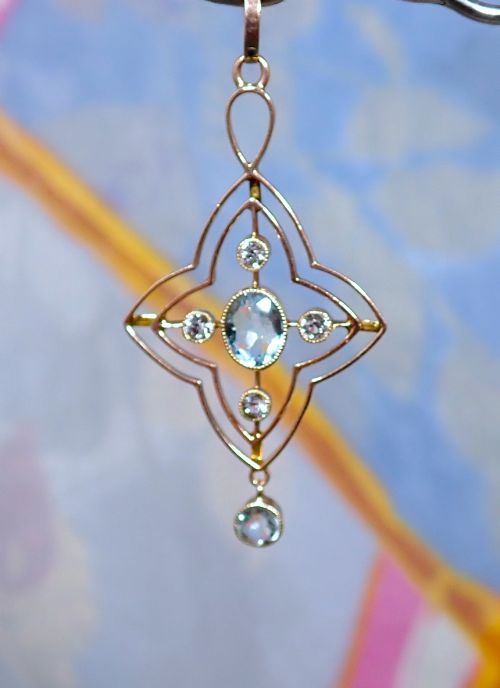
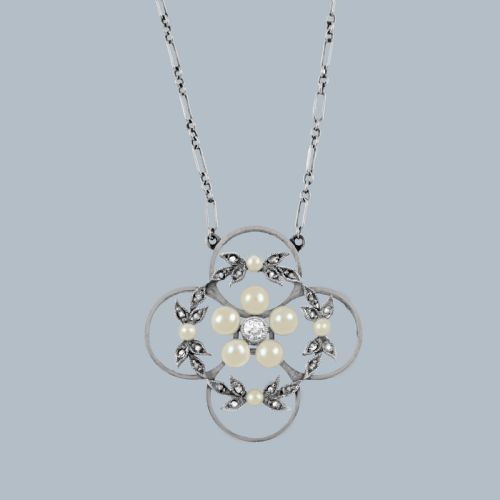
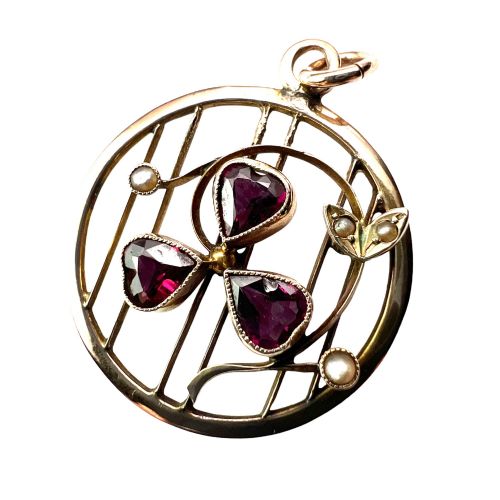
The drops and pendants often incorporate natural stones like peridot, amethyst, aquamarine and seed pearls set within frames of nine-carat or fifteen-carat gold. These pieces hang from matching chains or lavalier drops, shifting focus to the negative space and geometric or floral motifs built into the structure.
Originating largely from the late nineteenth and early twentieth centuries, these necklaces showcase distinct stylistic periods from late Victorian through to the nineteen-thirties and beyond. The combination of delicate open gold wire with centred gemstones defines the core of what you see listed here.
Materials and construction
Goldsmiths utilised nine-carat and fifteen-carat yellow and rose gold, occasionally incorporating platinum or silver gilt to mount the components. Piercing and soldering formed the intricate open frames, while delicate claws and bezels secured the seed pearls, garnets and topazes.
The incorporation of seed pearls required fine drilling and wire-threading techniques to cluster them around central aquamarines or amethysts. Artisans balanced structural rigidity with visual lightness, ensuring the pierced gold lattices could support the weight of the suspended stones.
Gold Openwork Pendant Necklace Retail Price Guide 2026
Typical asking prices for gold openwork pendant necklace among the pieces listed under this phrase on Sellingantiques today, from the lower quarter to the upper quarter. They describe what is for sale here now, not the wider market.
Distinctions in quality
The refinement of the piercing work distinguishes finer examples, where the pierced metal flows cleanly without harsh tool marks or uneven soldered joints. Superior pieces maintain crisp symmetry in their floral or geometric openwork, demonstrating high technical skill from the jeweller.
Stone selection and matching also drive the tier of the piece, with well-matched seed pearls and deeply saturated peridots or amethysts elevating the overall composition. The weight and purity of the gold, moving from nine-carat up to fifteen-carat or eighteen-carat, further separates standard production from exceptional works.
S. Blanckensee & Son·Artificers Guild
The Gold Openwork Pendant Necklace Glossary
- Openwork
- Metalwork pierced or cut away to create a pattern of holes and solid areas. This technique reduces weight and lets light pass through the design.
- Lavalier
- A pendant featuring a primary gemstone suspended from a smaller stone or a short drop chain. It gained widespread popularity during the Edwardian period.
- Seed pearl
- A very small, naturally formed or cultured pearl used in clusters or borders. They are frequently drilled and threaded onto fine wire within antique pendants.
- Cabochon
- A gemstone shaped and polished with a smooth, rounded surface rather than faceted. This cut highlights the inner colour and glow of stones like garnets.
- Suffragette jewellery
- Pieces incorporating green, white and violet stones representing the women's suffrage movement. Amethyst, peridot and pearl combinations are typical examples.
Gold Openwork Pendant Necklace: Frequently Asked Questions
What is a gold openwork pendant necklace?
A gold openwork pendant necklace is an antique piece featuring pierced or wire-formed metalwork, often set with gemstones and seed pearls.
These necklaces showcase styles from the Victorian, Edwardian and Art Nouveau eras, hanging on delicate gold chains.
How do I wear an antique pendant necklace?
These necklaces suit contemporary necklines easily, resting comfortably against fabrics that let the open metalwork stand out.
Because the gold and stone settings are delicate, it pays to put the necklace on after dressing to avoid catching the chain on clothing.
How can I tell an Edwardian pendant from a Victorian one?
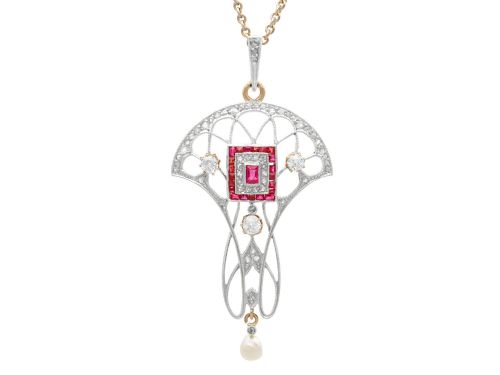
Edwardian pieces tend to use platinum or higher carat gold with lighter, airier openwork motifs like garlands and ribbons. Victorian pieces often feel heavier, incorporating rose gold and bolder coloured stones such as garnets and amethysts.
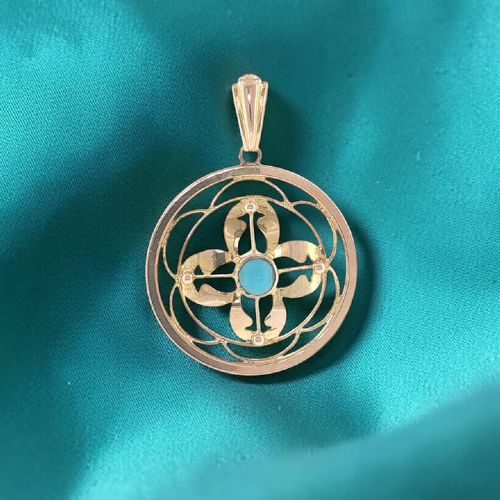
Examining the back of the pendant and the style of the stone setting helps clarify the manufacturing period.
Were these necklaces worn every day?
In their original eras, women wore fine gold pendants for social calls, dinners and daytime gatherings. The lighter weight of nine-carat and fifteen-carat gold made them comfortable for prolonged wear.
Today, owners reserve them for special occasions to protect the delicate seed pearls and intricate wire framing from daily wear and tear.