


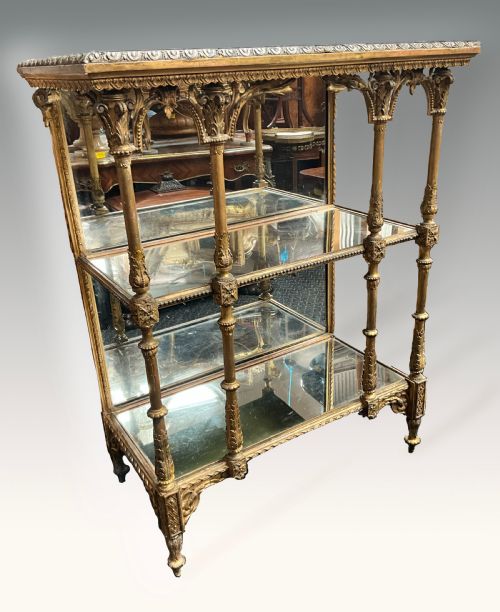


Gold Mirrored Shelves
Gold mirrored shelves combine functional display surfaces with reflective glass, bringing warmth and light into a room through gilded woodwork and brass details.
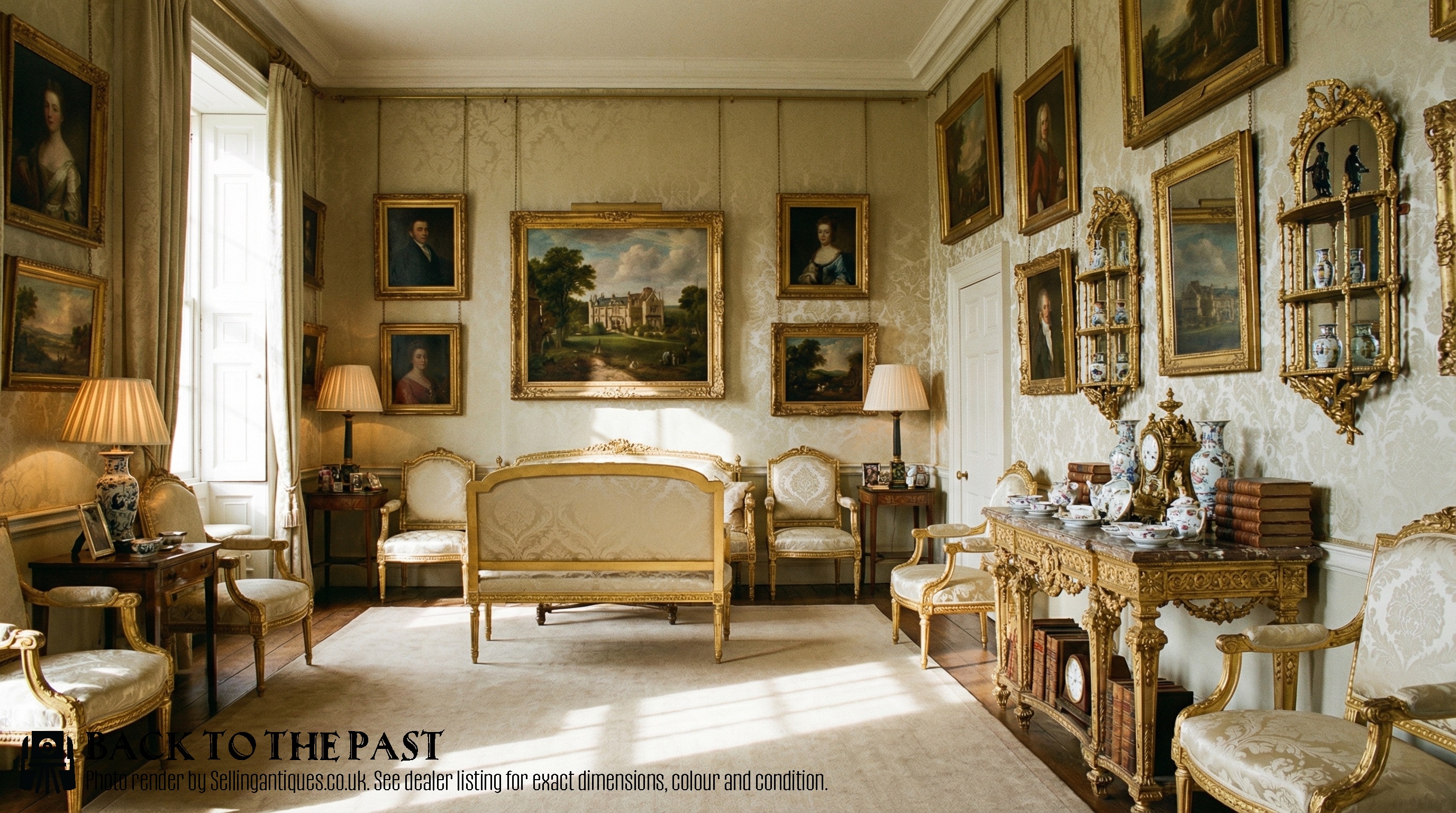
Gold Mirrored Shelves
When searching for gold mirrored shelves, buyers encounter wall-mounted display units, étagères, and overmantel mirrors fitted with integrated brackets or ledges. These pieces serve both decorative and practical roles, holding small objects while reflecting interior spaces.
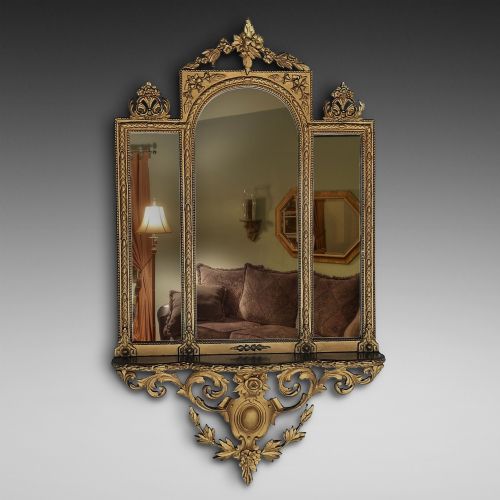
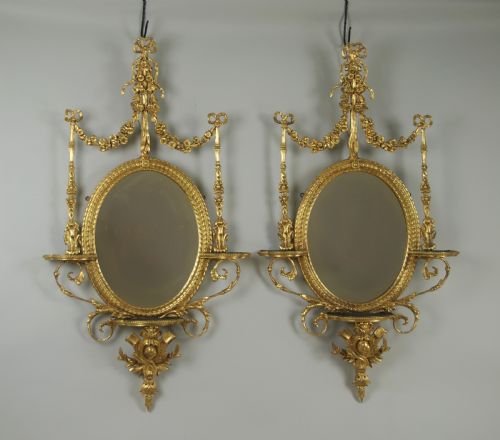
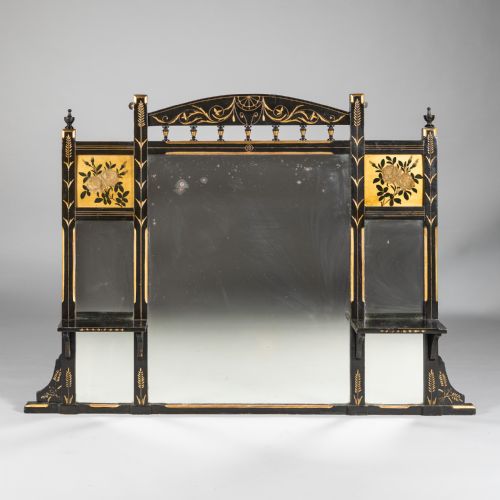
The selections on this page draw predominantly from the Victorian era and the nineteenth century, alongside later French Rococo Revival and Edwardian examples. Forms range from ebonised and parcel-gilt overmantels with built-in shelves to ornate giltwood pier glasses and bracket mirrors.
Makers utilised various formats, including pairs of oval wall mirrors with display brackets and console mirrors featuring a shelf underneath. The integration of mirror glass with structural ledges defines this category, merging surface reflection with tangible display space.
Materials and Construction
Craftsmen built the structural frames using timber such as painted wood and ebonised wood, applying gesso to form intricate decorative reliefs. Artisans then laid gold leaf over these prepared surfaces to achieve a rich gilded finish.
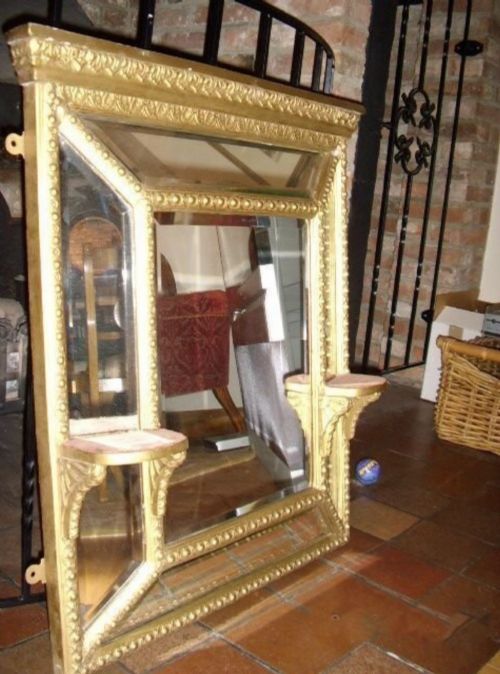
Mirror glass plates, sometimes bevel-cut, were fitted securely into the rebated frames alongside sturdy wooden or brass display brackets. The combination of heavy giltwood or gesso mouldings provided the necessary strength to support small decorative objects on the integrated shelves.
The listings span from the mid-nineteenth century through the Edwardian period, utilising glass, giltwood, gesso, and brass across various revival styles.
Assessing Quality and Execution
Quality in these pieces rests upon the crispness of the gesso mouldings and the purity of the gilding applied to the wooden frames. Finer examples display hand-carved details and well-balanced proportions between the mirror plate and the attached display shelves.
The integration of the shelf brackets reveals the maker's joinery skill, with superior pieces maintaining structural integrity without compromising the delicate decorative vocabulary of styles like French Rococo Revival or the Aesthetic Movement.
Strahan of Dublin
The Gold Mirrored Shelves Glossary
- Giltwood
- Timber that has been decorated with gold leaf. This material forms the primary structure of many nineteenth-century frames and shelves.
- Gesso
- A plaster-like mixture applied to wood surfaces and carved before gilding. It allows for elaborate relief decoration on mirror frames and brackets.
- Overmantel Mirror
- A large looking glass designed to hang above a fireplace mantel. Many versions incorporate small display shelves or gilded brackets.
- Étagère
- A piece of furniture consisting of a set of open shelves for displaying small objects. In this category, they often incorporate mirror glass into the back panel.
- Pier Glass
- A tall mirror designed to hang on the pier or wall space between windows. These frequently feature console tables or integrated shelves underneath.
- Parcel-Gilt
- Woodwork where only specific carved details are gilded while the rest of the surface remains ebonised or painted.
Gold Mirrored Shelves: Frequently Asked Questions
What are gold mirrored shelves?
These pieces are decorative wall fixtures that combine a looking glass with integrated ledges or brackets for display. They range from overmantel mirrors with built-in shelves to dedicated wall étagères.
Originating largely in the nineteenth century, they utilise reflective glass to brighten rooms while providing a surface to showcase small ornaments.
How were they used historically?
In period interiors, these units hung above fireplaces, on pier walls, or in reception rooms to maximise ambient light. The attached shelves held porcelain, figurines, or small trinkets.
By combining mirrors and display surfaces in a single wall-mounted fixture, interiors gained both decorative depth and practical utility.
How do I style them at home?
Mount these pieces securely to wall studs, considering the substantial weight of the timber and mirror glass. Position them to reflect natural light sources or key focal points in the room.
Keep the items placed on the integrated shelves minimal to let the carved giltwood and mirror plate remain the primary visual focus.
How do I identify Victorian examples?
Victorian pieces often feature deep giltwood mouldings, gesso ornamentation, or ebonised surfaces with parcel-gilt highlights. Stylistic markers include Aesthetic Movement clean lines and heavy Rococo Revival curves.
Examining the reverse of the wooden frame and the characteristics of the mirror glass helps confirm nineteenth-century production methods.