


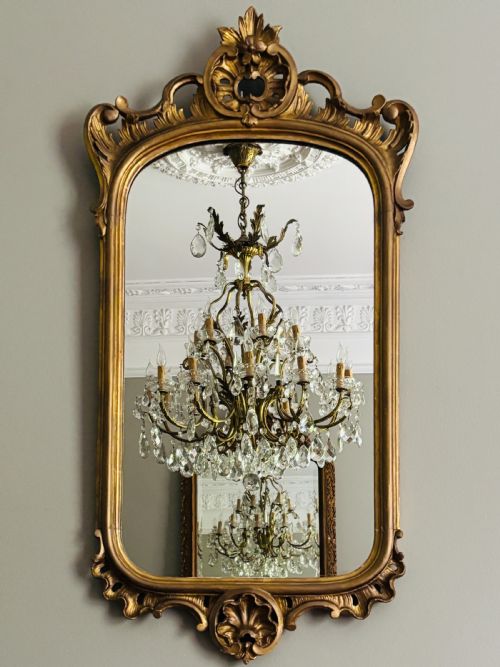
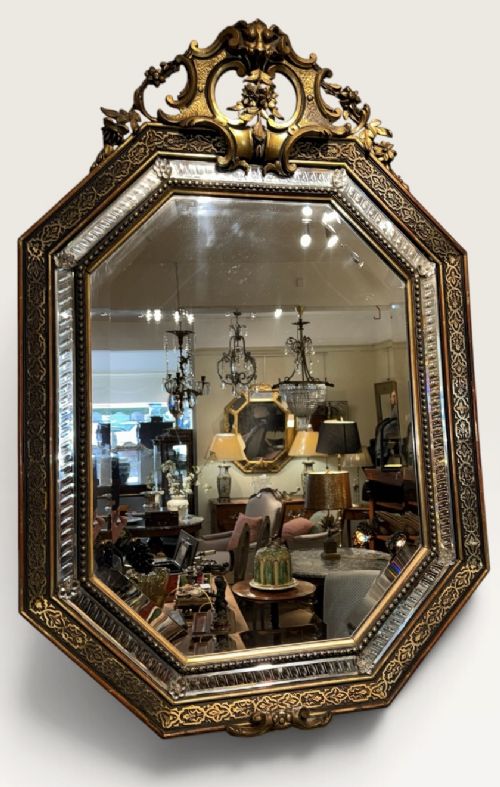
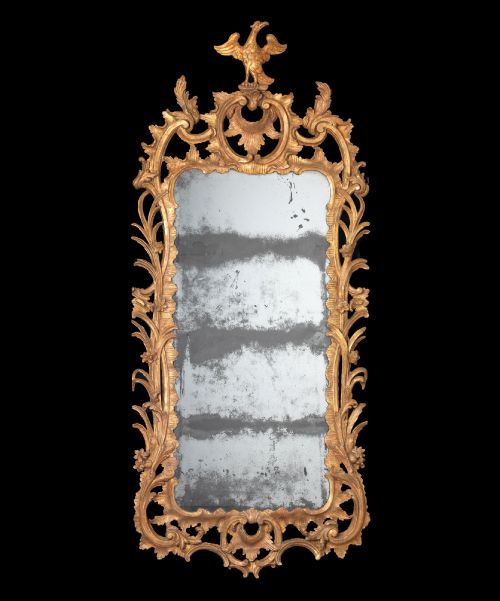
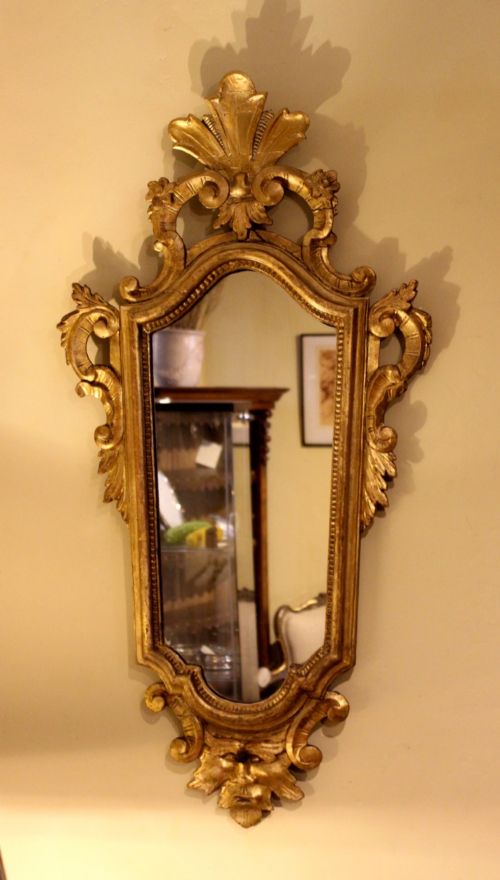
Gold Mirror with Crest
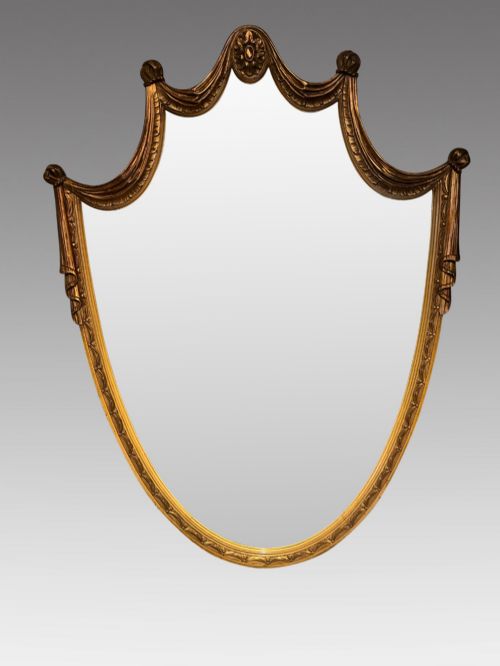
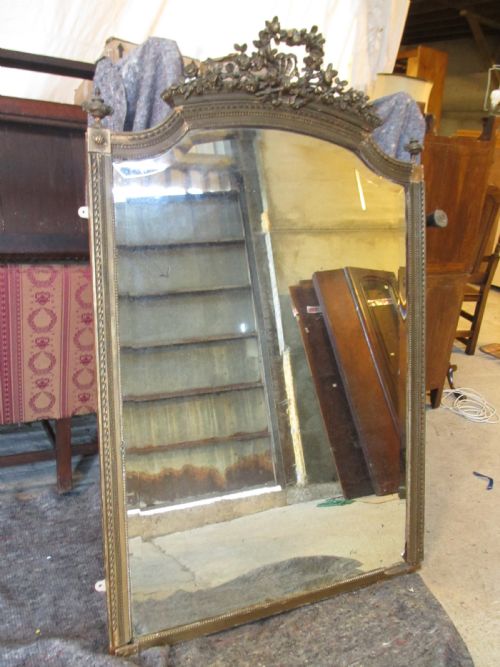
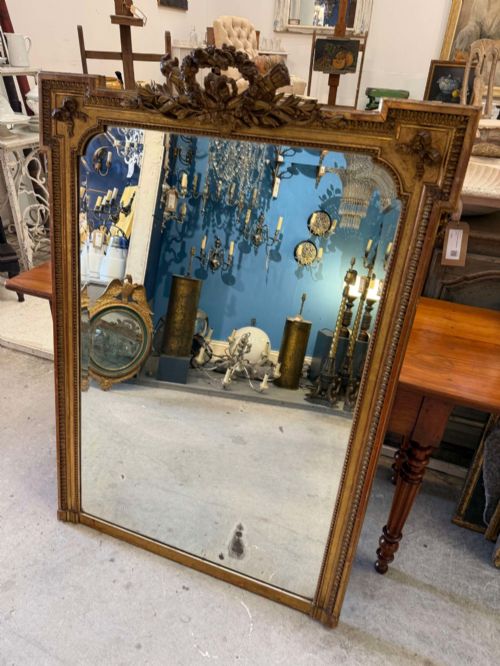
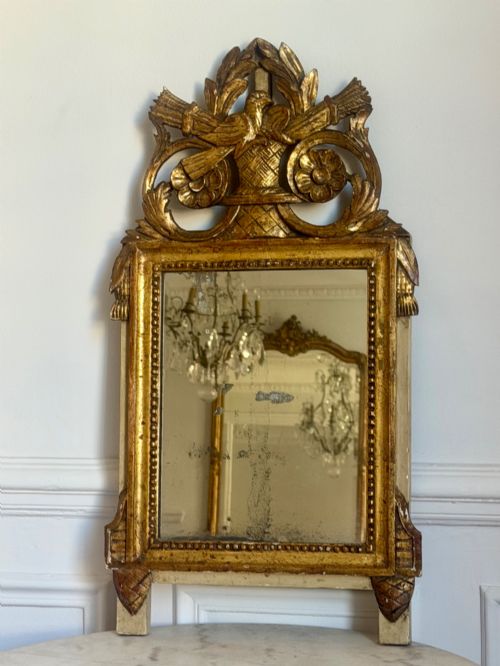
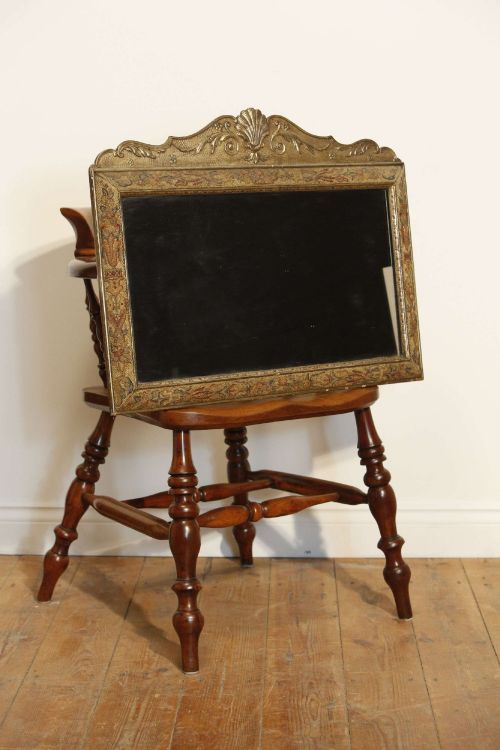
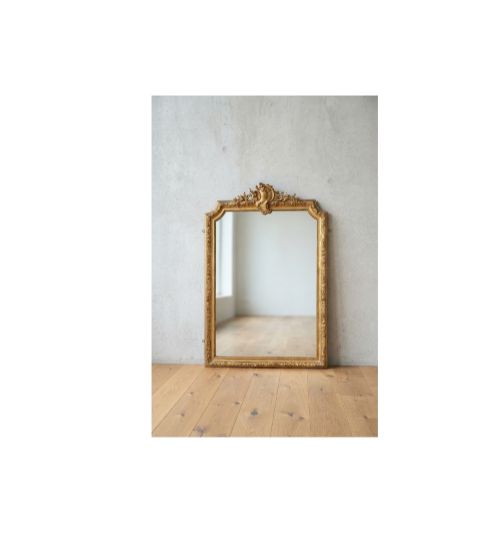
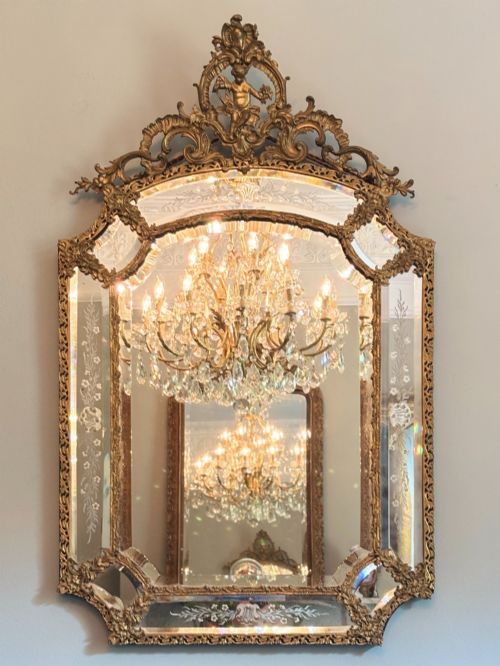
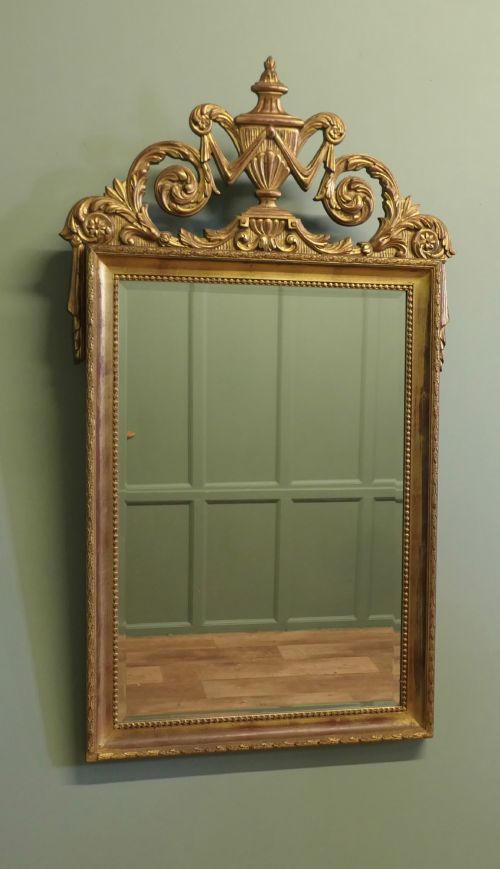
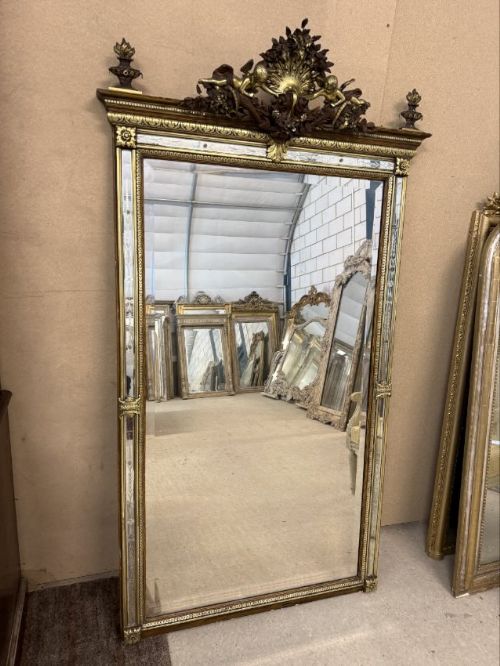
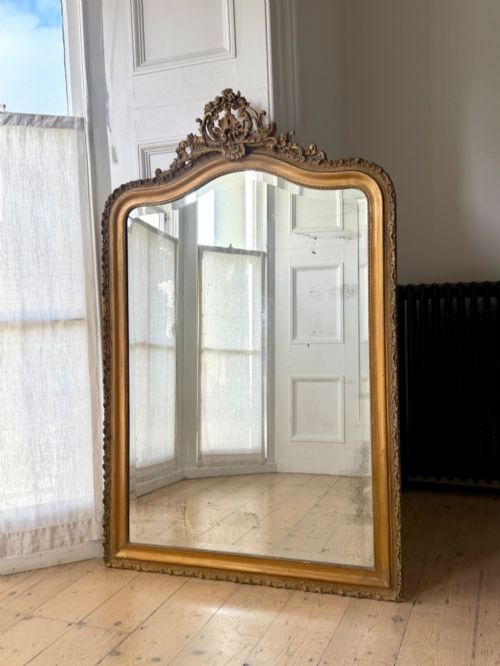
A gold mirror with crest brings classical presence into a room, offering striking ornament and focused light through sculptural woodwork and carved crestings.
Gold Mirror with Crest
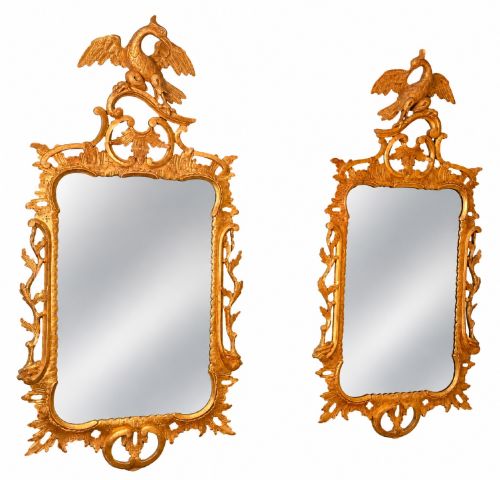
A gold mirror with crest combines gilded surfaces with elaborate ornamental top pieces, ranging from classical birds to architectural cartouches. These pieces function primarily as wall mirrors, overmantels, or convex mirrors designed to command attention in a room.
The selection here draws predominantly from nineteenth-century Victorian and Regency periods, alongside eighteenth-century examples and French revival styles. Forms vary widely from circular convex glasses with eagle surmounts to tall rectangular overmantels and oval wall mirrors.
Buyers encounter regional variations such as French Louis XV style rococo frames, Belle Epoque pieces, and English Regency gesso works. Each variant employs specific crest motifs, from shell designs and putti to heraldic animals and foliate scrolls.
Materials and construction
Makers built these frames using timber cores of wood or ebonised wood, overlaid with gesso and composition ornaments to create sharp relief details. Artisans applied thin layers of gold leaf or gilt finishes over these prepared surfaces to achieve a brilliant metallic sheen.
Gilt bronze and pressed brass appear in French and Victorian examples, while mirror glass units include original bevelled plates and convex glass forms. Structural joinery supports substantial overmantel and wall formats, integrating carved crests directly into the upper frame.
Gold Mirror with Crest Retail Price Guide 2026
Typical asking prices for gold mirror with crest among the pieces listed under this phrase on Sellingantiques today, from the lower quarter to the upper quarter. They describe what is for sale here now, not the wider market.
Several mirrors feature watchful winged creatures peering down from the top, including eagles, greyhounds, lions, and mythical Ho-ho birds.
Distinctions in quality
Quality rests in the crispness of the carved or moulded cresting, where hand-carved elements display sharper definition than mass-produced composition ornament. The depth and integrity of the original gilding reveal the skill applied during initial manufacture and subsequent preservation.
The retention of original mirror glass, whether flat bevelled plates or convex surfaces, elevates a piece above those with modern replacements. Structural harmony between the primary frame and the applied cresting dictates the overall visual success of the object.
The Gold Mirror with Crest Glossary
- Gesso
- A plaster-like mixture applied to wood frames to create a smooth surface for gilding or deep relief moulding.
- Giltwood
- Timber that has been coated with gold leaf. It forms the primary bright surface of traditional decorative frames.
- Convex mirror
- A round mirror with an outward-curving glass surface that offers a wide-angle reflection of the interior.
- Overmantel mirror
- A large horizontal mirror designed to sit directly above a fireplace mantelpiece.
Gold Mirror with Crest: Frequently Asked Questions
Where should I hang a mirror with a crest?
These pieces suit positions above mantelpieces, console tables, or principal reception room walls where their height and ornament draw the eye.
Ensure adequate wall fixings support the weight, particularly for large overmantel and giltwood formats.
How do I identify a Regency period mirror?
Regency pieces often feature convex glass, ebonised details, or prominent bird crests like eagles and Ho-ho birds within a giltwood frame.
Construction methods and material use from the early nineteenth century help distinguish these from later Victorian revivals.
What is composition ornament?
Composition, or compo, is a mouldable mixture of whiting, resin, glue and linseed oil pressed into decorative relief shapes.
Makers applied these mouldings over wooden frames before gilding to achieve elaborate crests and borders efficiently.
Are the mirror plates original?
Many older pieces retain their original mirror glass, which may show light foxing, minor silvering loss, or heavier bevelled edges.
Original plates contribute historical authenticity to eighteenth and nineteenth-century examples.