

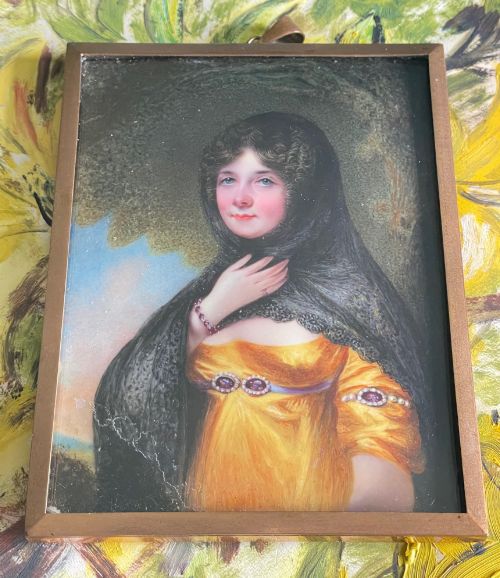
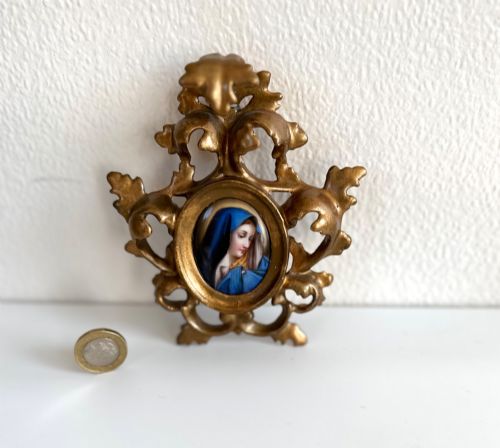
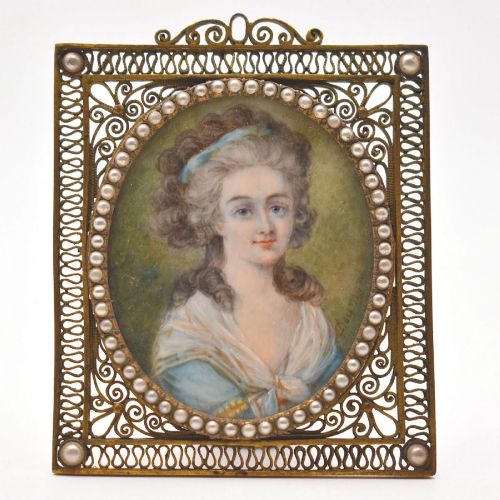


Gold Metal Framed Miniature
These gold metal framed miniature pieces capture meticulous portraits and frames in gilt bronze, brass, and gilt metal.
Gold Metal Framed Miniature
A gold metal framed miniature brings together small-scale portrait paintings and delicate picture frames spanning the eighteenth and nineteenth centuries. You encounter portrait miniatures executed in watercolour, enamel, and oil alongside gilt bronze and brass picture frames.
The selections on this page range from Georgian and Regency works to Victorian revival styles. Portrait subjects include named sitters, noblemen, and ladies, often housed within oval or standing metal enclosures.
French Rococo and Victorian aesthetics heavily influence the decorative metalwork surrounding these tiny paintings. Buyers find both standalone picture frames and complete miniature portraits ready for display.
How they were made
Artists painted these miniature portraits on paper, enamel, and card using watercolour, gouache, and oil. Detail work required immense precision, capturing lace, facial expressions, and coral beads on a tiny scale.
Frames and stands utilise cast gilt bronze, brass, and gilt metal, sometimes incorporating seed pearls and glass. These metal housings were shaped into oval profiles or fitted with stands to support the paintings.
Gold Metal Framed Miniature Retail Price Guide 2026
Typical asking prices for gold metal framed miniature among the pieces listed under this phrase on Sellingantiques today, from the lower quarter to the upper quarter. They describe what is for sale here now, not the wider market.
Listings span the 18th century, Regency period, and Victorian era, utilising watercolour, enamel, oil, glass, and gilt bronze.
What varies in quality
The refinement of the brushwork dictates the standard of the portrait, separating hurried decorative sketches from the precise execution of named painters. Finer examples capture complex textures like lace and fabric with absolute clarity.
Metal framing quality depends on the crispness of the casting in the gilt bronze or brass, alongside the preservation of the original gilding. Well-preserved frames retain sharp decorative relief and secure glass coverings.
Horace Hone·Dumont·William Naish·Emma Kendrick·Henry Jacob Burch·Diana Hill
The Gold Metal Framed Miniature Glossary
- Gilt bronze
- Copper alloy finished with a thin layer of gold, providing a durable and decorative surface for frames. This material appears frequently in nineteenth-century French and English metalwork.
- Gouache
- An opaque water-based paint used by miniature artists to achieve solid areas of colour and dense highlights. It often appears combined with watercolour on paper.
- Portrait miniature
- A small-scale painting depicting a specific person, popular before the widespread adoption of photography. These works were frequently encased in metal frames with glass fronts.
- Seed pearl
- Very small natural pearls used to decorate the borders of fine frames and jewellery. Their presence usually indicates a piece of higher social standing.
Gold Metal Framed Miniature: Frequently Asked Questions
What are gold metal framed miniatures?
They are small historical artworks, typically portraits painted on paper or enamel, housed in protective metal frames made of brass, gilt bronze, or gilt metal.
These pieces date from the eighteenth and nineteenth centuries, reflecting Georgian, Regency, and Victorian aesthetics.
How were these miniatures displayed?
Owners displayed them on tabletops using small gilt metal stands or hung them directly on walls within decorative picture frames.
Many were also kept as personal mementos or carried in pockets during travel.
How do I date a miniature?
Dating relies on the costume and hairstyle of the sitter, the painting technique, and the stylistic cues of the surrounding metal frame.
Georgian and Regency works often feature distinct clothing styles compared to later Victorian revivals.
Are the frames original to the paintings?
Many pieces retain their original gilt bronze, brass, or gilt metal frames, which were specifically chosen or made to house the artwork.
Examining how the miniature fits within the metal housing helps confirm its period context.