




Gold Marble Table Clock
A gold marble table clock brings heavy stone and bright metal together on a surface, offering both precise time and grand continental style.
Gold Marble Table Clock
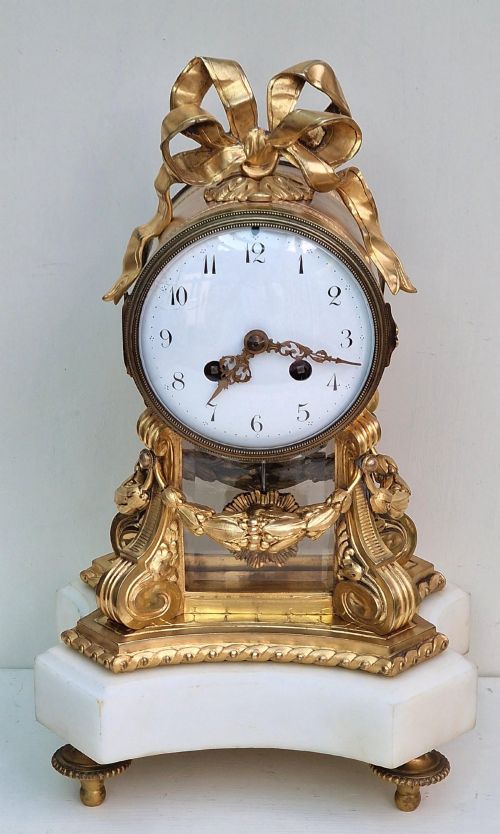
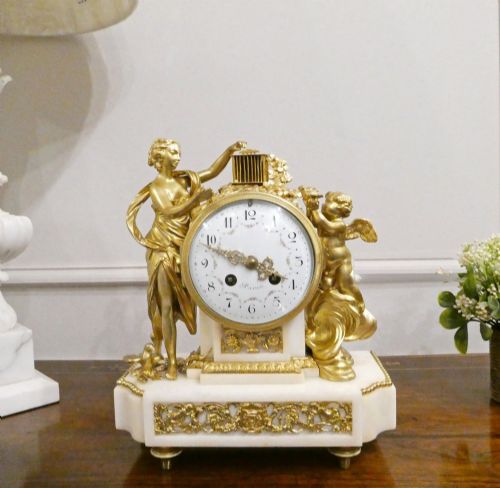
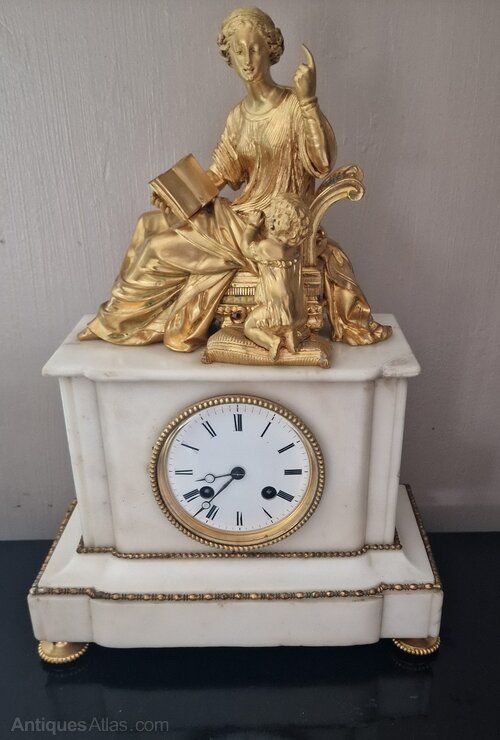
A gold marble table clock is a timepiece set in a substantial stone body, most commonly white marble or variegated marble, paired with gilt bronze, ormolu, or gilt metal. These pieces emerge predominantly from the nineteenth century, including Victorian examples and earlier eighteenth-century works, drawing heavily on French design vocabulary.
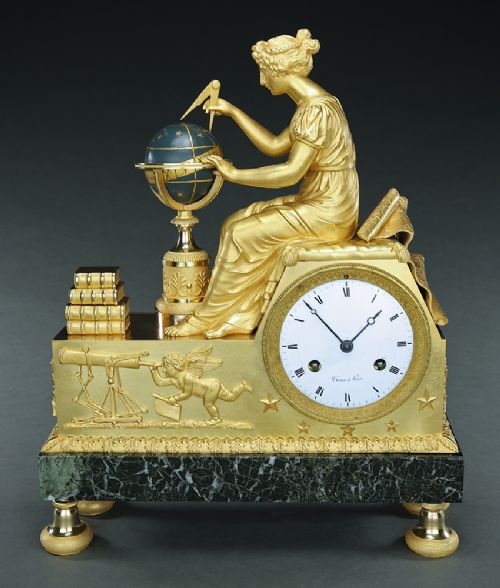
The forms span straightforward mantel clocks and desk clocks to elaborate portico clocks and clock garnitures featuring figural elements like cherubs, classical figures, or astronomical motifs. Many pieces adhere to Louis XVI, French Empire, or classical styles, reflecting grand interior decoration schemes from continental workshops and London makers alike.
How they were made
The physical structure relies on solid blocks of marble, sometimes inlaid, shaped to support heavy mechanical movements driven by eight-day striking trains or fusee mechanisms. Enamel dials display the numerals, protected behind glass bezels.
Metal components utilise cast bronze, brass, or gilt metal finished with mercury gilding or ormolu techniques to achieve a bright gold appearance. Foundries and makers cast these metal mounts separately before pinning or screwing them securely to the marble bases.
Listings feature marble and gilt bronze table clocks spanning the eighteenth century through the Victorian era, heavily centred on French neoclassical designs.
What varies in quality
Quality rests heavily on the crispness of the bronze casting and the depth of the original gilding. Finer pieces show sharp hand-chased details in the ormolu mounts, whereas lesser examples present softer, shallower cast work.
The selection of the marble itself creates a division, with heavy, flawless white Carrera marble or richly variegated stands commanding more visual presence than plain stone. The reputation of the maker, such as Japy Freres or Charpentier, also elevates the standing of the work.
Japy Freres·Berger Paris·Louis Goret·William Hardy London·Charpentier Foundry·Thos Agnew and Sons·Gillion
The Gold Marble Table Clock Glossary
- Ormolu
- Gilt bronze, created by applying an amalgam of gold and mercury to a bronze object and heating it to drive off the mercury. This technique leaves a durable, rich golden surface characteristic of fine French clocks.
- Portico clock
- A mantel clock designed with architectural columns supporting the movement housing, resembling a miniature classical portico. These pieces often incorporate marble bases and gilt metal details.
- Garniture
- A set consisting of a central clock flanked by matching decorative objects, such as candelabra or urns, designed to sit together on a mantelpiece. They share identical materials like marble and gilt bronze.
- Fusee
- A conical pulley used in clock movements to maintain even force on the gear train as the mainspring unwinds. This mechanism improves the timekeeping accuracy of the timepiece.
- Enamel
- A glassy substance fused to a metal dial substrate through high-temperature firing, used to provide a smooth, durable white surface for painted clock numerals.
Gold Marble Table Clock: Frequently Asked Questions
Where should I place a gold marble table clock?
These heavy timepieces suit a sturdy mantelpiece, a large desk, or a solid side table where their considerable weight is safely supported. Ensure the surface is level so the pendulum swings evenly.
Keep them away from direct sunlight and damp walls to protect the delicate enamel dials and the gilt metal finishes.
How do I tell a Louis XVI style clock from an Empire piece?
Louis XVI style gold marble table clocks lean towards lighter classical symmetry, straight columns, and delicate floral or ribbon motifs in the ormolu mounts. They emphasise restraint and neoclassical elegance.
Empire clocks, by contrast, display heavier military, astronomical, or Egyptian Revival themes, reflecting the grandeur of the early nineteenth-century continental aesthetic.
Do these clocks chime the hours?
Many of these pieces feature eight-day striking movements that sound the hours and half-hours on a bell or gong. The inclusion of a striking train is typical of high-quality nineteenth-century production.
Some simpler desk timepieces, however, operate without striking mechanisms and only record the passing hours.