
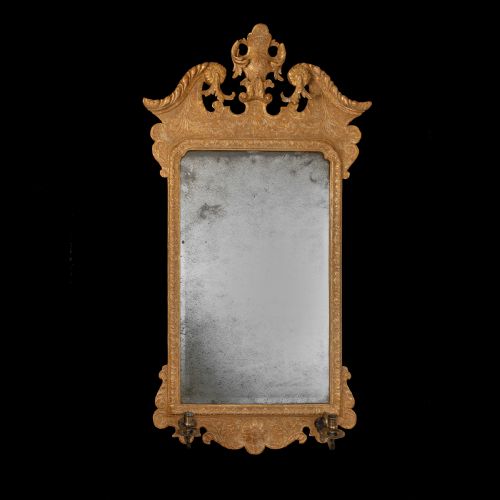

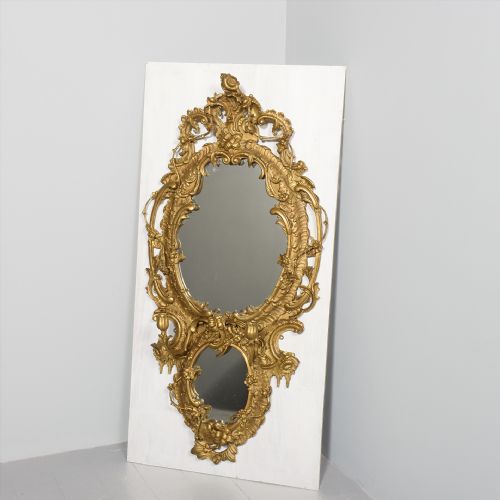


Gold Leaf Sconce Mirror
These gold leaf sconce mirror pieces combine reflective glass with candle arms to throw warm light across a room.
Gold Leaf Sconce Mirror
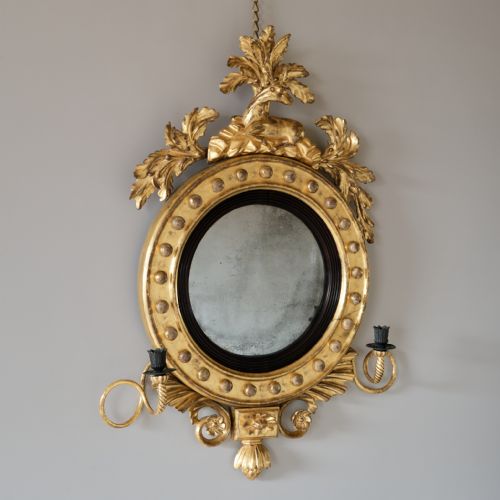
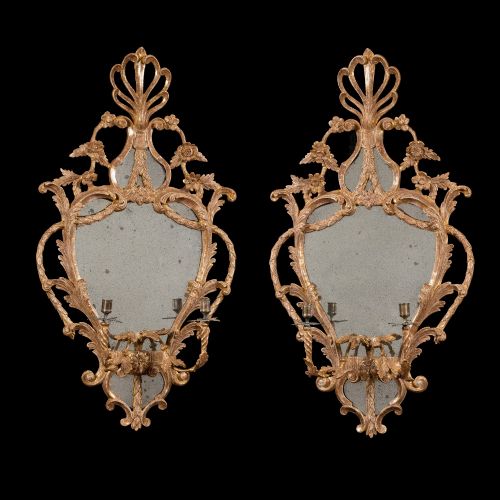
A gold leaf sconce mirror brings together functional reflection and ambient candle lighting on a wall. When searching for a gold leaf sconce mirror, buyers encounter various forms including girandoles, convex glasses, and pier mirrors.
The pieces span periods from the 18th century through the Victorian era and the 1920s. Regency and 18th-century examples appear frequently alongside Victorian and early 20th-century revivals.
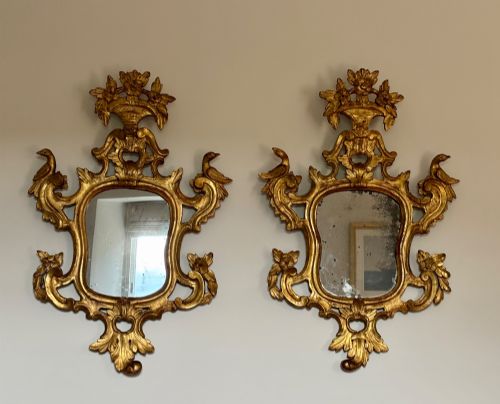
Styles range from Rococo Revival and Neoclassical to Florentine, Italian, and Venetian Rococo. Object types include wall mirrors, wall sconces, and wall display shelves with mirrored backs.
Materials and construction
Carved wood provides the structural base for many pieces, finished with layers of gesso to create smooth surfaces for gilding. Artisans apply thin sheets of gold leaf or giltwood over the prepared ground.
Glass plates and mirror glass form the reflective centres, occasionally paired with brass or other metal components for the sconce arms. Carved details define the frames in styles from Georgian through to Rococo Revival.
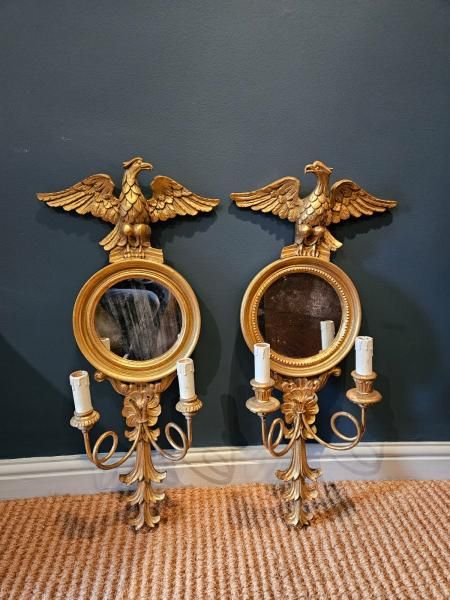
Some convex mirrors feature small eagles perched atop the frame, watching over the room with motionless Victorian vigilance.
Assessing quality and craftsmanship
The depth and crispness of the carved detail distinguish finer frames from simpler ones. Hand-applied gilding shows subtle variations in texture that contrast with flat, uniform modern finishes.
The integration of the sconce arms with the frame structure reveals the maker's skill. Original mirror glass plates often display age characteristics such as foxing and light oxidation that indicate period authenticity.
The Gold Leaf Sconce Mirror Glossary
- Girandole
- A wall mirror featuring attached candle sconces designed to reflect candlelight into the room. These pieces often incorporate elaborate carved frames.
- Giltwood
- Timber coated with a thin layer of gold leaf or gold paint for a decorative metallic finish. This material characterises the majority of traditional frames.
- Gesso
- A plaster-like mixture applied to wood frames to create a smooth base for gilding and carving. It allows artisans to shape intricate relief ornamentation.
- Convex mirror
- A round mirror with a curving outward glass surface that provides a wide-angle reflection of the interior. Regency examples frequently utilise this form.
- Pier mirror
- A tall mirror designed to hang on the wall space between windows. These pieces often match the proportions of the surrounding architecture.
Gold Leaf Sconce Mirror: Frequently Asked Questions
How do I hang a heavy giltwood mirror?
These frames require secure wall anchors suited to their substantial weight. Professional fixings distributed across multiple points ensure safe installation on plaster or masonry.
Position the piece at eye level to maximise both the reflection and the distribution of light from the attached sconces.
What is a girandole mirror?
A girandole combines a reflective glass plate with integrated candle holders projecting from the frame. This design multiplies the illumination from candles in darker rooms.
Such pieces served a practical lighting purpose before the advent of electricity while adding decorative splendour.
How do I clean antique gilt surfaces?
Dust the carved frame gently with a soft, dry brush to avoid disturbing the delicate gold leaf. Moisture and chemical cleaners damage historic gilding.
Clean the glass plate separately with a minimal amount of glass cleaner applied to a cloth rather than sprayed directly.
How do I date a gold leaf mirror?
Examine the construction of the wooden frame, the composition of the gesso, and the characteristics of the glass plate. Georgian and Regency pieces show distinct carving techniques compared to later 19th-century revivals.
Evidence of age on the mirror glass, such as oxidation spots, helps confirm the period alongside stylistic indicators.