

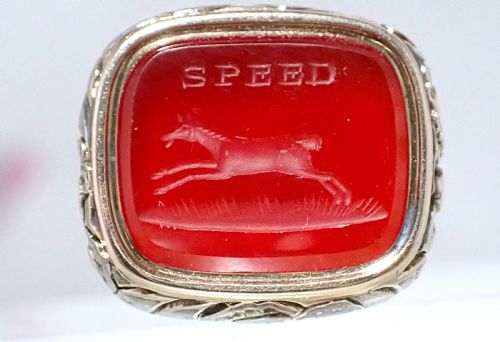


Gold Intaglio Seal
A gold intaglio seal is a carved gemstone mounted in gold, made to impress a personal mark into hot wax.
Gold Intaglio Seal
When you search for a gold intaglio seal, you encounter small personal signets and pendants designed for correspondence or display. These pieces originate across the eighteenth, nineteenth, and twentieth centuries, spanning Georgian, Victorian, and Edwardian periods.
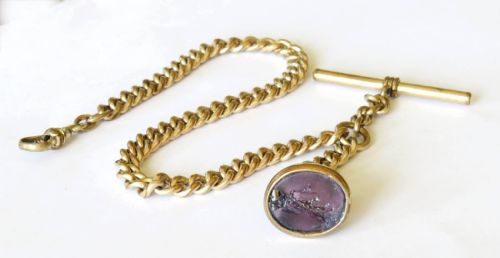
The selections on this page appear most frequently as fob seals meant for watch chains or as rings worn on the hand. Collectors meet them mounted in nine-carat, fifteen-carat, and eighteen-carat gold, alongside gold-cased variants.
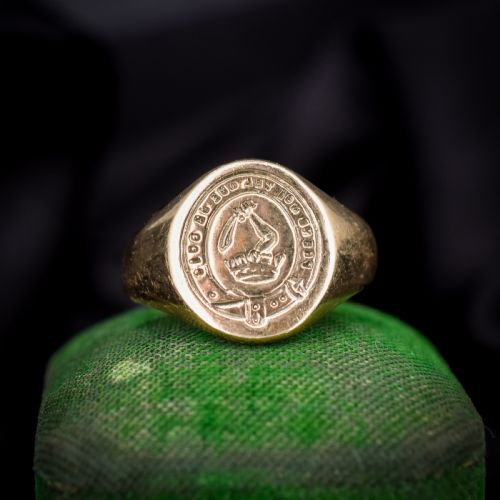
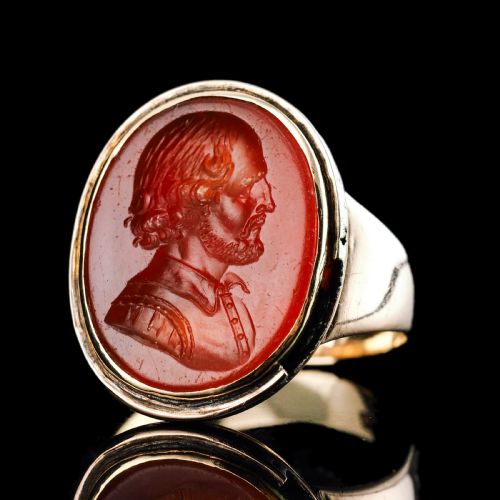
Carved motifs range from classical figures and portraits to heraldic crests and brief inscriptions. Each piece bridges practical function and decorative jewellery, reflecting the personal tastes of past owners.
How they were made
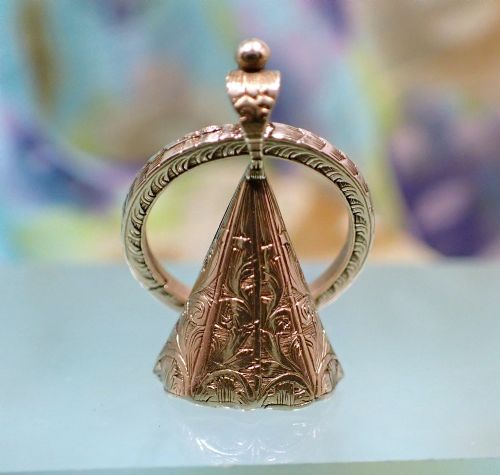
Goldsmiths shaped gold into rings, swivel mounts, and ornate fob pendants using solid metal or gold casing techniques. Stones were selected for their hardness and depth of colour before receiving meticulous hand-carved intaglio details.
Hardstones such as carnelian, bloodstone, chalcedony, sardonyx, agate, and rock crystal form the carving surfaces. Craftsmen utilised rotary tools and abrasive pastes to sink portraits, animals, and classical scenes into the stone faces.
One historical seal carries the carved figure of a horse alongside the motivational instruction 'SPEED'.
What varies in quality
The weight and purity of the gold mount also distinguish individual pieces. Heavier gold gauges and intricate chased or ornate metalwork indicate higher original cost and superior workshop execution.
The Gold Intaglio Seal Glossary
- Intaglio
- A design carved into the surface of a gem so that an impression pressed in wax produces a raised relief. This technique forms the core of every seal in the collection.
- Fob seal
- A small pendant hung from a pocket watch chain, featuring a carved stone base intended for stamping wax. These objects doubled as personal ornaments.
- Carnelian
- A reddish-orange variety of chalcedony quartz frequently chosen for intaglio carvings due to its pleasing colour and fine grain. It represents the most common stone material seen here.
- Bloodstone
- A dark green jasper flecked with red spots of iron oxide, utilised for its striking contrast and durability. Victorian makers favoured this stone for signet rings and fobs.
- Chalcedony
- A cryptocrystalline form of silica comprising mineral varieties like carnelian and bloodstone. It provides a smooth, resilient medium for detailed miniature carving.
Gold Intaglio Seal: Frequently Asked Questions
How do I wear a fob seal?
Fob seals hang primarily from watch chains, waistcoats, or charm bracelets. Collectors also suspend them from modern neck chains as pendants.
Ensure the suspension loop remains secure before wearing any antique piece daily.
Can I still use an intaglio seal for wax stamping?
Hardstones like carnelian and bloodstone tolerate modern sealing wax well, provided the stone has no hidden fractures. Press the cold stone firmly into warm, softened wax and pull straight up.
Clean residual wax gently from the engraved recesses with a soft brush.
How do I date a gold seal?
Dating relies on the gold alloy standard, the mount style, and the character of the carving. Georgian and Victorian pieces show distinct hand-chiselled ornamentation and specific gold purities.
Comparing motifs to known period examples helps narrow the manufacturing decade.
What is the difference between a signet ring and a fob seal?
A signet ring fits directly on the finger for everyday sealing and wear. A fob seal includes a handle or loop designed to dangle from a chain.
Both items perform the exact same function of impressing a personal emblem.