






Victorian Gold Watch Charm
These victorian gold watch charm pieces are miniature ornaments that once dangled from waistcoats, combining personal utility with lasting style.
Victorian Gold Watch Charm
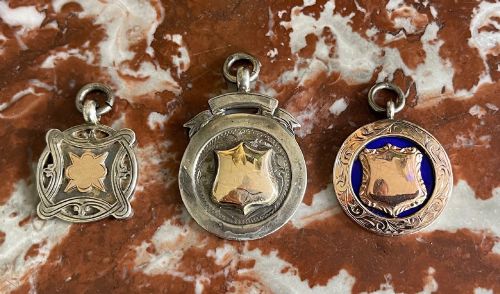
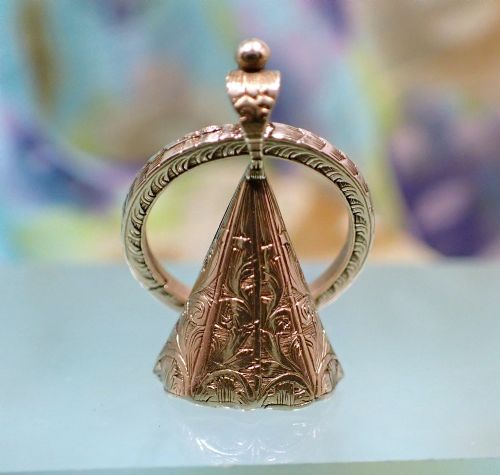
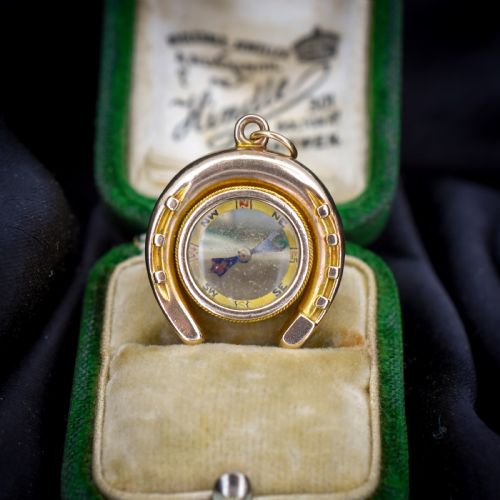
When you search for a victorian gold watch charm, you are looking at small decorative items designed to be suspended from a pocket watch chain. The examples found here encompass functional keys, spinning seals, and novelty pendants.
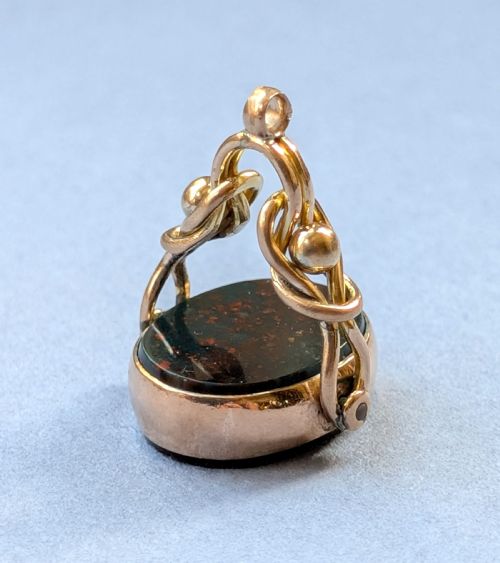
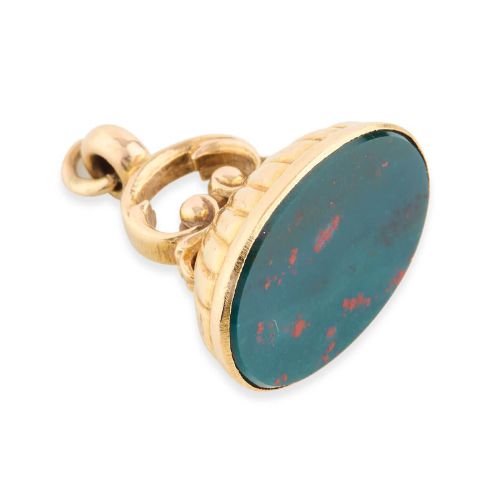
The most common version you will meet on this page is the gold fob seal, often set with stones like carnelian or bloodstone. These pieces bridge the gap between practical timekeeping accessories and miniature sculpture.
The selection ranges from simple yellow gold mounts to more elaborate figural designs. They reflect the diverse tastes of the nineteenth century, utilising precious metals alongside hardstones.
Materials and Technique
The construction relies heavily on nine-carat and fifteen-carat gold, paired with hardstones such as carnelian, bloodstone, chalcedony, and sardonyx. Goldsmiths shaped these metals into bezels, mounts, and articulated mechanisms.
Stones were cut and polished to fit tightly into swivel rings or stationary bezels, frequently featuring intaglio engravings for sealing documents. Enamel and gilt metal also appear, adding colour and textural contrast to the yellow gold frames.
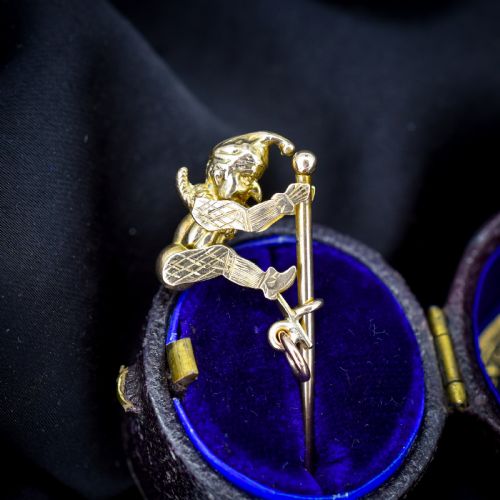
Mr Punch makes an appearance, swinging as a gold pendant for anyone who fancies a touch of theatrical mischief.
Assessing Quality
Quality rests upon the crispness of the metalwork and the depth of the intaglio carving set into the stone. Pieces with well-defined engraving and substantial gold weight stand apart from lighter, mass-produced items.
The complexity of the mechanism also dictates value, particularly in spinning fobs or sliding charms that require precise engineering to function smoothly.
The Victorian Gold Watch Charm Glossary
- Fob seal
- A small pendant featuring an engraved matrix at the base for stamping wax. This was used to authenticate letters and documents.
- Intaglio
- A design incised into the surface of a gemstone so that an impression in wax creates a raised relief. It requires steady hand skill to execute.
- Spinning fob
- A pendant mounted on a swivel axis so that the central stone can rotate to display two different faces. These often combine a plain stone with an engraved seal.
- Watch key
- A small winding tool shaped like a key, suspended from a chain to wind pocket watches before stem-wind movements became common.
- Split ring
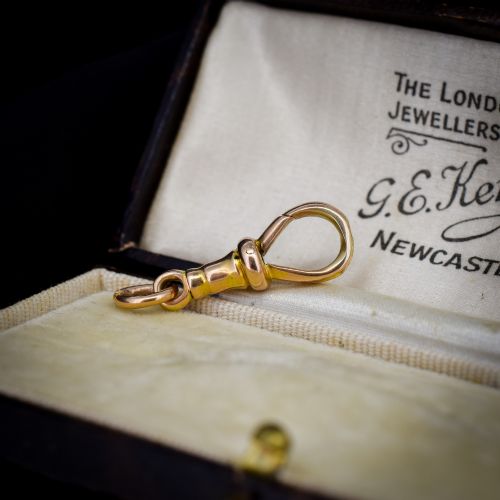
- A circular metal connector with overlapping coils, similar to a modern key ring, used to securely attach charms to a watch chain.
Victorian Gold Watch Charm: Frequently Asked Questions
What is a watch charm?
A watch charm is a small decorative item hung from a pocket watch chain or fob ribbon. They served to personalise an outfit and often doubled as practical tools.
These items range from miniature animals to engraved seals and winding keys. They were worn across the waistcoat by both men and women during the nineteenth century.
How were fob seals used?
Fob seals were pressed into hot sealing wax to close letters and documents with a personal signature or family crest. The stone base was carved with initials, a motto, or a classical figure.
As pocket watches became more common, the seal remained attached to the chain as jewellery even when its sealing function was no longer needed.
How do I tell periods apart?
Differentiating periods depends on stylistic cues and metal purity marks. Georgian pieces often show hand-carved mounts and closed-back settings for stones.
Victorian and later items frequently incorporate machine stamping, standardised gold carats, and distinct design revivals like Egyptian or classical motifs.
Can I wear these as pendants?
Yes, many people wear these pieces on modern chains around the neck rather than on a pocket watch fob. Their small scale and detailed metalwork suit contemporary necklace wear.
When wearing them this way, ensure the split ring or jump ring is secure to prevent loss during daily movement.