
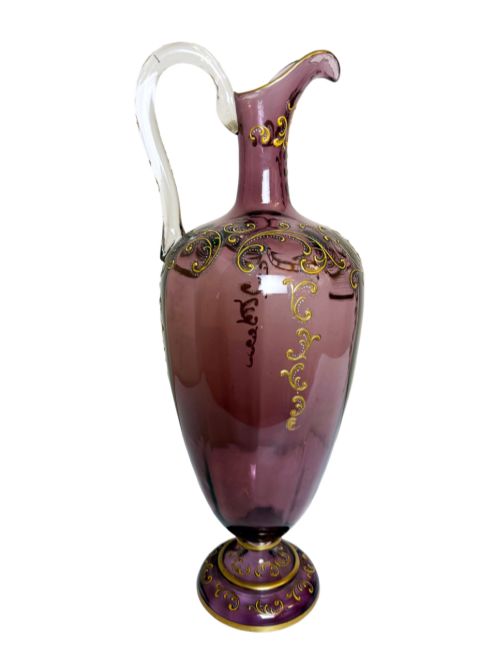


Gold Hand Painted Ewer
These gold hand painted ewer selections bring cabinet presence and historic shape, formed in porcelain, earthenware, and glass across the nineteenth and twentieth centuries.
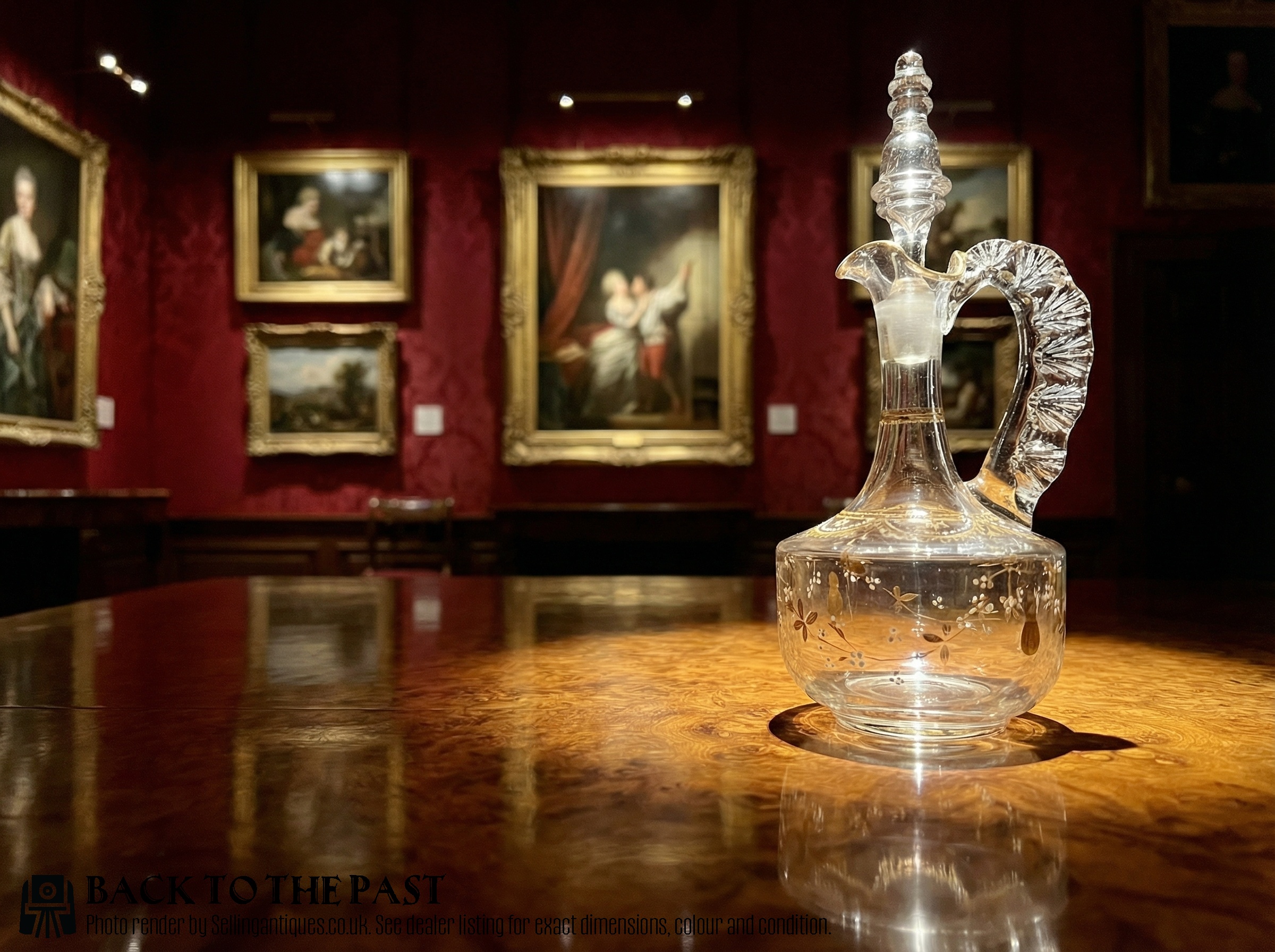
Gold Hand Painted Ewer
A gold hand painted ewer serves primarily as a decorative vessel, drawing upon historic shapes originally intended for pouring water or wine. When you search for this phrase, you encounter ornamental pitchers, jug-vases, and ewers intended for display rather than utility.
The pieces on this page span the nineteenth and twentieth centuries, taking in Victorian, Edwardian, and Aesthetic Movement designs. You meet items from major British potteries alongside continental porcelain and coloured blown glass.
Forms range from classical revival shapes with slender handles and spouts to Persian influenced pottery and bulbous jug forms. Each example displays painted floral or abstract decoration enhanced with gold leaf, gilt, or gilding.
How they were made
Pottery and porcelain pieces begin as shaped clay bodies, fired and glazed before receiving hand painted enamel details. Artisans then apply gold leaf, gilt, or liquid gilding by hand, often firing the piece a second time to bond the metallic finish to the glaze.
Glass ewers utilise free-blown or mould-blown glass techniques, producing vibrant coloured vessels in violet or other shades. Makers apply surface ornamentation such as hand painted gilt appliques directly onto the cooled glass body.
Some nineteenth-century glass pitchers wear hand painted gilt appliques like tiny golden jewels.
What varies in quality
Quality rests upon the precision of the hand painting and the execution of the gilding. Finer pieces demonstrate careful brushwork in floral panels and securely bonded gold leaf that retains its bright metallic lustre.
The reputation of the maker shapes the standing of a piece, with established factories achieving cleaner forms and more intricate surface decoration. Well-balanced proportions and crisp detailing distinguish finer production from simpler commercial output.
Doulton Burslem·Royal Worcester·Coalport·Rockingham·Vienna
The Gold Hand Painted Ewer Glossary
- Ewer
- A large jug with a wide spout and handle, traditionally used for holding water. In antique decorative contexts, it functions as a display object.
- Gilding
- The application of gold leaf or gold dust to a surface. On ceramics and glass, it provides metallic highlights to painted designs.
- Applique
- A decorative feature applied or adhered to the surface of a vessel. In glass ewers, this often takes the form of gilded metal or enamel motifs.
- Enamel
- A glassy substance fused to ceramic, glass, or metal through firing. It creates durable, coloured surface decoration.
Gold Hand Painted Ewer: Frequently Asked Questions
What is a gold hand painted ewer used for?
These vessels serve as decorative ornaments for display on mantels, sideboards, or cabinets. Their historic forms and metallic details make them focal points in a room.
While their shapes derive from historical pouring vessels, surviving examples are intended for visual appreciation rather than practical daily service.
How do I date a gold hand painted ewer?
Dating relies on maker marks stamped or painted on the base, stylistic clues such as Victorian or Edwardian motifs, and manufacturing materials. Pottery bodies and glass colours also point to specific production eras.
Comparing the decorative style, such as Rococo Revival or Neoclassical Revival, helps narrow down the decade of manufacture.
Are these ewers made of porcelain or glass?
The materials vary across the listings, encompassing porcelain, earthenware, and blown glass. Each material carries different surface textures and weight.
Ceramic examples often feature painted floral panels, whilst glass versions utilise translucent bodies paired with gilt appliques.
How do I care for antique gilding?
Gilding and hand painted enamels require gentle handling to prevent wear over time. Dusting with a soft, dry cloth is usually sufficient for maintenance.
Avoid harsh chemical cleaners or abrasive materials, which can damage the delicate gold leaf and painted surfaces.