

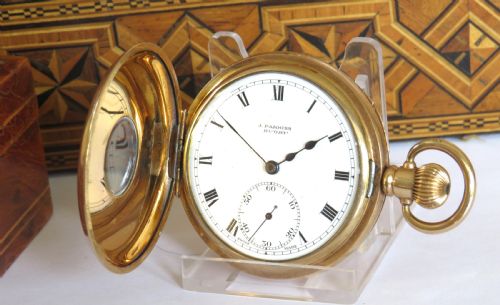
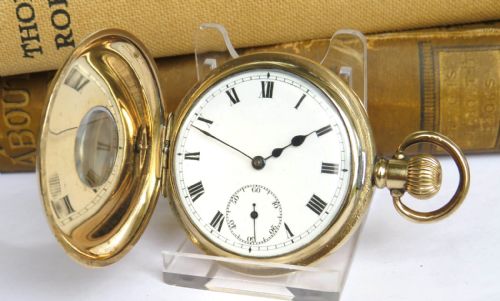


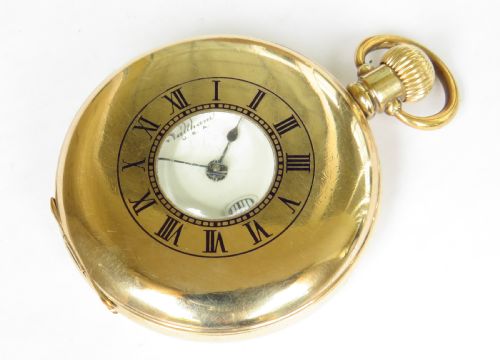
Gold Half Hunter Pocket Watch
A gold half hunter pocket watch gives you reliable timekeeping with a protective outer case, offering a glimpse into early twentieth-century engineering.
Gold Half Hunter Pocket Watch
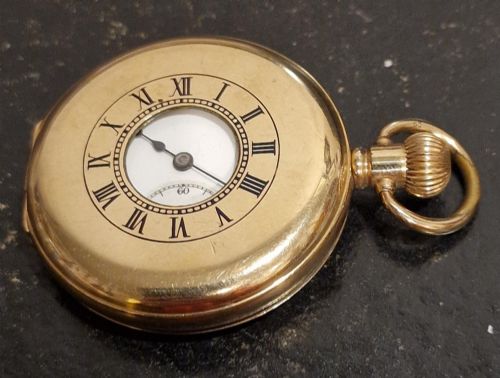
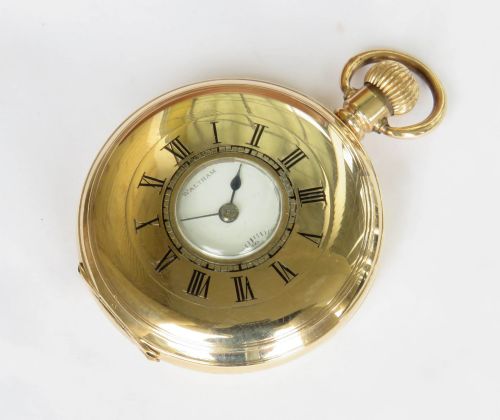
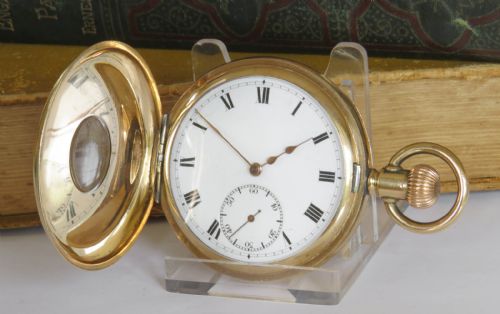
When you search for a gold half hunter pocket watch, you are looking at portable timepieces featuring a distinctive cover with a glass or open centre that lets you read the hands without opening the case. The versions you are most likely to meet on this page hail from the Victorian era, the Edwardian period, and the 1920s and 1930s. These pieces bridge the gap between pure utility and refined personal adornment.
The forms range from plain polished metals to inscribed presentation pieces, such as the 1930s example linked to the Folkestone Fishermen. You will find variations spanning the late nineteenth century through to the interwar period of the 1930s. They represent a distinct era of daily pocket watch carriage before wristwatches took over entirely.
How they were made
The construction relies on precious metals and durable base metals plated to simulate solid gold, alongside solid 18 carat and 9 carat gold housings. Manufacturers utilised gold plate, gold filled, and solid gold alongside enamel for the dial chapters and glass for the crystal inspection window. These materials were chosen to balance durability against the required elegance of a pocket accessory.
Movements inside these cases were engineered by established watchmaking houses, incorporating jewelled mechanisms such as fifteen jewel Swiss movements. The outer metal covers often feature precise hinge work and integrated glass lenses set within the protective front lid. Artisans applied enamel directly onto metal dials to create crisp, legible numbers for daily time reading.
Gold Half Hunter Pocket Watch Retail Price Guide 2026
Typical asking prices for gold half hunter pocket watch among the pieces listed under this phrase on Sellingantiques today, from the lower quarter to the upper quarter. They describe what is for sale here now, not the wider market.
Materials recorded across the inventory include enamel, glass, gold plate, and 18ct gold.
What varies in quality
The distinction between standard examples and finer items rests in the purity of the metal and the pedigree of the movement. Solid 18 carat gold cases sit at the upper end of the scale, whereas gold plated metal and gold filled alternatives represent more accessible manufacturing methods. Signed movements by notable makers elevate an item beyond anonymous mass-produced equivalents.
Case execution and subsidiary craftsmanship define the overall standard of the piece. Crisp enamel work on the dial and robust, smoothly operating spring-loaded half hunter covers indicate higher grade production. The presence of specialised inscriptions or historical associations further distinguishes individual watches.
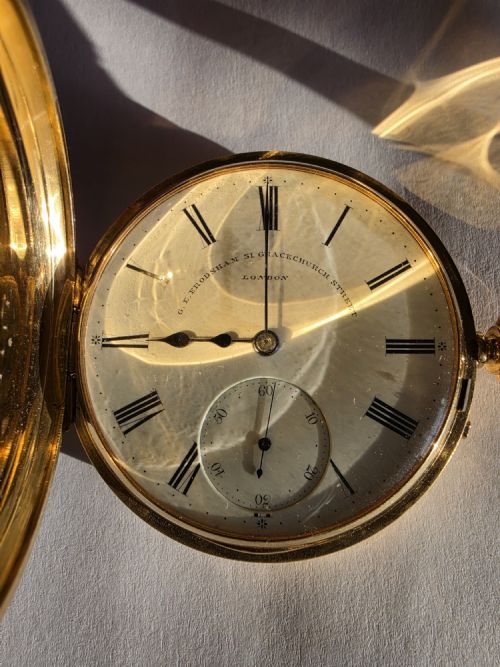
George Edward Frodsham·Eastern Watch Case Co·Waltham·Limit Revue·Baume and Co·Record
The Gold Half Hunter Pocket Watch Glossary
- Half hunter
- A pocket watch featuring a protective outer metal case with a glass-covered aperture in the front lid. This design allows the wearer to check the time quickly without opening the main cover.
- Gold filled
- A manufacturing technique where a layer of gold is mechanically bonded to a base metal core. This provides a thick, wear-resistant gold surface distinct from standard plating.
- Enamel
- A glassy substance fused to metal under high heat to create smooth, durable watch dial faces. It provides a crisp, permanent surface for painted numerals and markers.
- 18ct gold
- An alloy containing seventy-five percent pure gold by mass, valued for its rich colour and precious status in antique watch cases. It represents a high standard of precious metal utilisation.
Gold Half Hunter Pocket Watch: Frequently Asked Questions
What is a half hunter pocket watch?
A half hunter pocket watch is a timepiece enclosed in a metal case with a hinged front cover. A small glass window in the centre of this lid allows you to view the hands without opening the watch.
This design protected the delicate dial crystal from scratches during everyday use while keeping the time visible at a glance. They were widely carried by professionals and travellers throughout the Victorian and Edwardian eras.
How do I tell the age of these watches?
You can determine the period by examining the style of the numerals, the casing materials, and any maker signatures stamped on the movement. Art Deco examples from the 1920s and 1930s often display geometric motifs, whereas Victorian pieces tend to be more ornate.
Hallmarks stamped inside the gold or gold-plated cases offer definitive clues regarding the year of manufacture and the assay office. Comparing the movement design against known production dates of makers like Waltham further narrows down the timeline.
Were these watches used daily?
These watches were designed as reliable everyday instruments for keeping time in an era before digital devices or wristwatches. Owners carried them in waistcoat pockets attached to chains secured through buttonholes.
Special presentation pieces, such as those inscribed for specific groups like fishermen, served as commemorative awards or retirement gifts. Despite their precious metal construction, they were built for practical, rugged daily service.
How do I live with a pocket watch?
Living with an antique pocket watch involves winding the mainspring gently at consistent times and storing it safely away from magnetic fields and moisture. Many owners display them on dedicated stands or carry them in pockets using appropriate watch chains.
Regular gentle handling preserves the historic hinges and glass components of the half hunter case. Occasional professional servicing ensures the internal mechanical movement continues to function accurately.