



Gold Gemstone Cluster Pendant
A gold gemstone cluster pendant brings together rich central stones and surrounding highlights, offering distinct historical character for daily wear.
Gold Gemstone Cluster Pendant
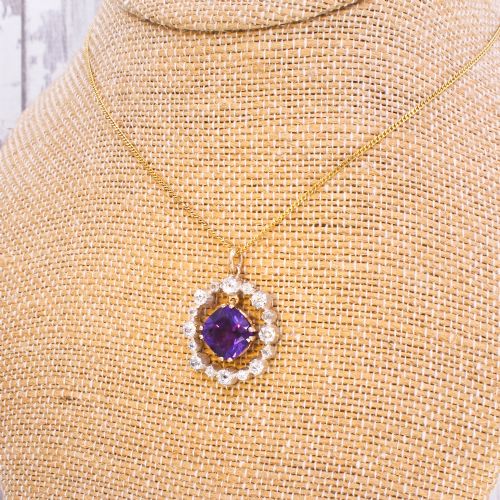
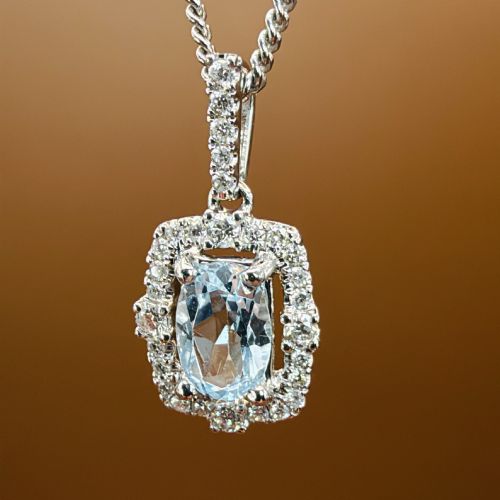
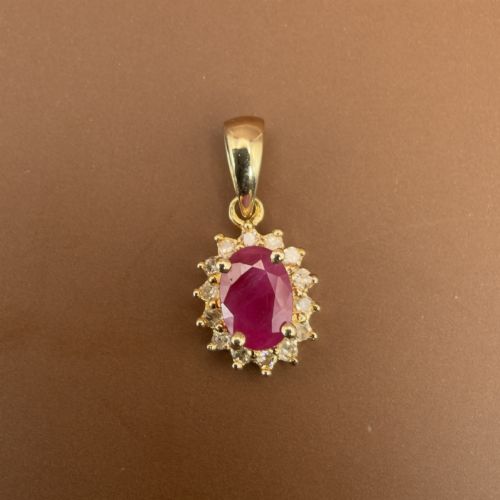
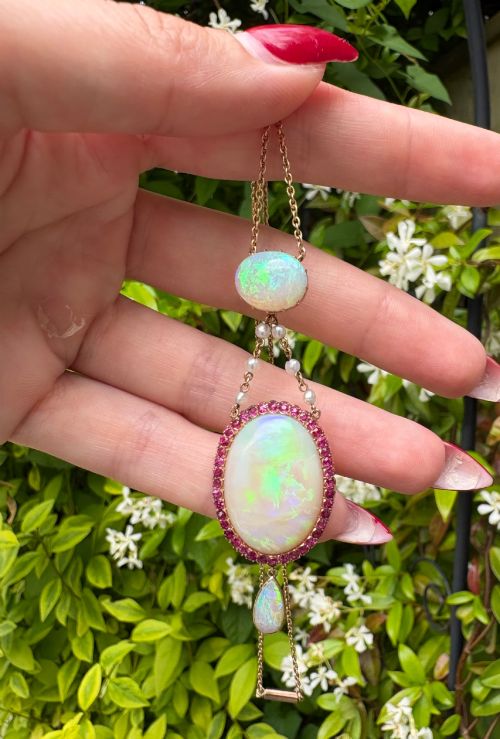
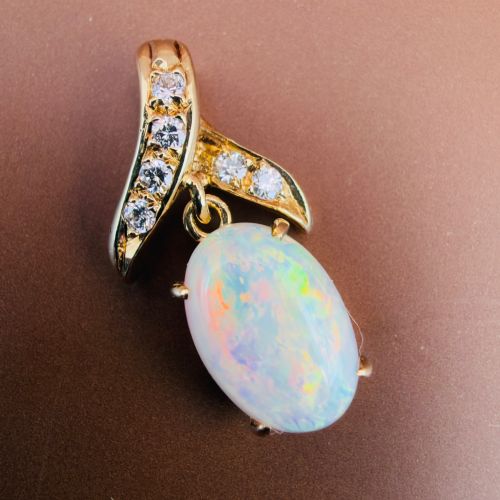
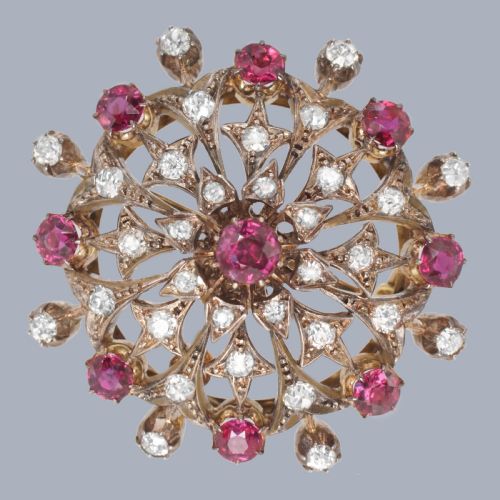
A gold gemstone cluster pendant concentrates attention on a principal stone framed by smaller gems, creating a distinct visual impact. These pieces appear across Victorian, Edwardian, and mid-century periods, taking forms that range from floral arrangements to geometric shapes.
The selection includes specimens fashioned from nine-carat, fourteen-carat, and eighteen-carat gold, often housing garnets, amethysts, rubies, or sapphires alongside diamonds. Many items function dually as brooches and pendants, reflecting period versatility.
Materials and construction
Goldsmiths utilised yellow gold, white gold, and platinum settings to secure cluster arrangements, frequently pairing silver with gold in earlier pieces to enhance diamond brilliance. Stones received varied cuts, including old cut, oval cut, marquise, and cabochon forms.
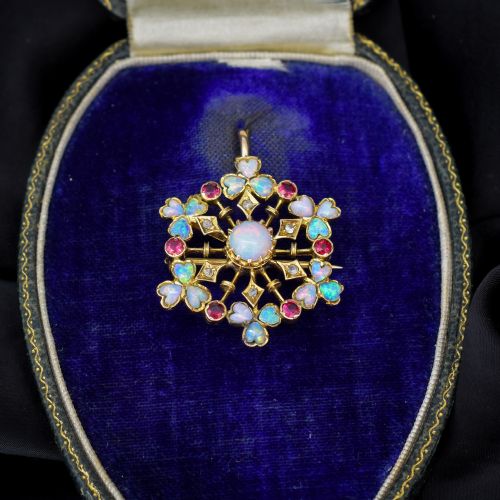
Mounts incorporate claw settings, collet settings, and open-backed foil work designed to catch light through coloured stones like Bohemian garnets, peridots, and opals.
Listings span periods from the eighteenth century through the Victorian, Edwardian, and mid-twentieth-century eras, using gold and silver.
Evaluating quality in clusters
Quality rests in the matching of stones, the crispness of the claw work, and the structural integrity of the gold or platinum gallery. A superior piece displays balanced proportions between the central gemstone and its surrounding border.
The depth of colour in rubies, sapphires, emeralds, and amethysts, alongside the minimal inclusion within diamonds, distinguishes finer examples from standard production.
Dorrie Nossiter
The Gold Gemstone Cluster Pendant Glossary
- Cluster pendant
- A necklace drop featuring a central gemstone encircled by a ring of smaller stones. This arrangement maximises surface sparkle and colour contrast.
- Cabochon
- A gemstone shaped and polished with a smooth, convex domed surface rather than faceted edges. This cut suits opals and star stones.
- Old cut
- A diamond cutting style prevalent in the nineteenth and early twentieth centuries, characterised by a high crown and small table.
- Collet
- A band of metal that holds a gemstone in place by gripping its girdle. This technique provides a secure and neat edge around the stone.
Gold Gemstone Cluster Pendant: Frequently Asked Questions
What is a gold gemstone cluster pendant?
A gold gemstone cluster pendant is a neck ornament featuring a main stone surrounded by smaller accent gems, set in gold.
These pieces range from Victorian multi-stone designs to mid-century sapphire and diamond arrangements.
How do I date a cluster pendant?
Dating relies on material combinations, such as gold paired with silver, stone cuts like old cut diamonds, and overall design motifs.
Victorian pieces often use Bohemian garnets or seed pearls, while later twentieth-century items utilise distinct white gold mountings.
Can these pendants double as brooches?
Many historical examples incorporate integrated folding loops and pin stems, allowing dual wear on chains or lapels.
This convertible function appears frequently in nineteenth-century and Edwardian jewellery.
What stones are common in these pendants?
Common stones include diamonds, rubies, sapphires, amethysts, garnets, peridots, and opals set within yellow or white gold.
Different periods favoured specific combinations, such as deep red garnets in Victorian work and bright aquamarines in later decades.