

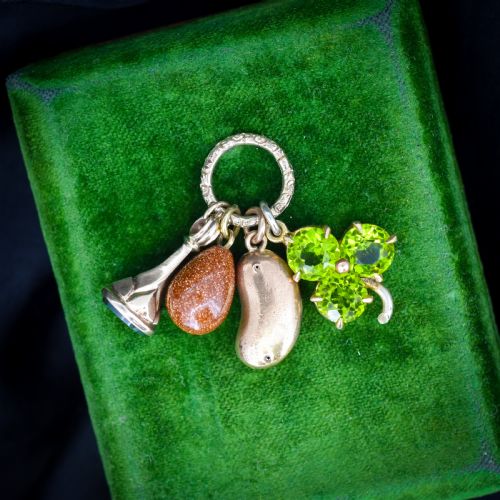


Yellow Gold Peridot Pendant
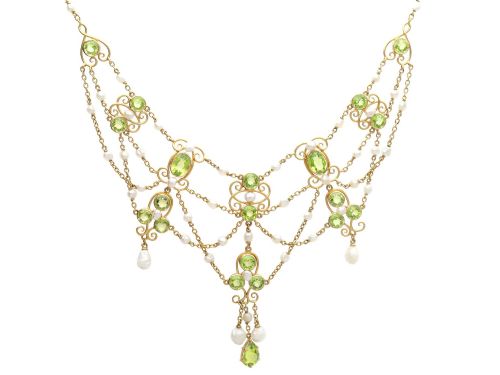
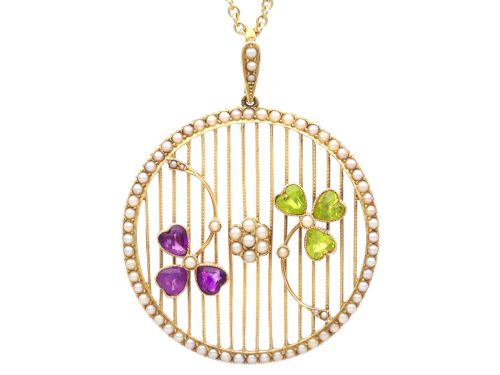
A yellow gold peridot pendant brings together vivid green stones and warm metal, offering the delicate craftsmanship typical of early twentieth-century jewellery.
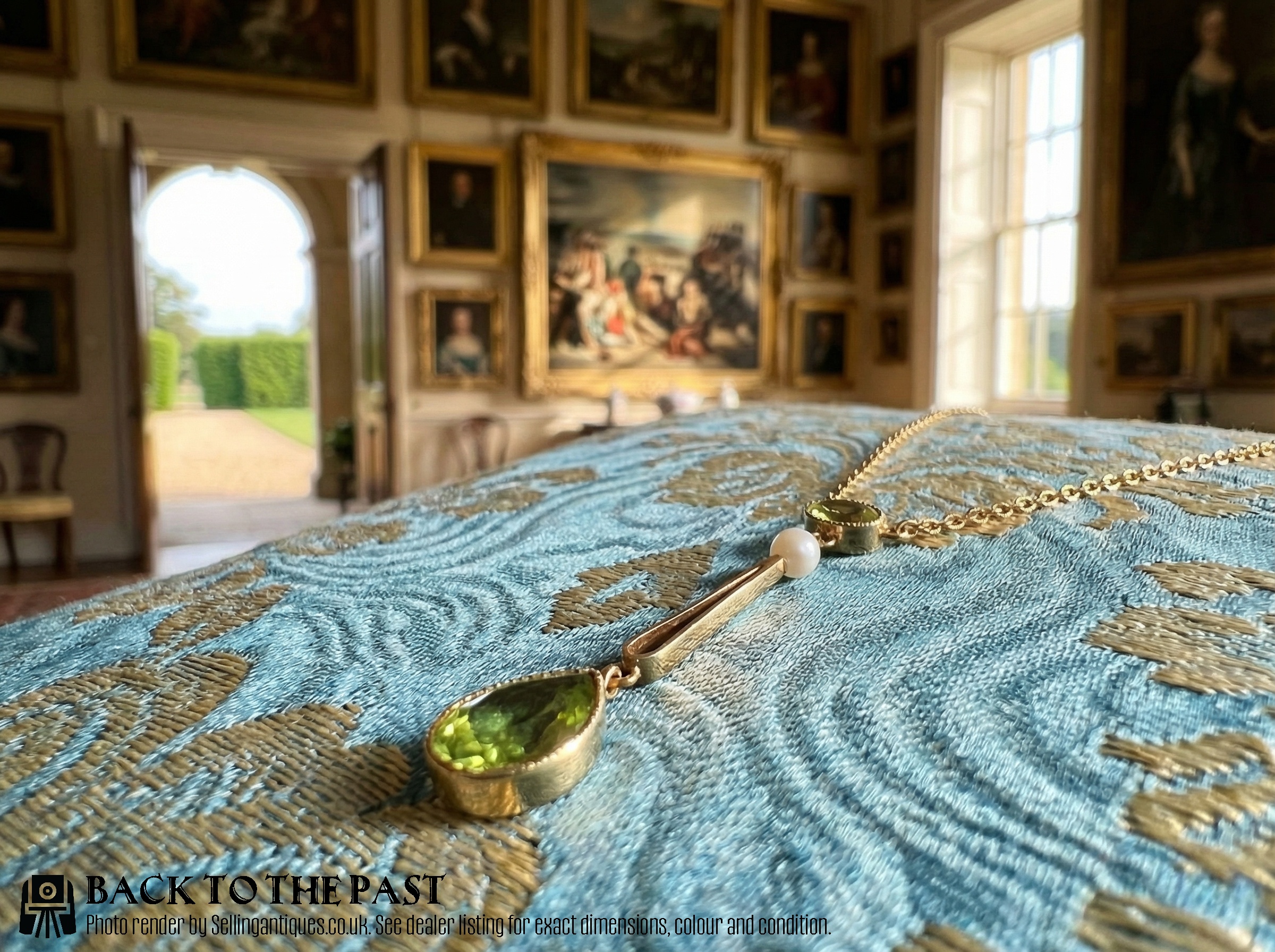
Yellow Gold Peridot Pendant
A yellow gold peridot pendant is a necklace centrepiece featuring the vibrant olive-green gemstone set in gold, frequently paired with seed pearls or diamonds. Buyers seeking a yellow gold peridot pendant will encounter many examples from the Edwardian and Victorian eras, alongside pieces created in the Art Nouveau and Arts and Crafts styles.
The selection ranges from delicate drop designs and lavalier necklaces to versatile pendant brooches that function as both chest ornaments and neckwear. Most pieces originate from the late nineteenth century and the early decades of the twentieth century, constructed in either nine-carat or fifteen-carat gold.
How they were made
Goldsmiths worked primarily with nine-carat and fifteen-carat yellow gold, shaping metal into intricate frames, bezels and claw settings to secure the peridot stones. Many examples incorporate seed pearls or diamonds as accent stones, while specialised techniques like plique-a-jour enamel add translucent colour resembling stained glass within the gold framework.
Garland motifs and flowing organic lines define the construction of Art Nouveau and Arts and Crafts pieces, requiring skilled hand-working of the metal wire and sheet. Jewellers designed multifaceted drops and clusters to maximise the light passing through the transparent green peridot crystals.
Yellow Gold Peridot Pendant Retail Price Guide 2026
Typical asking prices for yellow gold peridot pendant among the pieces listed under this phrase on Sellingantiques today, from the lower quarter to the upper quarter. They describe what is for sale here now, not the wider market.
Materials span nine-carat and fifteen-carat yellow gold, silver, pearl, and specialised techniques such as plique-a-jour enamel.
What varies in quality
The fineness of the gold alloy influences the character of the piece, with fifteen-carat yellow gold offering a richer tone than nine-carat alternatives. Superior examples display careful stone matching and precise gemstone carat weights, alongside intricate secondary elements such as seed pearl clusters or diamond highlights.
Artistic execution distinguishes standard production from exceptional work, particularly where labour-intensive techniques like plique-a-jour or detailed garland engraving are employed. The integration of convertible mechanisms, allowing a pendant to also function as a brooch, demonstrates higher ambition in the original design.
Murrle Bennett
The Yellow Gold Peridot Pendant Glossary
- Peridot
- A transparent gemstone ranging from olive to lime green, prized for its bright lustre in antique jewellery settings.
- Seed pearl
- A very small natural or cultured pearl used in clusters and delicate border arrangements around central gemstones.
- Lavalier
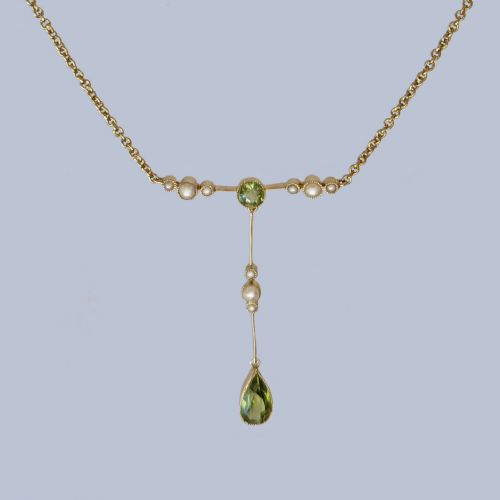
- A pendant necklace featuring a central stone with one or more suspended drops hanging below it, popular in the Edwardian period.
- Plique-a-jour
- An enamelling technique where enamel is applied without a backing, creating a translucent, stained-glass effect within a metal cell framework.
- Garland style
- A decorative motif popular in Edwardian jewellery featuring swags, ribbons and floral wreaths rendered in gold and gemstones.
Yellow Gold Peridot Pendant: Frequently Asked Questions
How do I wear a convertible pendant brooch?
These versatile jewels feature a hidden bail for a chain alongside a secure pin finding on the reverse. This allows the piece to transition seamlessly from a necklace to a lapel ornament.
Ensure the pin catch fastens securely before wearing the item as a brooch. When hung from a chain, tuck the pin safely against the garment to prevent snagging.
What is a lavalier necklace?
A lavalier is a specific drop necklace design where a main gemstone hangs freely from a chain, often with secondary suspended elements. They gained immense popularity during the Edwardian era.
The elongated silhouette draws the eye downward, making them well-suited for wearing over high collars or evening necklines. They frequently incorporate seed pearls and peridots.
How do I care for antique peridot jewellery?
Peridot is a softer gemstone compared to diamond, rating around six and a half to seven on the Mohs scale. Gentle handling is essential to prevent scratching the surface facets.
Clean the piece using warm soapy water and a soft cloth rather than harsh ultrasonic machines. Store the pendant separately from harder jewels to protect the gold and stones.
How do I distinguish Edwardian from Victorian pieces?
Victorian jewellery from the nineteenth century tends to be heavier, featuring robust gold work and darker stones or dense pearl clusters. Designs often reflect sentimental or mourning themes.
Edwardian pieces from the early twentieth century lean towards lightness and grace, utilising garland motifs and platinum-topped gold. Peridot and seed pearl combinations are especially characteristic of this later airy aesthetic.