

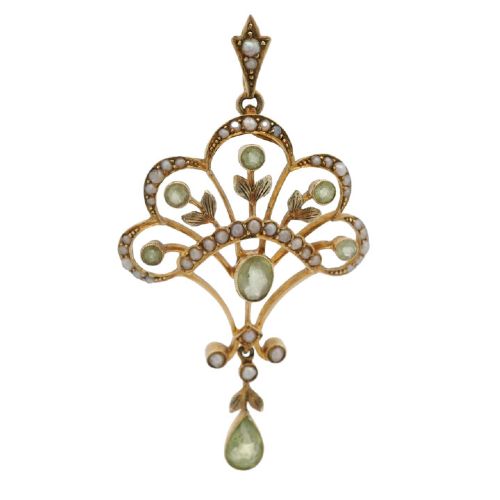
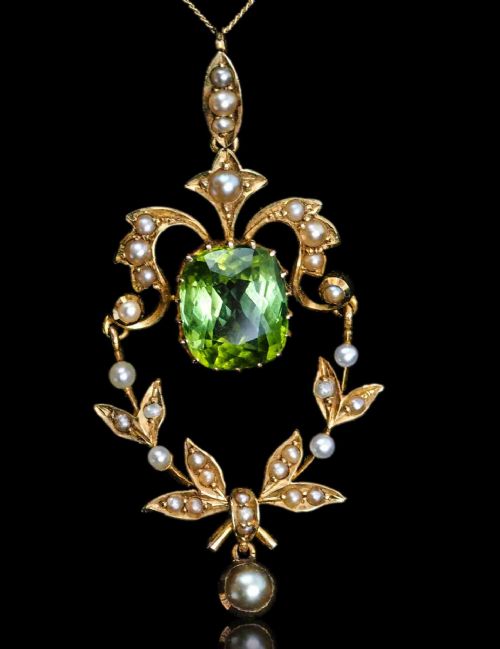


Peridot Pearl Drop Necklace
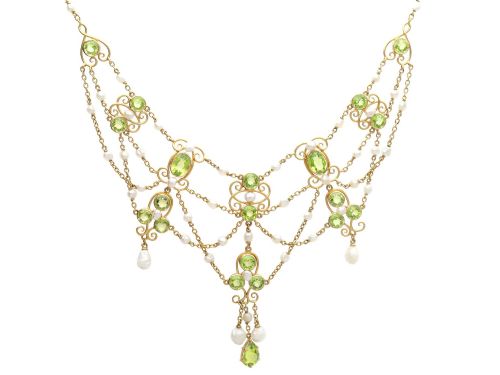
These peridot pearl drop necklace examples bring together bright green gems and lustrous pearls in gold settings.
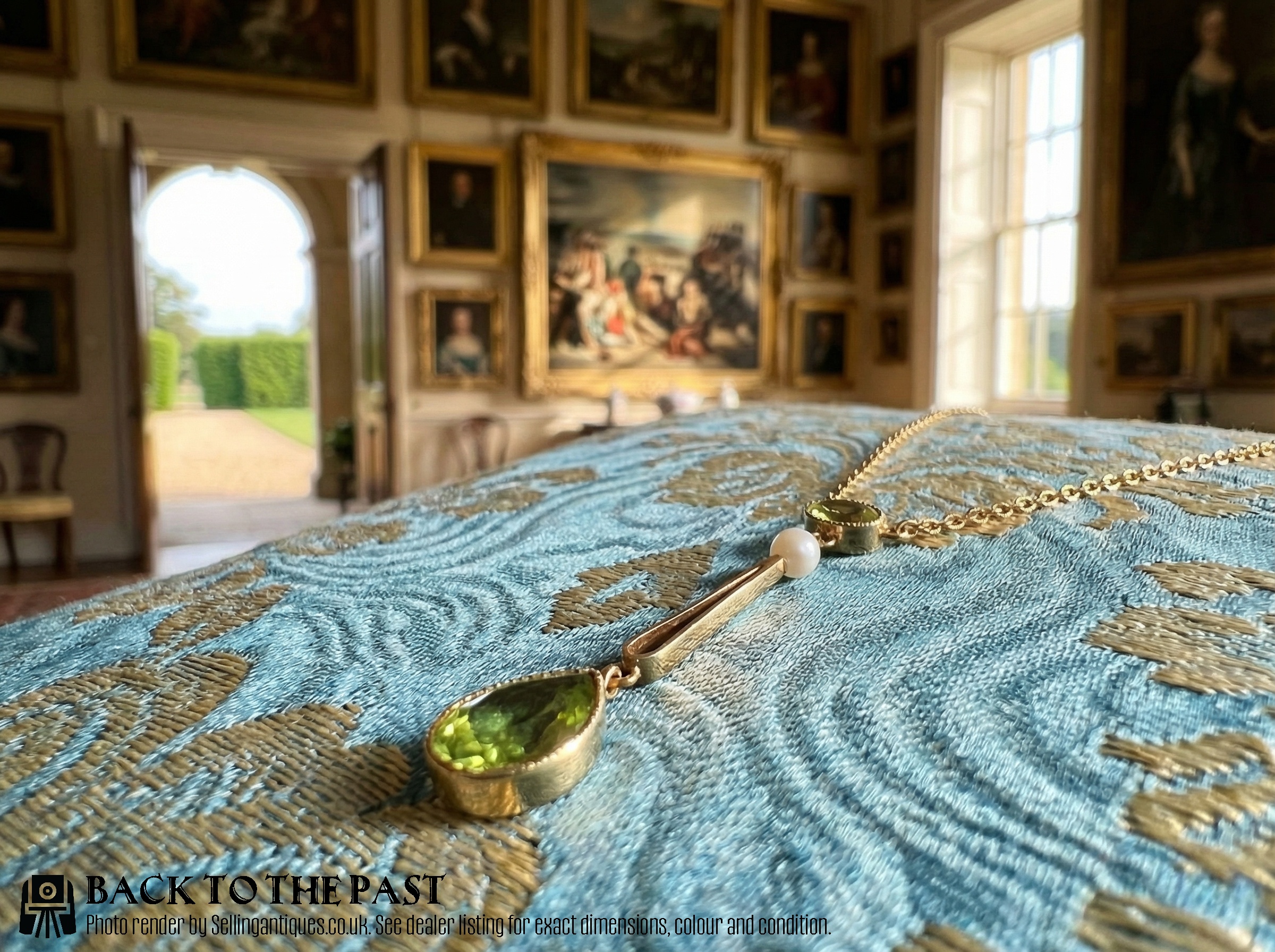
Peridot Pearl Drop Necklace
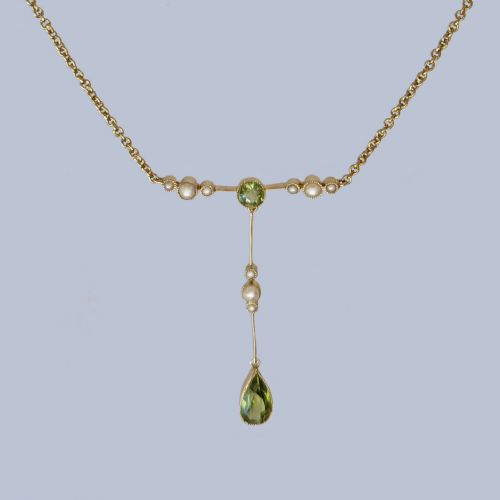
A peridot pearl drop necklace is a pendant piece combining peridot stones and pearls, often suspended from a fine gold chain. These jewels span the Victorian and Edwardian eras, alongside pieces dated around nineteen hundred.
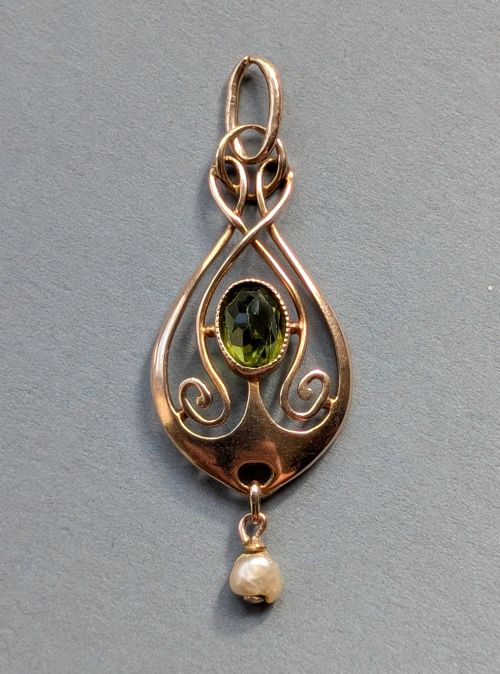
Most pieces seen here belong to the Edwardian period, frequently taking the form of lavalier pendants or drop designs. Art Nouveau styling also appears, alongside traditional star motifs and crescent shapes.
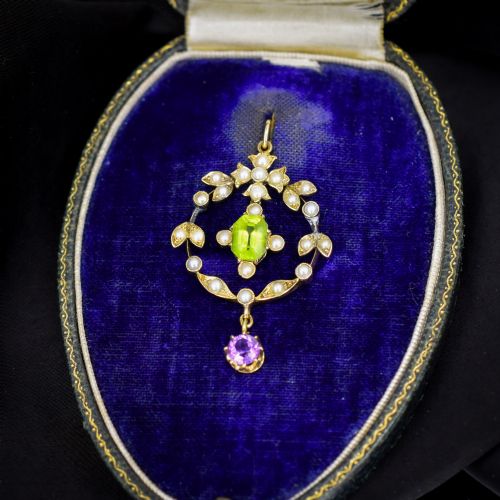
Makers of these items utilised gold ranging from nine carat to fifteen carat, occasionally incorporating platinum or silver elements. Gemstone combinations sometimes extend to amethyst, tourmaline, or white sapphire alongside the central peridot.
Materials and construction
Goldsmiths constructed these pendants using nine carat or fifteen carat yellow gold, occasionally employing platinum for finer structural details. Seed pearls are neatly set by hand to frame the larger peridot stones.
Stone cutting techniques of the Victorian and Edwardian periods produced cushion, round, and pear-shaped peridots that sit within open-backed or closed settings. Delicate wirework and articulated drop joints allow the pendant sections to move freely.
Peridot Pearl Drop Necklace Retail Price Guide 2026
Typical asking prices for peridot pearl drop necklace among the pieces listed under this phrase on Sellingantiques today, from the lower quarter to the upper quarter. They describe what is for sale here now, not the wider market.
Listings feature items from the Victorian and Edwardian eras, utilising peridot, seed pearls, and nine or fifteen carat gold.
Grading quality
The distinction between standard examples and finer pieces lies in the saturation of the peridot and the uniformity of the seed pearls. Superior items display clean, vibrant green stones securely held by delicate claw or bezel settings without excess solder.
Complexity of design separates basic drops from elaborate lavalier and star configurations. Pieces retaining their original fitted boxes or utilising higher carat gold demonstrate greater original expenditure.
The Peridot Pearl Drop Necklace Glossary
- Peridot
- A yellowish-green gemstone favoured in Victorian and Edwardian jewellery. It provides the central vibrant colour for these drop necklaces.
- Seed pearl
- A very small, naturally formed or cultured pearl used in clusters or borders. They accent the bright green peridots in Edwardian and Victorian designs.
- Lavalier
- A pendant featuring a stone suspended from a shorter drop, popular during the turn of the twentieth century. This style swings freely from a slender gold neck chain.
- Art Nouveau
- A design movement celebrating flowing, organic lines prevalent around nineteen hundred. Pieces in this style often incorporate whipped wirework and natural motifs.
Peridot Pearl Drop Necklace: Frequently Asked Questions
What periods do these necklaces come from?
The available pieces originate primarily from the Victorian and Edwardian eras, spanning the late nineteenth century and the early twentieth century.
Datings cluster around nineteen hundred, reflecting the aesthetic preferences of the period.
What metals are used in these pendants?
Goldsmiths worked predominantly in nine carat and fifteen carat yellow gold for these mountings. Platinum and silver also appear in select Edwardian examples.
Gold purity marks often appear stamped on the reverse of the pendant frames or upon the jump rings.
How should I wear an antique drop necklace?
These delicate pendants suit evening wear or elevated daytime attire, suspended from fine gold chains that match the original metal colour.
Care should be taken to avoid exposing the softer peridot stones and pearls to harsh chemicals or ultrasonic cleaners.
Are these pieces marked with maker details?
Many antique necklaces feature partial hallmarks or carat stamps rather than explicit maker signatures. Such stamps indicate the gold standard used by the workshop.
Stylistic cues such as Edwardian garland motifs or Art Nouveau asymmetry help indicate the period of manufacture.