
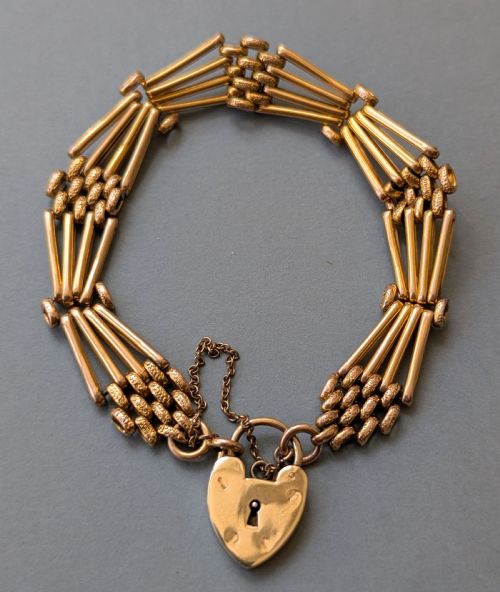


Gold Gate Link Chain
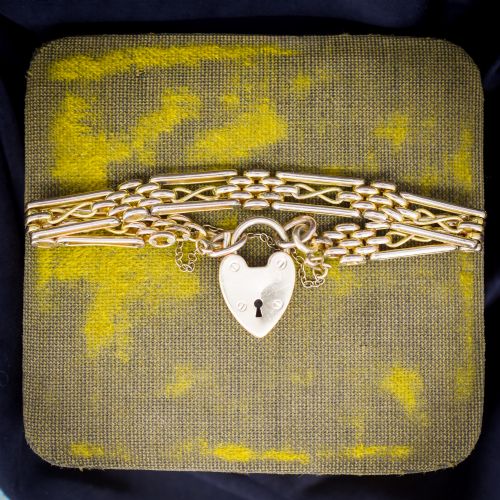
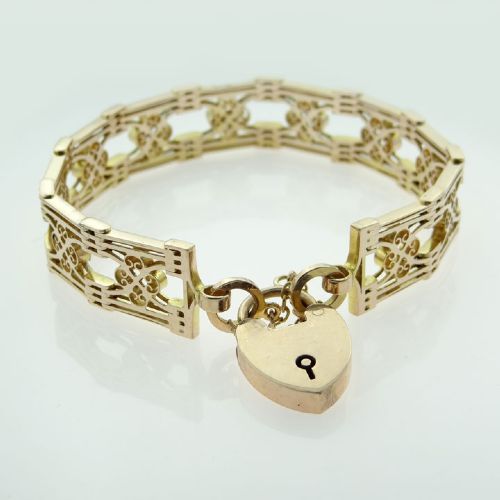
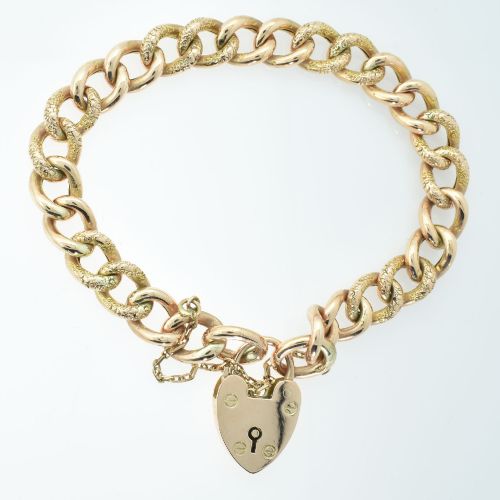
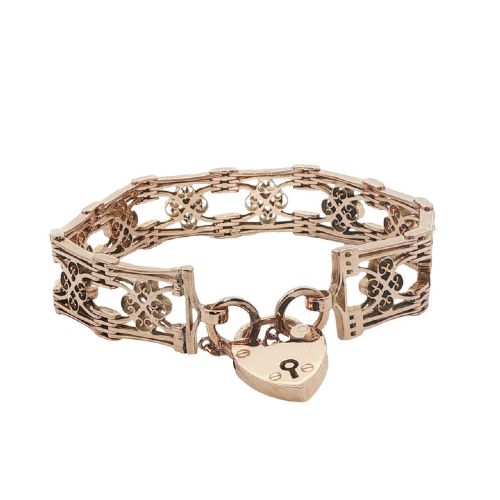
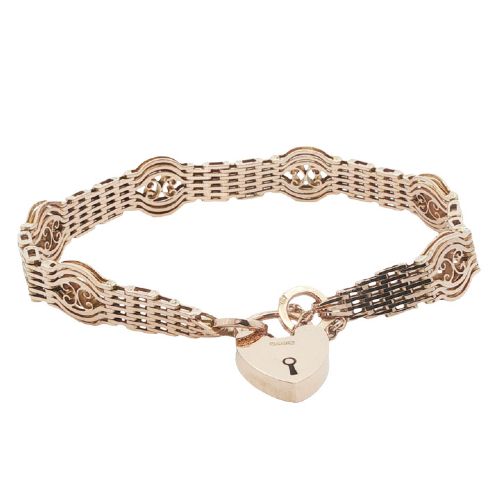
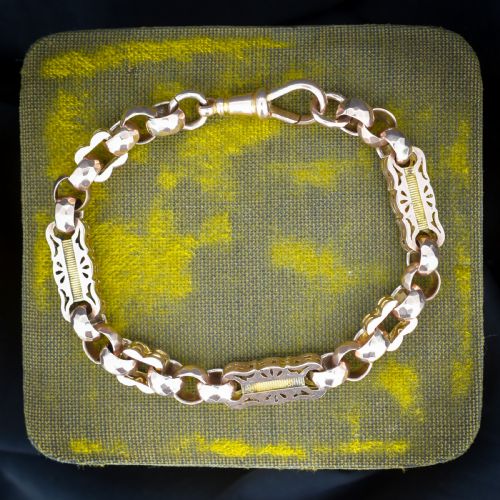
These gold gate link chain bracelets offer the secure beauty of period craftsmanship, pairing flexible linked rows with distinctive heart padlocks.
Gold Gate Link Chain
A gold gate link chain takes its name from the distinctive interlocking bars that resemble miniature metal gates, forming a flexible and tactile bracelet. Buyers searching for this phrase seek out these articulated wristwear pieces, which date primarily from the Victorian and Edwardian eras. The most common form on this page pairs these signature multi-bar links with a secure heart-shaped padlock fastening.
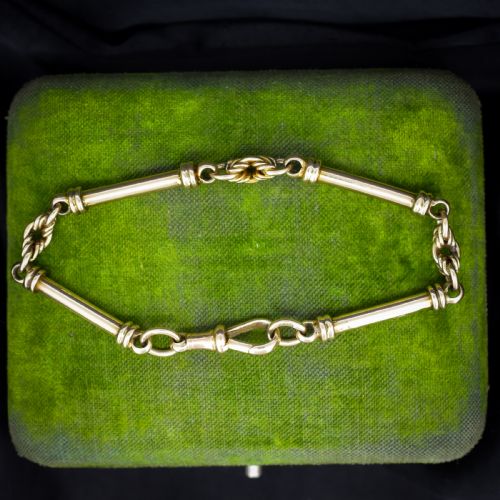
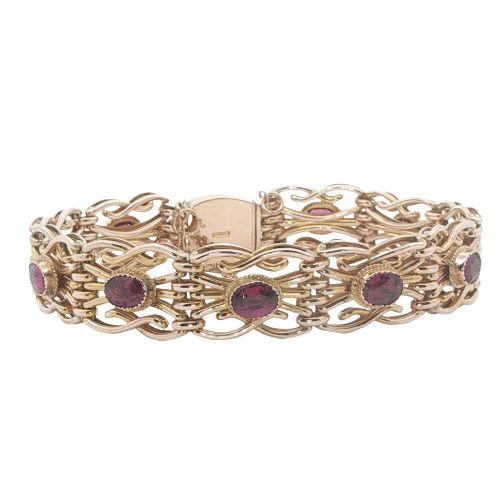
Most examples span the Victorian and Edwardian periods, stretching into the early twentieth century around nineteen ten. Alongside standard gate link designs, related variations appear on this page including curb links, love knot patterns, and tubular bar configurations. These pieces frequently incorporate gemstones such as almandine garnet, amethyst, ruby, and pearl.
Originating predominantly in Britain during the late nineteenth and early twentieth centuries, these bracelets were designed for daily wear by women of the period. The inclusion of safety chains and dog clips alongside heart padlocks demonstrates both practical utility and sentimental charm. Today, collectors value these items for their robust construction and distinctive period character.
How they were made
Goldsmiths constructed these bracelets using nine carat gold, available in standard yellow or warm rose variations, alongside rolled gold alternatives for more accessible pieces. The links were individually formed, soldered, and assembled by hand to create a flexible mesh that drapes smoothly around the wrist. Engraving tools were frequently employed to decorate the surface of the links with half-engraved patterns or geometric motifs.
Heart padlocks served both as functional clasps and decorative focal points, often featuring intricate chased designs or flush-set gemstones like garnets and amethysts. Makers secured stones using grain or bezel settings integrated directly into the gold links or central padlocks. Hallmarks stamped onto the metal often indicate London origins and specific early twentieth-century dates.
Current listings feature nine carat gold, rose gold, and rolled gold, alongside gemstones including amethyst, ruby, almandine garnet, and pearl across Victorian and Edwardian periods.
What varies in quality
The density and weight of the gold links dictate the structural substance of the bracelet, separating solid gold constructions from lighter hollow or rolled gold alternatives. Finer examples display precise uniformity across every individual bar and connector, ensuring the mesh flexes evenly without pinching. The complexity of the assembly, such as multi-bar gate formations paired with matched safety chains, elevates the standard of the piece.
Gemstone selection and hand-engraved detailing further distinguish finer specimens, particularly when incorporating rubies, pearls, or deep red almandine garnets. The presence of clear hallmarking provides definitive evidence of origin and metal purity, adding historical clarity. Padlocks that retain their original matching design and secure spring action represent higher manufacturing standards.
The Gold Gate Link Chain Glossary
- Gate link
- A bracelet construction style featuring parallel metal bars joined by small central links, mimicking the appearance of a physical gate. This design provides exceptional flexibility and durability for daily wear.
- Heart padlock
- A decorative and functional clasp shaped like a miniature padlock, commonly used to secure Victorian and Edwardian bracelets. These often feature hand-engraved motifs or gemstone settings.
- Rolled gold
- A material formed by bonding a thin layer of gold to a base metal core under heat and pressure, offering the appearance of solid gold. This technique was popular for durable, accessible jewellery.
- Almandine garnet
- A deep red variety of garnet frequently utilised in Victorian jewellery for its rich colour and durability. These stones were often set into gold links or central padlocks.
- Dog clip
- A spring-loaded metal fastening commonly attached to watch chains and bracelets of the period. It allows secure attachment to charms, padlocks, or safety chains.
Gold Gate Link Chain: Frequently Asked Questions
How do I fasten a gate link bracelet?
Most of these bracelets secure via a spring-loaded heart padlock that clips onto a designated jump ring or safety chain. Opening the padlock requires pressing the internal spring mechanism to release the shackle.
Ensure the spring snaps firmly shut after fastening to keep the bracelet secure on the wrist. Many pieces also include an attached safety chain as an extra precaution against accidental loss.
Are these bracelets made of solid gold?
The listings on this page include both solid nine carat gold and rolled gold variations. Hallmarks stamped onto the metal often confirm the specific gold purity and origin.
Rolled gold pieces use a bonded layer of gold over a base metal core, providing a similar aesthetic to solid metal. Checking the description will clarify the exact material composition of each individual piece.
What periods do these bracelets come from?
These pieces originate primarily from the Victorian and Edwardian eras, spanning from the late nineteenth century to approximately nineteen ten. Styles evolved slightly over this period, moving from traditional gate link formations to incorporating tubular bars and love knots.
Hallmarks and design characteristics help narrow down the production era for each item. Most examples reflect the distinct romantic and sentimental jewellery trends of turn-of-the-century Britain.
Can I wear a gate link bracelet every day?
These bracelets were originally built for regular wear during the Victorian and Edwardian periods, utilising robust interlocking metal links. Their flexible construction allows them to move comfortably with the wrist.
However, delicate elements like rolled gold surfaces or gemstone settings such as pearls require mindful care to prevent damage. Removing the bracelet during heavy physical activity helps preserve the historical metal and stones.