


Gold Garnet Pendant
A gold garnet pendant brings deep red stones together with warm metal, offering a distinct historic charm that draws collectors and daily wearers alike.
Gold Garnet Pendant
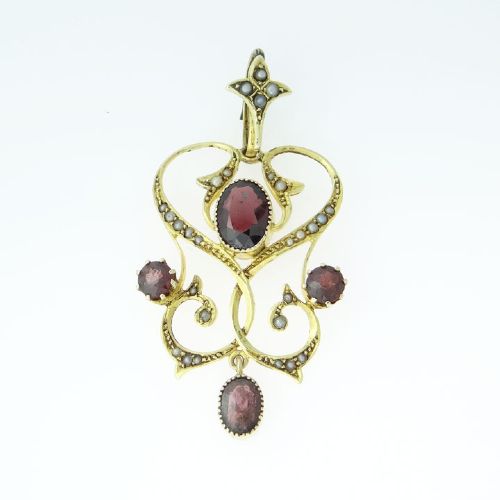
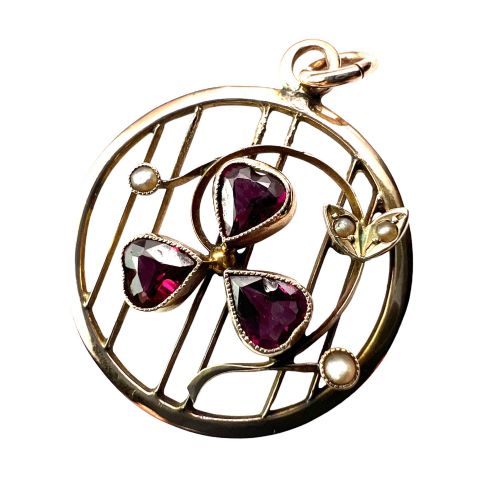
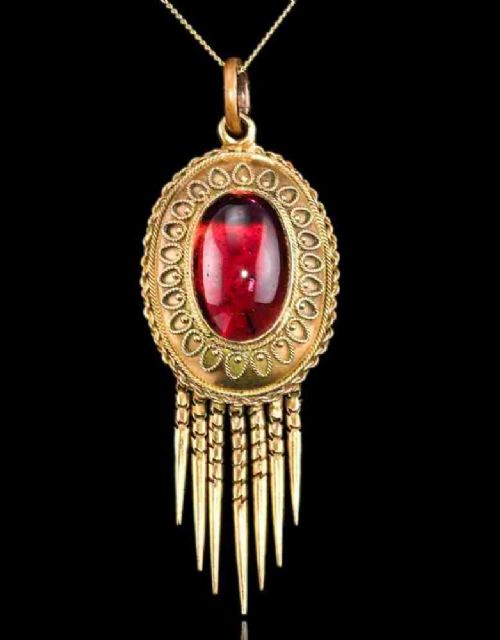
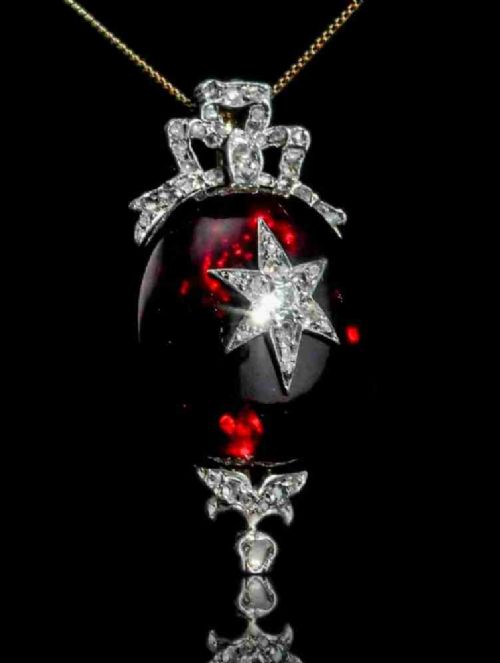
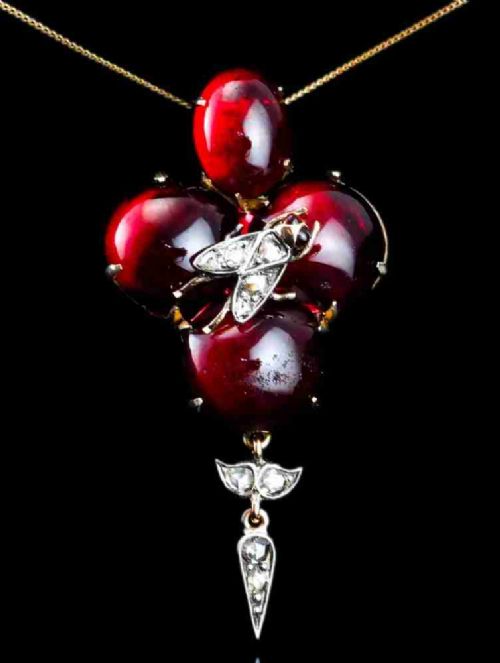
A gold garnet pendant is a neck ornament featuring deep red gemstones set in gold, spanning periods from the Victorian era through the Edwardian years and into the mid-twentieth century. The selection ranges from delicate clover hearts and starburst clusters to elaborate lavalier drops accented with pearls.
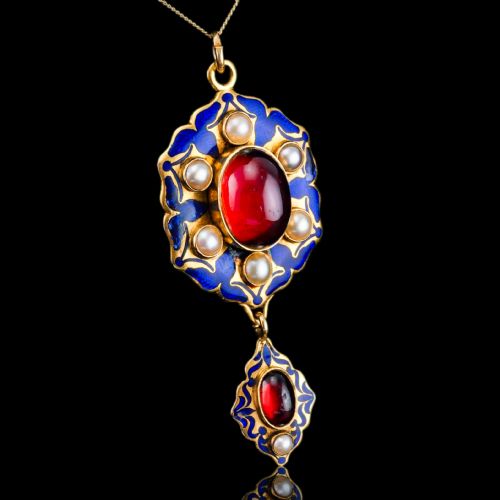
Victorian examples often display rich almandine stones paired with high-carat gold, sometimes incorporating memorial glazed compartments or revivalist enamel work. Edwardian pieces tend towards flowing organic lines of Art Nouveau design, integrating seed pearls alongside cabochon or faceted garnets in lighter 9ct or 15ct gold settings.
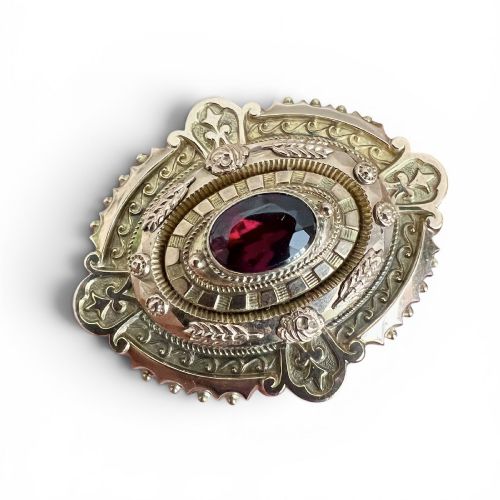
Mid-century and later interpretations on this page include clean oval cuts and pear-shaped cluster designs set in standard 9ct gold. Buyers encounter convertibles too, such as brooches fitted with bails to serve double duty as pendants.
How they were made
Goldsmiths constructed these pendants using varying purities of yellow and rose gold, ranging from standard 9ct and 10ct up to rich 14ct, 15ct, and 18ct alloys. Stones were secured using collet settings, grain settings, or delicate claw work designed to catch light through deep red facets or smooth cabochons.
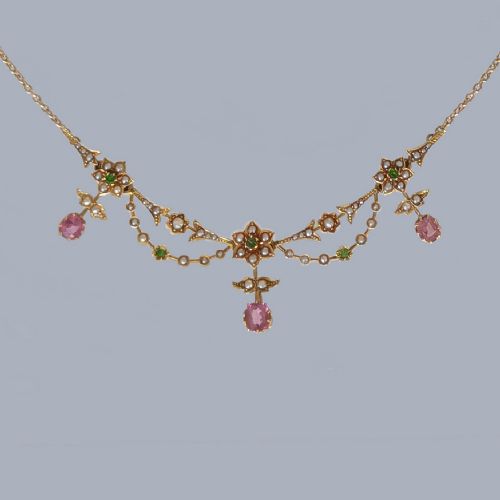
Craftsmen frequently combined garnets with seed pearls, diamonds, peridots, and occasional enamel or glass elements. Techniques such as repoussé, granulation, and openwork wire framing define the intricate structural styles seen across the Victorian Renaissance and Edwardian periods.
Gold Garnet Pendant Retail Price Guide 2026
Typical asking prices for gold garnet pendant among the pieces listed under this phrase on Sellingantiques today, from the lower quarter to the upper quarter. They describe what is for sale here now, not the wider market.
Some Victorian birds managed to smuggle themselves onto golden branches, perching permanently in garnet form.
What varies in quality
Quality rests on the depth of the gold work and the selection of the stones. Finer pieces show crisp hand-carved details, secure stone alignment, and well-matched garnets with intense saturation rather than dull opacity.
The sophistication of the design dictates distinction, moving from simple commercial cluster stampings to intricate, articulated Edwardian lavaliers with balanced pearl drops and substantial metal weight.
The Gold Garnet Pendant Glossary
- Almandine garnet
- A dense, deep red variety of garnet commonly found in Victorian and Edwardian cluster pendants.
- Cabochon
- A gemstone shaped and polished with a smooth convex surface rather than faceted edges.
- Lavalier
- A pendant featuring a central stone or drop suspended from a small chain or symmetrical framework, popular during the Edwardian period.
- Holbeinesque
- A heavy, ornate Victorian revival style inspired by sixteenth-century court jewellery, often incorporating enamel, pearls, and prominent cabochon stones.
- Seed pearl
- A very small, naturally formed or cultured pearl used in delicate clusters and borders around central gemstones.
Gold Garnet Pendant: Frequently Asked Questions
How do I date a gold garnet pendant?
Dating relies on examining the metal hallmarks, the cut of the stones, and the overall manufacturing style. Victorian pieces often feature closed backs or high-carat rose gold, while Edwardian items lean towards airy lavalier frames with seed pearls.
Later mid-century examples typically utilise standard 9ct gold with machine-finished cluster settings or straightforward oval cut stones.
Can I wear a gold garnet pendant every day?
Garnets possess a reasonable hardness for daily wear, though antique settings require gentle treatment. Care should be taken to avoid exposing pearls, if present, to harsh chemicals or ultrasonic cleaning.
Storing the pendant separately prevents scratching against other items in a jewellery box.
What is the difference between a lavalier and a cluster pendant?
A lavalier incorporates a dangling drop suspended below the main decorative framework, creating a swinging movement typical of Edwardian designs. Cluster pendants arrange stones tightly around a central focal point, often forming starburst or floral patterns.
Both styles make frequent use of contrasting seed pearls and garnets.
Why do some pendants also function as brooches?
Many nineteenth-century jewels were constructed with hinged pin stems and hidden loops, allowing the owner to pin the ornament to clothing or suspend it from a chain. This versatility was common during the Victorian era when multi-use accessories were highly favoured.
Modern wearers simply slide a chain through the integrated bail or fold-down loop.