

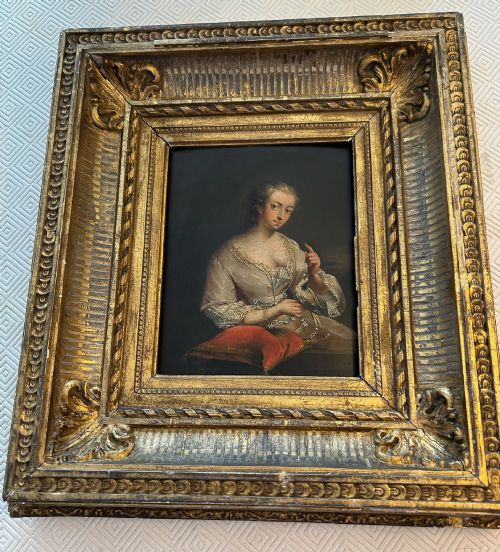


Gold Framed Wall Miniatures
Gold framed wall miniatures are small paintings, silhouettes and plaques housed in gilded surrounds, offering collectors intimate portraiture and delicate detail on a domestic scale.
Gold Framed Wall Miniatures
Gold framed wall miniatures encompass small-scale portraiture, landscape studies, and decorative plaques originating from the Georgian, Regency, and Victorian periods. Buyers search for these pieces to add focused points of historical character and refined craftsmanship to wall spaces.
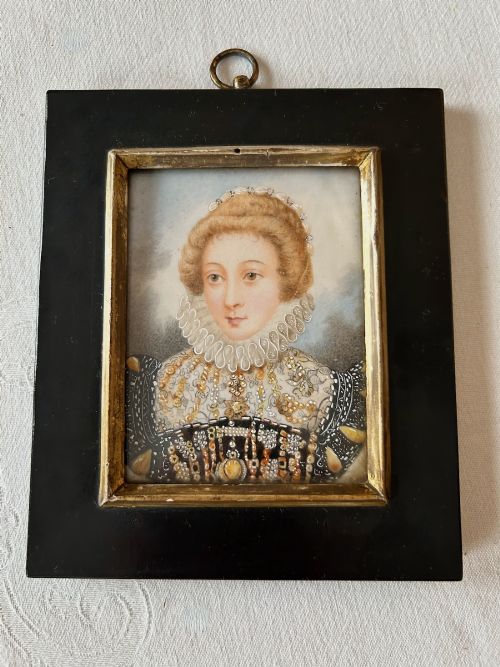
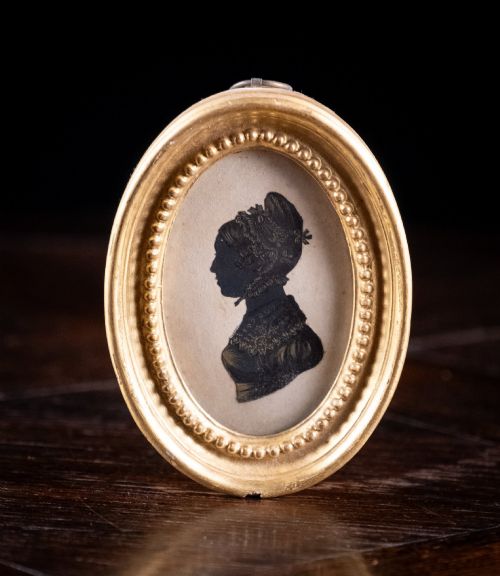
The objects span varied media, including delicate watercolours on paper and ivory, oil paintings on panel, painted porcelain plaques, and silhouettes. Portrait miniatures depicting historical figures, nobility, and family members dominate the available forms.
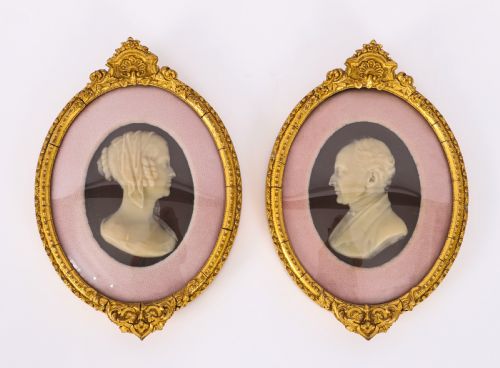
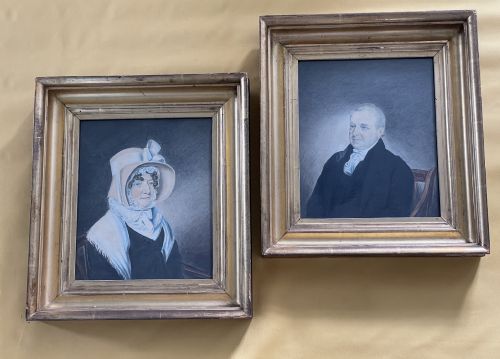
Origins stretch across British, European Continental, and Indian traditions, reflecting both academic portraiture after Old Masters and intimate domestic commissions. Pieces frequently survive in pairs or matched sets, often retaining their original enclosures.
Materials and construction
Makers utilised delicate supports such as paper, card, ivory, silk, and ceramic porcelain plaques to achieve fine detail. Pigments include watercolour, gouache, pastel, and oil paints applied with minute brushes.
Enclosures rely on timber frames finished with gold leaf, giltwood, or gilt metal mounts, sometimes incorporating cast or hand-carved ornamentation. Glazing protects the painted surfaces, while paper backings and silk linings secure the miniature within its casing.
Several ladies gaze sternly across the centuries while sharing wall space with mischievous dogs and mythological deities.
Distinction in execution
Quality rests primarily on the precision of the brushwork and the psychological depth captured in facial expressions and attire. Superior examples display confident handling of light and proportion by skilled hands rather than mechanical reproduction.
The integrity of the frame also dictates overall standing, with hand-carved giltwood and original fire-gilt metal mounts elevating the piece above later replacements. Preservation of the underlying painted or drawn surface without heavy overpainting determines lasting worth.
Henri Fradelle·Richard Cosway·J Bizo·Susie Lassam·John Smith of Edinburgh·Ozias Humphry
The Gold Framed Wall Miniatures Glossary
- Portrait miniature
- A small-scale painting, typically executed on ivory, vellum, or card during the eighteenth and nineteenth centuries. These works were designed to be carried, worn, or displayed closely on domestic walls.
- Giltwood
- Timber carved and coated with a thin layer of gold leaf or gold powder applied over a prepared gesso ground. It provides the ornate shimmering border characteristic of period miniature frames.
- Chrystoleum
- A Victorian technique where a coloured print is made transparent with chemicals, stuck to glass, hand-painted from behind, and mounted in a frame. This process created the illusion of a genuine oil painting.
- Porcelain plaque
- A flat ceramic tablet fired at high temperatures and hand-painted with enamel colours, often depicting classical subjects or portraits after Renaissance masters. These plaques were frequently mounted in heavy gilt metal frames.
- Silhouette
- A profile portrait cut from black paper or painted in solid dark pigment against a pale background. Artists used these economical likenesses extensively during the Georgian and Regency eras.
Gold Framed Wall Miniatures: Frequently Asked Questions
How do I hang wall miniatures safely?
Choose a wall protected from direct sunlight and fluctuating humidity to safeguard fragile watercolours and organic pigments.
Use appropriate picture hooks rated for light frames, securing the piece at eye level where the intricate detail can be properly observed.
Were these pieces always intended for walls?
Many early portraits began as personal items kept in lockets or pocket cases before later mounting in wall frames.
By the nineteenth century, makers produced specific formats designed expressly for domestic wall display, often in matching pairs.
How do I date a gold framed miniature?
Examine the costume, hair styling, and framing materials for stylistic clues matching Georgian, Regency, or Victorian aesthetics.
Backings, handwritten inscriptions, and maker signatures on the reverse or surface frequently confirm the period of production.