


Gold Framed Oriental Art
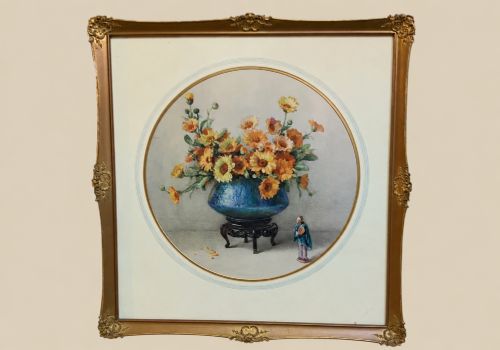
Gold framed oriental art brings together diverse regional traditions and shimmering gilt surrounds, offering historic textiles, paintings and mirrors for the wall.
Gold Framed Oriental Art
Gold framed oriental art encompasses a rich variety of paintings, watercolours, textiles and wall mirrors originating from Chinese, Mughal, Ottoman, Indian and Japanese traditions. These works span the late eighteenth, nineteenth and early twentieth centuries, capturing diverse cultural aesthetics from the Qing Dynasty to the Meiji period.
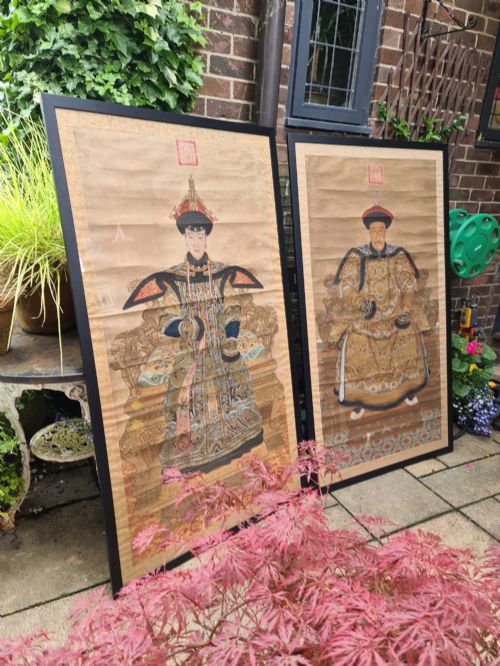
Buyers frequently encounter framed Chinese ancestor scrolls, delicate pith paintings of insects, and vibrant Indian gouache miniatures depicting rulers or lovers in landscapes. Alongside these works on paper and silk, oil paintings and embroidered fragments bring varied textures to the category.
The objects take several forms, dominated by wall art, framed paintings and embroidered panels designed to command attention in a room. Whether through an Ottoman embroidered jacket framed for display or a reverse painted glass mirror, each piece reflects distinct regional craftsmanship.
Materials and techniques
Makers utilised wood, glass, paper and silk as the primary supports for these artworks, applying ink, watercolour, gouache and oil paints by hand. Many pieces incorporate gold leaf or gilt wood frames that complement the metallic threads found in embroidered fragments and silk robes.
Techniques range from traditional brushwork on delicate pith paper to reverse painting on glass and intricate needlework using metallic threads on textiles. The framing often relies on gilded wood moulding to protect and elevate the visual impact of the paintings and panels.
Some nineteenth-century Chinese pith paintings preserve microscopic butterfly wings and insect antennae with astonishing botanical precision.
Judging quality in these works
Quality rests upon the precision of the brushwork or needlework, the preservation of fragile materials like silk and paper, and the harmony between the artwork and its gilt wood frame. Finer examples display meticulous detail in facial expressions, plumage, or botanical elements, whereas lesser works show coarser execution.
The condition of the backing support and the originality of the framing significantly influence the overall standard. Pieces retaining their original gold leaf frames and stable pigments command greater appreciation from collectors.
Frederick Goodall RA·R.A Bartlett·Richard Wilson·K. Schubert
The Gold Framed Oriental Art Glossary
- Gouache
- An opaque water-based paint that dries to a matte finish. It allows for rich, saturated colour application on paper and cloth.
- Pith painting
- A fragile watercolour created on the cellular pith of the Tetrapanax papyrifer plant. These works are known for their luminous, velvety texture.
- Reverse painting on glass
- An image painted directly onto the rear side of a glass panel so that the finished piece is viewed through the transparent front. This technique produces a glossy, reflective surface.
- Ancestral scroll
- A hanging painting depicting family forebears, traditionally displayed for veneration. These scrolls often feature detailed portraits rendered in ink and colour on silk or paper.
Gold Framed Oriental Art: Frequently Asked Questions
How should I hang fragile silk and paper art?
Protect delicate watercolours, silk paintings and embroidered panels by placing them away from direct sunlight and excessive humidity. Consistent indoor temperatures prevent the paper and textiles from becoming brittle over time.
Ensure the gold frame is securely fastened to the wall using appropriate fixings for its weight. Professional framing with UV-filtering glass provides an extra layer of defence for nineteenth-century works.
Are these pieces painted on canvas or paper?
The support varies considerably depending on the origin and medium of the specific artwork. Surviving pieces utilise wood, glass, delicate paper, pith, and woven silk.
Oil paintings typically appear on canvas or board, while traditional Chinese and Indian works favour paper or silk scrolls and miniature formats.
How do I identify a nineteenth-century frame?
Nineteenth-century frames frequently employ carved gilt wood with hand-applied gold leaf rather than modern synthetic finishes. Close inspection often reveals subtle tooling, minor age-related oxidation, and traditional joinery at the corners.
The weight of the wood and the construction of the backing boards offer further clues to the period of manufacture.