
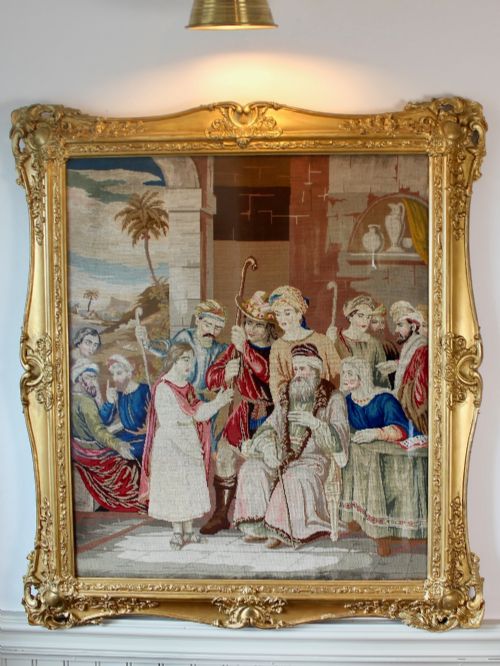

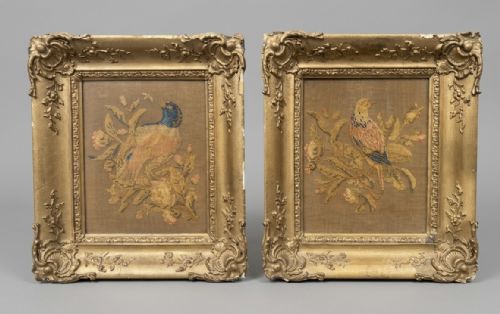


Gold Framed Needlework Picture
These gold framed needlework picture examples bring centuries of textile art into modern rooms with rich silk and giltwood splendour.
Gold Framed Needlework Picture
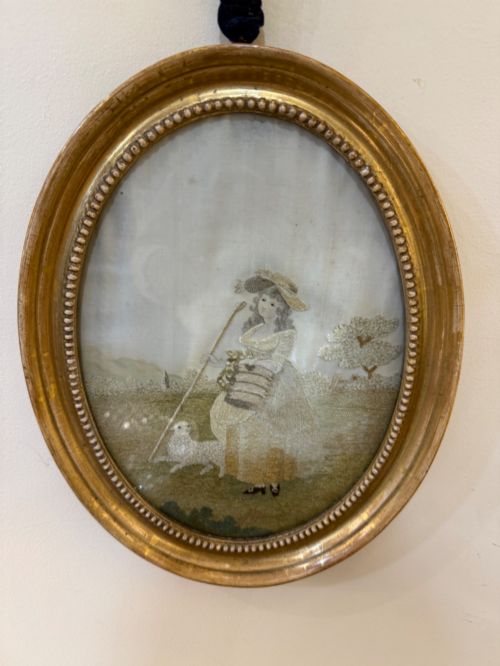
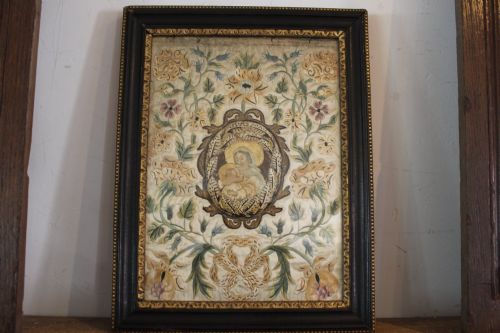
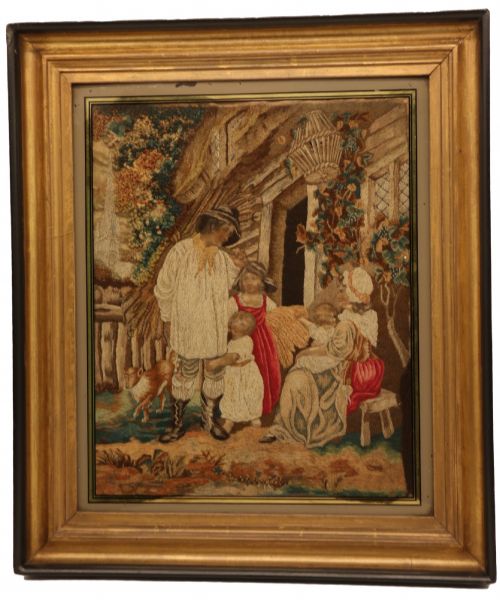
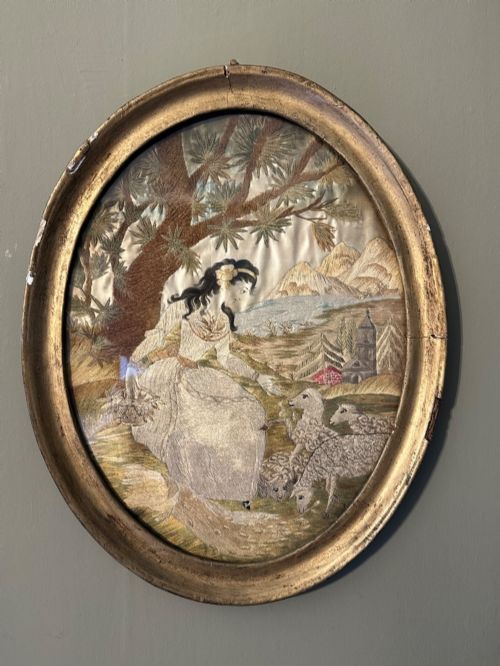
A gold framed needlework picture brings together historic textile artistry and decorative framing, ranging from delicate 18th century silk work to robust Victorian woolwork. Collectors seek these pieces for their intricate depictions of landscapes, racing tracks, and classical scenes rendered in thread.
The pieces on this page span the 17th, 18th, 19th, and early 20th centuries, showing forms from oval panels to large rectangular wall art. Buyers most frequently encounter 19th century and Regency examples housed in original giltwood or black glass frames.
How these textile works were constructed
Makers housed these embroideries behind protective glass within water gilded or giltwood frames, often incorporating mezzotint borders. The combination of organic threads and heavy wooden framing protected the delicate textiles from environmental damage over the centuries.
Several historical needlework panels depict specific bygone spectacles, including King Charles II with his favourite companion and Epsom horse racing tracks.
What determines the quality of a piece
The distinction between standard and superior pieces rests on the complexity of the stitchwork and the preservation of the original materials. Finer examples display meticulous long stitch or silk work techniques that retain vibrant colour and tight tension across the canvas.
The framing contributes significantly to the overall merit of an artwork, with original water gilded or black glass frames holding higher regard than later replacements. The synergy between the textile's pictorial detail and the frame's period character defines the upper tier of these items.
The Gold Framed Needlework Picture Glossary
- Berlin woolwork
- A type of counted thread embroidery popular in the 19th century, typically worked in wool on canvas using printed grid patterns.
- Giltwood
- Wood that has been coated with a thin layer of gold leaf or gold paint, frequently used for 18th and 19th century picture frames.
- Stumpwork
- A raised embroidery style from the 17th century that uses padded foundations to create three-dimensional figures and motifs.
- Mezzotint glass
- Dark or black glass used in framing during the Regency period to provide a contrasting border that enhances the tones of silk embroidery.
- Crewel work
- Embroidery executed using fine wool yarn on a plain woven fabric base, common in early 19th century textile pieces.
Gold Framed Needlework Picture: Frequently Asked Questions
How do I date a gold framed needlework picture?
Dating relies on examining the framing style, the fabric ground, and the type of thread used in the embroidery. 17th century examples often feature stumpwork and raised elements, while Regency and Victorian pieces favour smooth silk work or heavy wool.
Changes in frame moulding and the presence of original backboards or black glass borders also provide reliable clues for establishing the period of creation.
Were these pictures always framed in gold?
Many period pieces were housed in giltwood or water gilded frames from creation, designed to complement the richness of the silk and metallic threads. Some Regency and Victorian examples utilised black glass mounts within the gilt frames to create artistic contrast.
While original frames are prized by collectors, framing styles often reflected the taste of the era in which the embroidery was made or later mounted.
How should I care for a textile picture?
Protecting needlework art requires hanging pieces away from direct sunlight to prevent the silk and wool threads from fading over time. Maintaining a stable indoor climate helps preserve both the historic fabric and the wooden gilt frame.
Glass fronts already protect the delicate stitches from dust and ambient moisture, meaning minimal physical intervention is needed beyond gentle exterior dusting.
What subjects appear in these antique embroideries?
The subjects range widely from classical mythological scenes and royal commemorations to domestic landscapes and sporting events like horse racing. Early pieces frequently depict historical figures or biblical narratives in detailed thread work.
Later 19th century examples often translate famous paintings or local topography, such as Oxford scenes and rural fields, into wool and silk tapestries.