

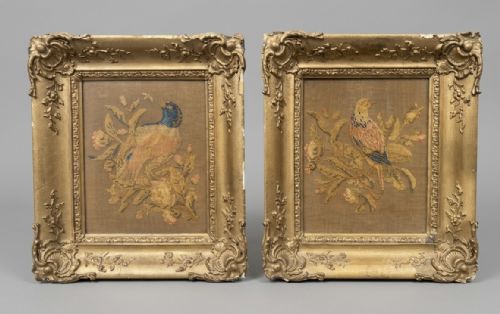


Gold Framed Needlepoint Picture
These gold framed needlepoint picture pieces combine detailed threadwork and gilt surrounds, offering collectors tangible fragments of domestic needlecraft history.
Gold Framed Needlepoint Picture
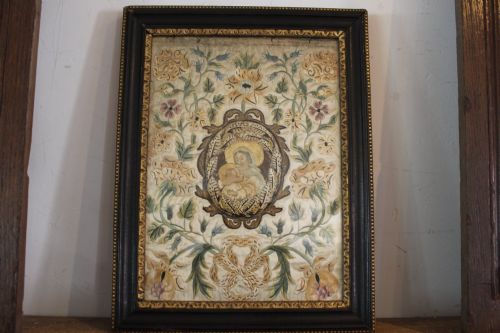
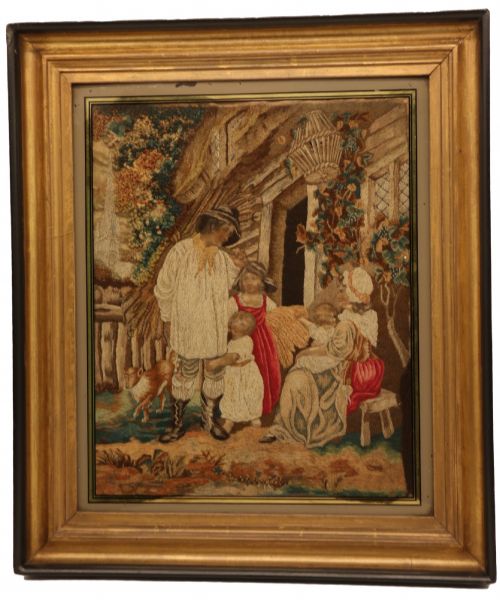
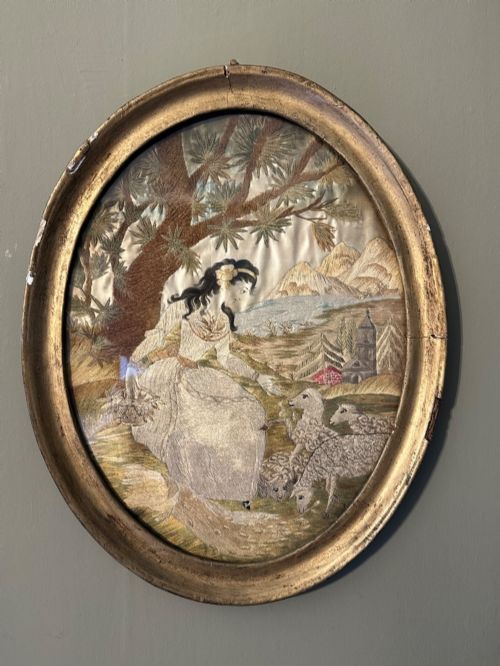
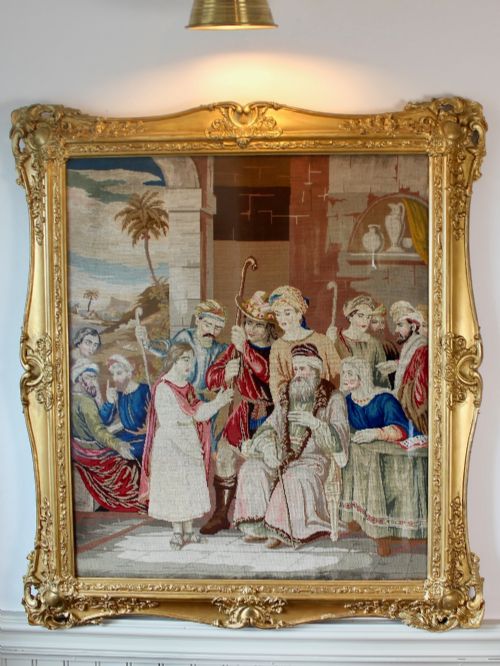
A gold framed needlepoint picture encompasses textile artworks executed in wool, silk, and metallic thread, enclosed within giltwood or water-gilded frames. These works range from early seventeenth-century silk embroidery panels and stumpwork to nineteenth-century Berlin woolwork and regency long stitch scenes.
Buyers encountering this selection will most frequently find nineteenth-century and Victorian examples, alongside eighteenth-century English and continental pieces. Subjects vary widely from classical portraits and literary narratives such as Pharaoh's dream to topographical views like Epsom Park and Abingdon.
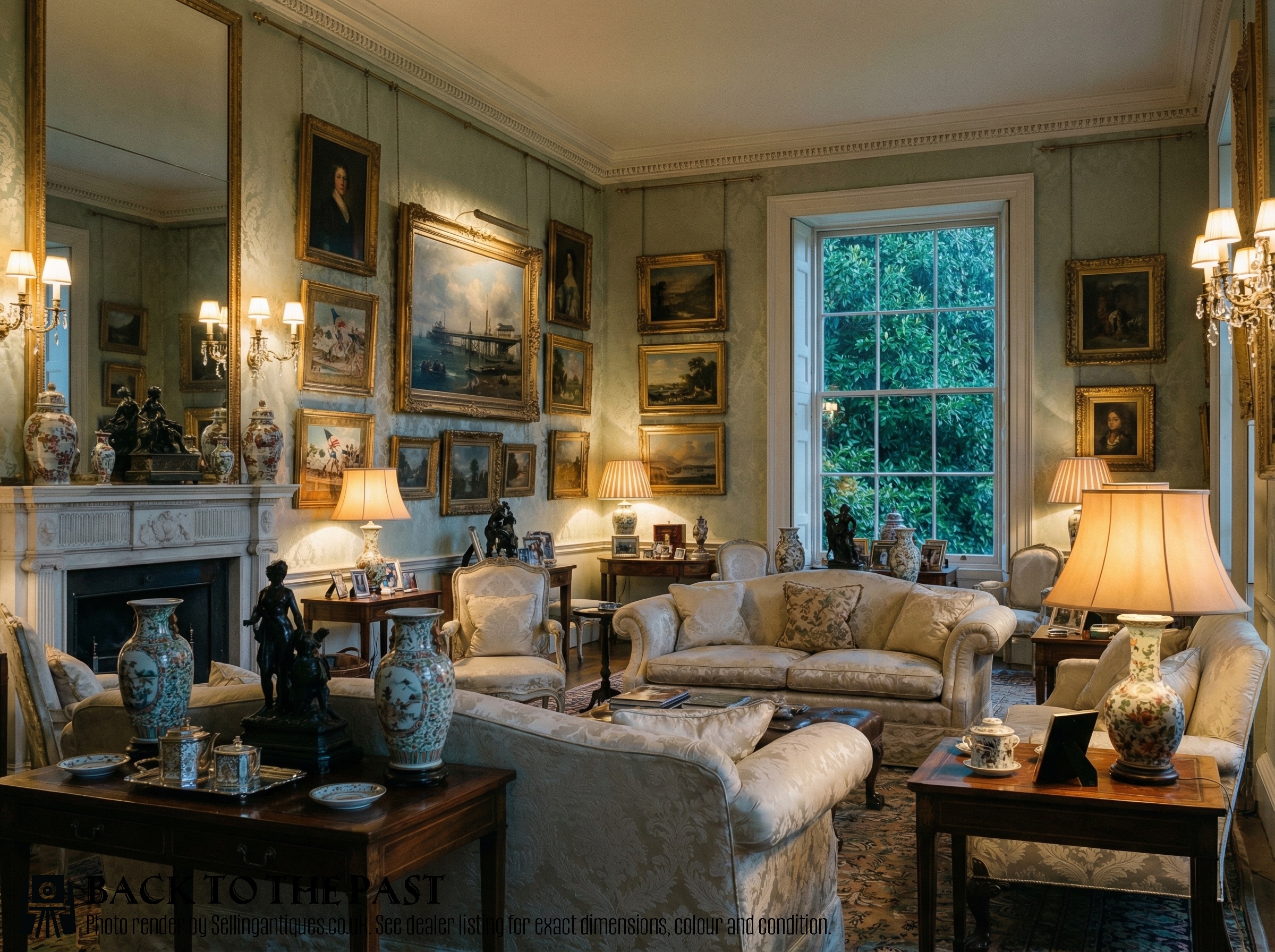
The objects serve primarily as wall art, bringing historical textile art into domestic interiors. They bridge the gap between fine art painting and domestic craft, frequently utilising painted details alongside physical stitching.
Assessing Quality and Execution
Quality in a gold framed needlepoint picture resides in the precision of the stitching and the sophistication of the pictorial composition. Finer works display intricate thread shading, complex stitch varieties such as long stitch or stumpwork, and well-executed hand-painted elements.
The relationship between the textile and its surround dictates much of the visual success, with original water-gilded or mezzotint glass frames enhancing the integrity of the piece. Superior examples maintain vibrant thread colour and stable mounting within their historical enclosures.
Geographic origins represented include English, Scottish, French, and Italian workshops, showcasing diverse regional embroidery traditions.
The Gold Framed Needlepoint Picture Glossary
- Stumpwork
- A raised embroidery style popular in the seventeenth century, utilising padded elements to create a three-dimensional effect on the panel.
- Berlin woolwork
- A type of counted thread embroidery popular in the nineteenth century, worked in wool from printed colour-coded grid patterns.
- Giltwood
- Timber that has been coated with a thin layer of gold leaf or gold paint, frequently used for antique picture frames.
- Long stitch
- An embroidery technique using parallel or overlapping stitches of varying lengths to fill pictorial areas smoothly.
- Mezzotint glass
- Dark glass borders used in framing, often featuring reverse printing or gilding to create a decorative edge around the artwork.
Gold Framed Needlepoint Picture: Frequently Asked Questions
How should I hang my needlepoint picture?
Keep textile artworks away from direct sunlight to prevent the fading of silk and wool threads over time. Stable indoor humidity protects both the wooden frames and the fragile fabrics.
Ensure secure wall fixings are used, as giltwood frames combined with glass can carry significant weight. Professional framing backing helps keep dust and atmospheric moisture away from the historic textile.
How do I identify the period of the frame?
Frame construction techniques, such as corner joinery and the type of gilding used, offer primary clues to the age of the surround. Water-gilding over gesso points towards earlier eighteenth and nineteenth-century craftsmanship.
Original frames often show age-appropriate wear and patination that matches the era of the textile within. However, frames and pictures were sometimes united later in their history.
What subjects appear in these works?
The subject matter ranges widely from biblical and literary narratives to historical portraits and classical scenes. Topographical views and landscape depictions also feature prominently across the selection.
Domestic and allegorical themes reflect the educational and decorative pursuits of the makers. Commemorative pieces mark specific historical events or military achievements.