


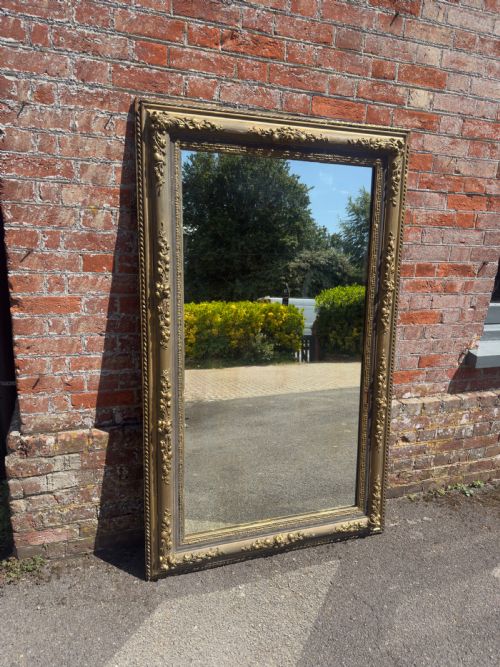
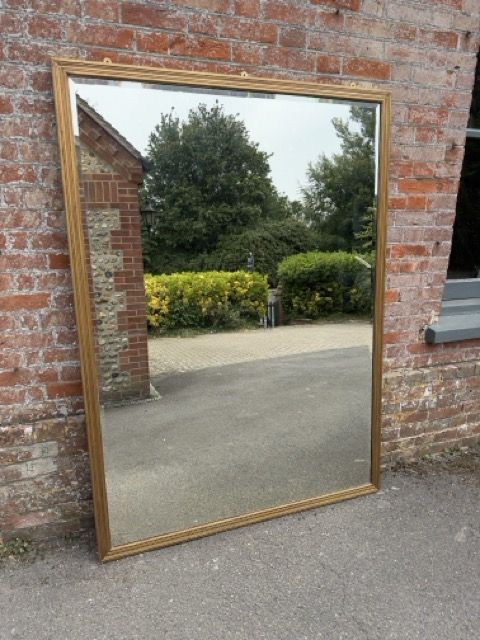
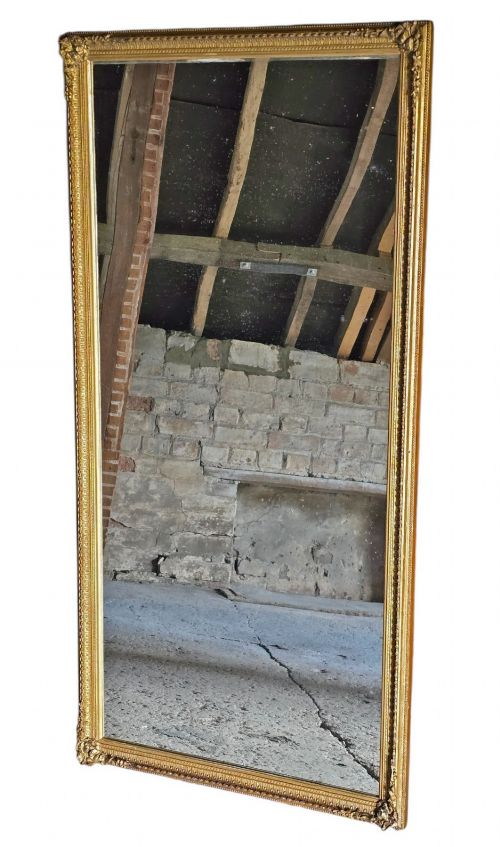
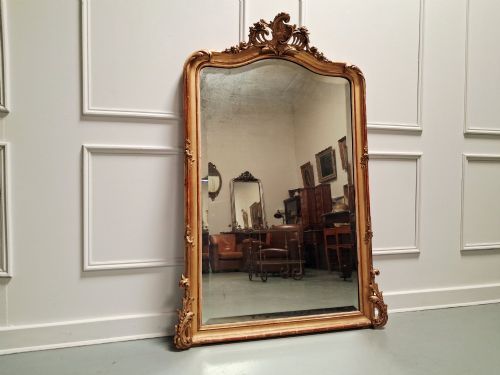


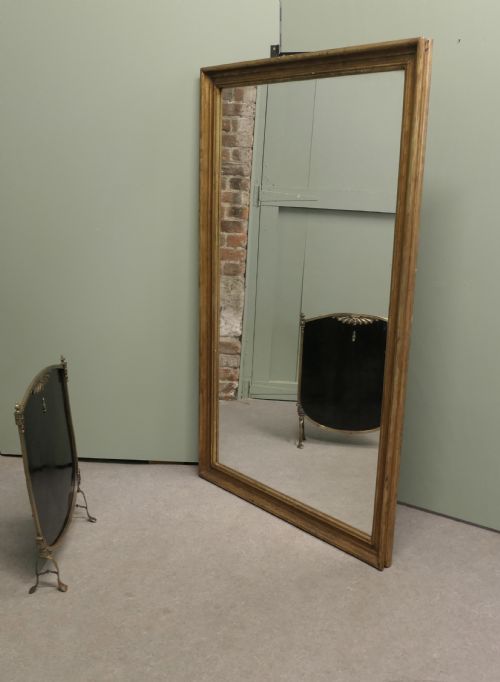
Gold Framed Floor Mirror
A gold framed floor mirror brings scale and reflected light to a room, drawing the eye along tall proportions.

Gold Framed Floor Mirror
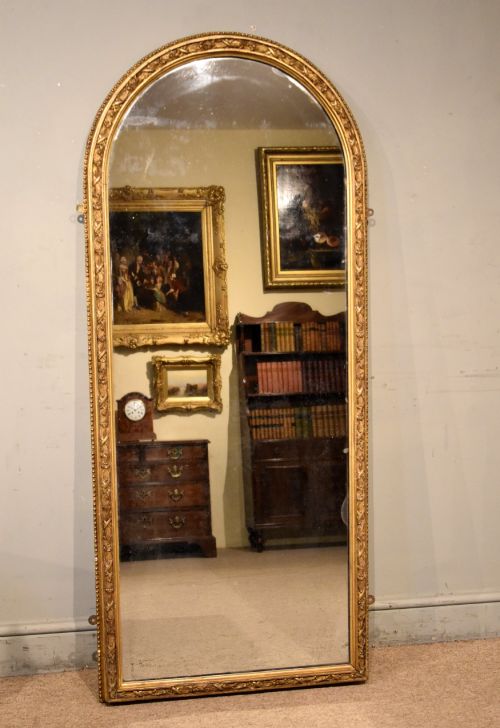
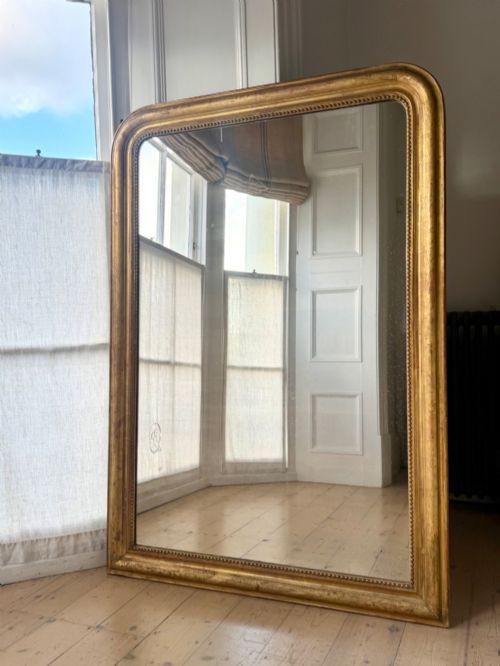
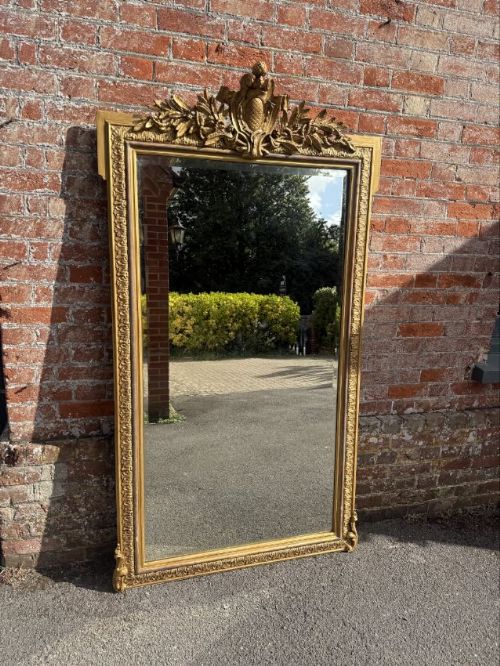
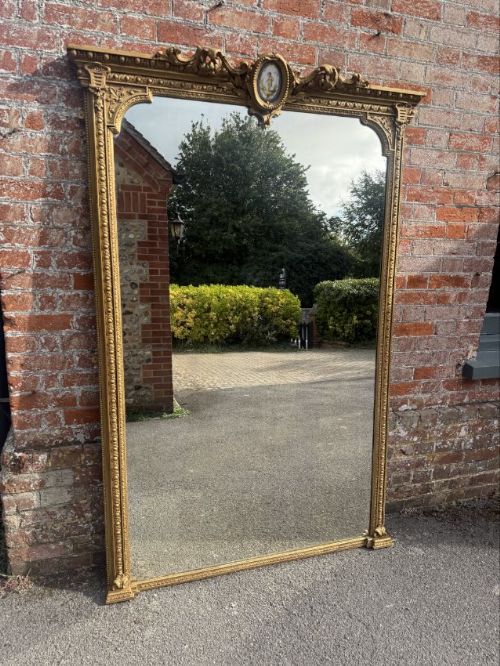
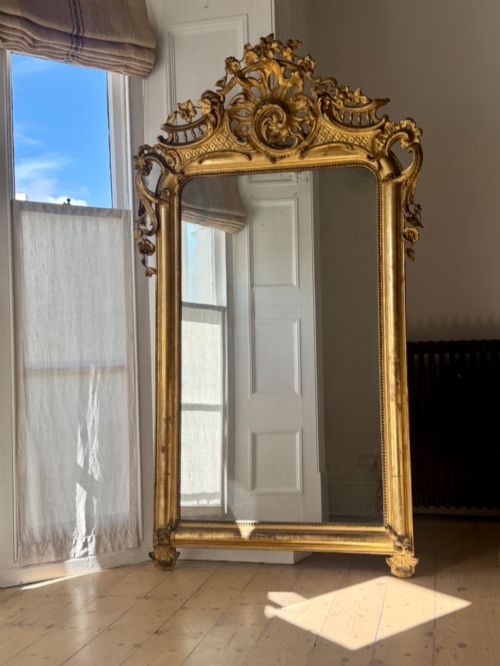
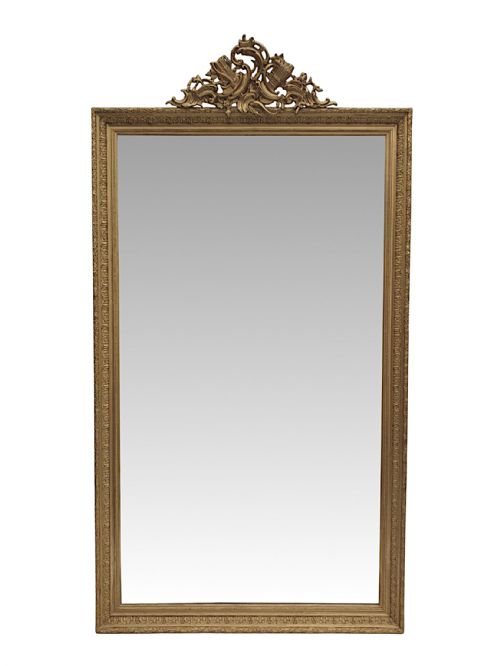
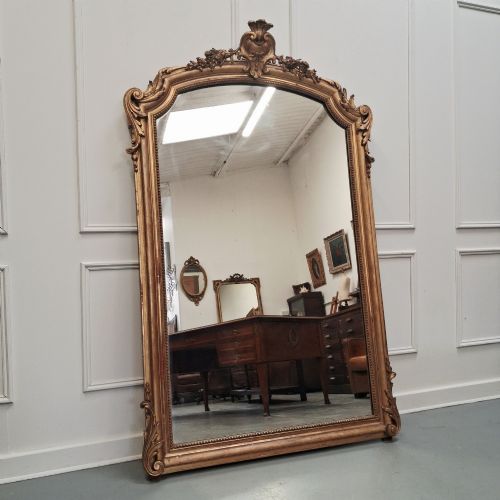
When you search for a gold framed floor mirror, you encounter large vertical surfaces designed to stand on the floor or lean securely against a wall. The examples on this page span the eighteenth century through to the early twentieth century, taking in English and French workshops.
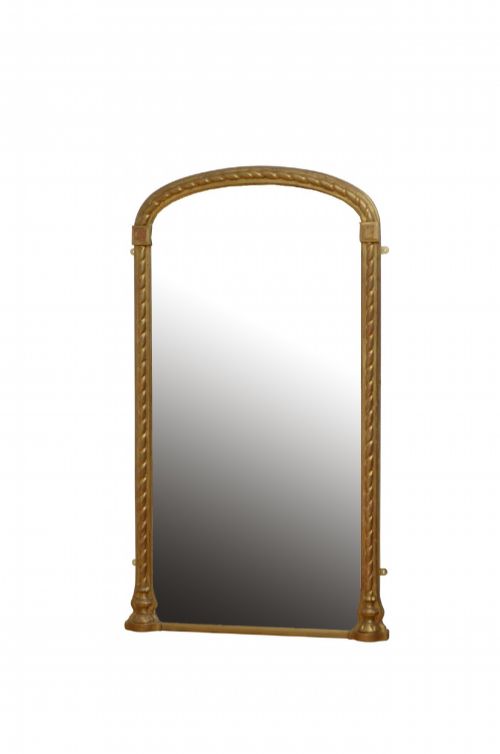
Most pieces you meet here belong to the nineteenth century, encompassing Victorian, Regency, and Louis Philippe periods. These tall formats serve as leaner mirrors, pier mirrors, and dressing mirrors, often featuring shaped or arched tops.
Makers shaped wood frames with gesso and covered them in gold leaf or gilt paint to achieve rich surface reflectivity. Many retain their original mercury glass, showing the characteristic soft speckling of age.
How they were made
Carved timber provides the structural foundation for these frames, utilising pine or hardwood substrates shaped by hand. Craftsmen applied layers of gesso over the wood to build up intricate relief patterns before gilding.
The application of gold leaf or composition metal leaf creates the bright metallic surface, frequently burnished to catch the light. Early plates consist of mercury glass, set carefully into the rabbet behind the frame.
Gold Framed Floor Mirror Retail Price Guide 2026
Typical asking prices for gold framed floor mirror among the pieces listed under this phrase on Sellingantiques today, from the lower quarter to the upper quarter. They describe what is for sale here now, not the wider market.
Some tall frames hide the reflections of generations behind softly foxed mercury glass, quietly watching rooms change over centuries.
What varies in quality
Depth and precision in the wood carving separate standard framing from exceptional work. Crisp execution in the gesso ornamentation indicates skilled hand-tooling rather than simple moulded production.
The integrity of the original gilding and the clarity or character of the mirror plate determine the desirability of the piece. Surviving original mirror glass with natural foxing holds greater appeal than a modern replacement.
Nosotti's·Versace
The Gold Framed Floor Mirror Glossary
- Gesso
- A plaster-like mixture applied to wood frames to create a smooth surface for carving and gilding. This material takes fine detail before the gold leaf goes on.
- Giltwood
- Timber coated in gold leaf or gold paint. It forms the primary visual finish across these tall frames.
- Mercury glass
- An early type of mirror plate produced by pouring a mercury and tin amalgam behind glass. It yields a softer, speckled reflection than modern silvered glass.
- Leaner mirror
- A tall vertical glass designed to stand upright against a wall without hanging brackets. These pieces rely on their own height and weight for stability.
- Pier mirror
- A tall narrow glass traditionally hung or placed on the wall space between two windows. They amplify natural light in period rooms.
Gold Framed Floor Mirror: Frequently Asked Questions
How do I secure a heavy leaner mirror?
Large nineteenth-century frames carry significant weight and require careful placement against a solid wall. Use hidden security fixings at the top of the frame to prevent accidental tipping.
Ensure the floor surface offers stable footing, whether resting on floorboards or thick carpet. Professional installation is advisable for exceptionally tall pieces.
What is Louis Philippe style?
Louis Philippe mirrors date from the mid-nineteenth century and feature understated, elegant lines. They typically display a gently rounded upper corners and simple bead or ribbon framing.
This style suits modern interiors as well as traditional rooms because the ornamentation remains restrained. The frames focus on proportion rather than heavy carved relief.
Should I replace foxed mirror glass?
Original mercury glass often shows dark spots and soft distortion known as foxing. Collectors prize this ageing as proof of authenticity and historical character.
Replacing the plate destroys the integrity of the antique piece. Live with the aged reflection to appreciate the true depth of the nineteenth-century surface.
How do I clean an antique gilt frame?
Dust giltwood frames gently using a soft, dry brush to protect the delicate gold leaf. Avoid liquid cleaners and chemical sprays which can strip the original gesso and surface finish.
Water causes irreversible damage to nineteenth-century water gilding. Regular light dusting is all the maintenance these surfaces require.