

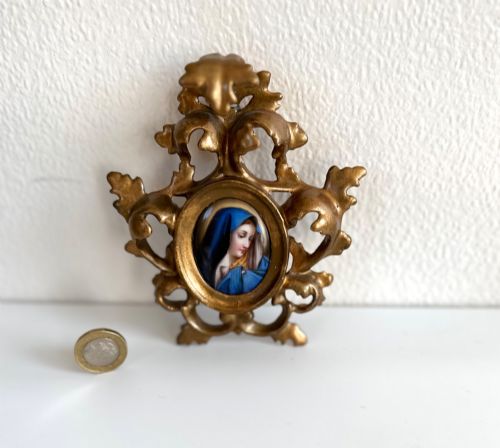
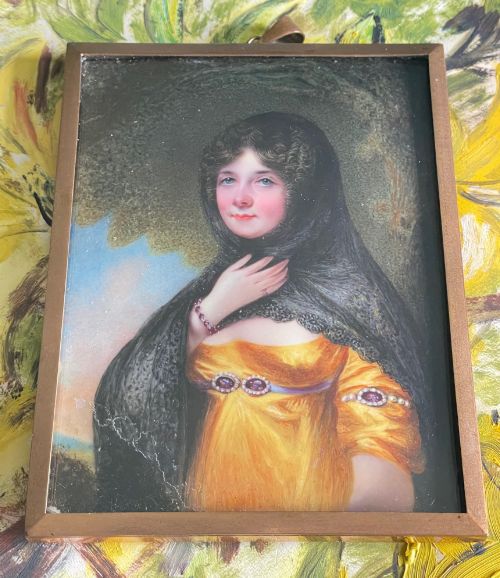


Gold Framed Enamel
These gold framed enamel pieces unite painted portraiture and fine metalwork, offering intimate historical keepsakes for any discerning collector.
Gold Framed Enamel
Gold framed enamel pieces comprise miniature portraits, decorative plaques, pendants, clocks, and frames spanning the eighteenth century to the Edwardian era. You will most frequently encounter portrait miniatures and small frames rendered in styles from Georgian simplicity to Victorian Rococo Revival and Art Nouveau.
The objects originate from British and continental workshops, capturing likenesses of notable figures alongside religious subjects. Their forms range from wearable pendants to table mirrors and wall art, each set within metal mounts of gilt bronze, ormolu, or gold.
How they were made
Craftsmen applied enamel paint onto metal or porcelain supports, firing the pieces to achieve durable, glossy colour surfaces. Portrait specialists painted fine details by hand before sealing the work under glass or setting it directly into frames.
Mounts and frames utilised gilt metal, ormolu, and solid gold, often embellished with chased decoration, pearls, or champleve enamel techniques. These housings were constructed to protect the delicate enamel work while providing ornate structural surrounds.
Gold Framed Enamel Retail Price Guide 2026
Typical asking prices for gold framed enamel among the pieces listed under this phrase on Sellingantiques today, from the lower quarter to the upper quarter. They describe what is for sale here now, not the wider market.
Cherubs peer out from gilt bronze frames, guarding miniature portraits of nobility and saints with unwavering metal wings.
What varies in quality
Quality rests primarily upon the skill of the enamel painter, where refined brushwork and lifelike facial rendering distinguish master portraitists from commercial workshops. The crispness of the surrounding metalwork, whether cast ormolu or chased gold, also dictates the overall standard.
The integration between the enamel panel and its frame reveals the maker's competence, with superior pieces showing precise fitting and harmonious design. Materials such as solid gold and detailed champleve work elevate the standing of an item above standard gilt metal mounts.
Horace Hone·Christian Friedrich Zincke·Stinton·Henry Pierce Bone·F.Bienvue
The Gold Framed Enamel Glossary
- Enamel paint
- A glossy, pigmented paint fused to a metal or porcelain base through high-temperature firing. This technique produces a hard, durable surface resistant to fading.
- Ormolu
- Gilded bronze or brass applied to decorative objects and furniture mounts. The finish mimics solid gold through a mercury amalgamation process.
- Champleve
- An enamelling technique where troughs are dug into a metal surface and filled with enamel powder before firing. The surrounding metal lines form a distinct grid pattern.
- Portrait miniature
- A small, highly detailed painting capturing a person's likeness, usually created on ivory, vellum, or enamel. They were often worn as pendants or kept in protective cases.
Gold Framed Enamel: Frequently Asked Questions
What are gold framed enamel pieces?
These items are small decorative and wearable works featuring enamel painted portraits, plaques, or scenes housed in metal frames. They span periods from the eighteenth century to the early twentieth century.
They encompass items such as pendant necklaces, portrait miniatures, clocks, and photograph frames. The materials combine painted enamel surfaces with gilt metal, ormolu, and gold mounts.
How were portrait miniatures used?
Portrait miniatures served as intimate personal keepsakes, often worn close to the heart as pendant necklaces or kept on desks and dressing tables. They allowed individuals to carry likenesses of family members, monarchs, or religious figures.
Over time, many functioned as both personal tokens of affection and displays of social status. Their protective frames ensured the delicate painted surfaces survived regular handling.
How do I date a piece?
Dating relies on the stylistic markers of the frame and the painting technique, alongside any signatures or hallmarks present on the metal. Georgian and Regency pieces often feature simpler classical lines, whereas Victorian and Edwardian examples show revival styles or Art Nouveau curves.
Comparing the portrait subject's clothing and hairstyle to historical fashion plates provides additional chronological clues. Enamel composition and mounting techniques also shifted across the eighteenth and nineteenth centuries.
How should I display them?
Display these items away from direct sunlight to protect the enamel colours and any organic materials like pearls from degradation. Wall-hung pieces and table mirrors require stable placements where they will not be knocked.
Pendants benefit from secure storage or specialist display cases when not being worn. Gentle handling prevents damage to the delicate metal mounts and glass covers.