

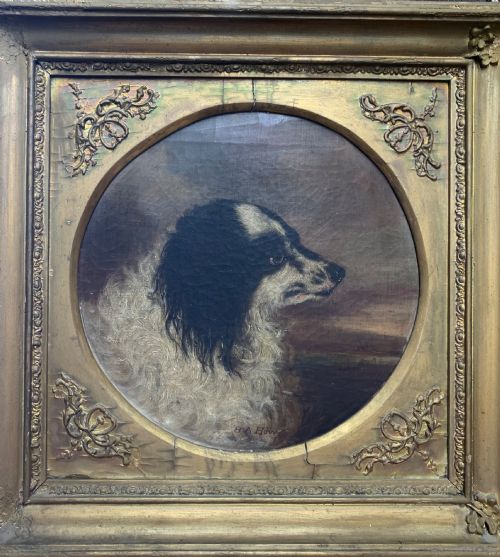
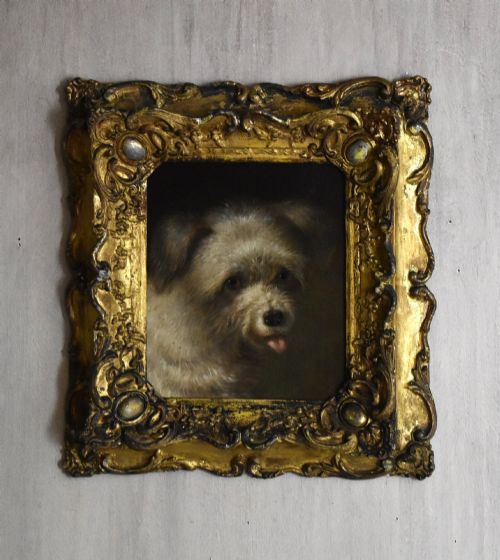
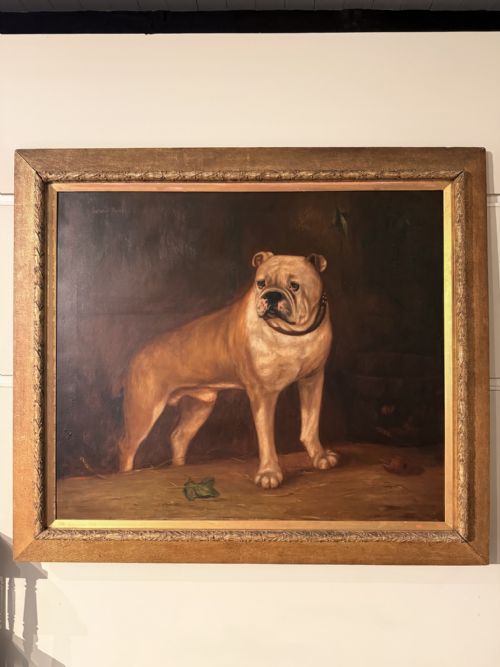
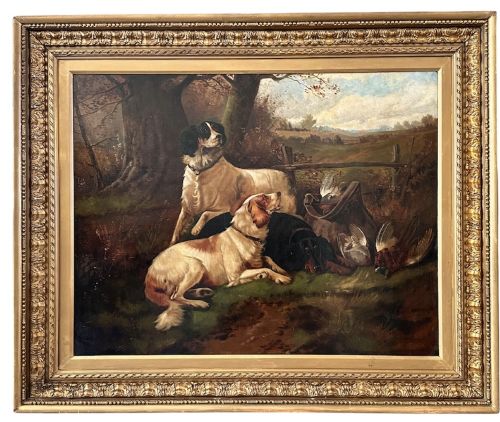
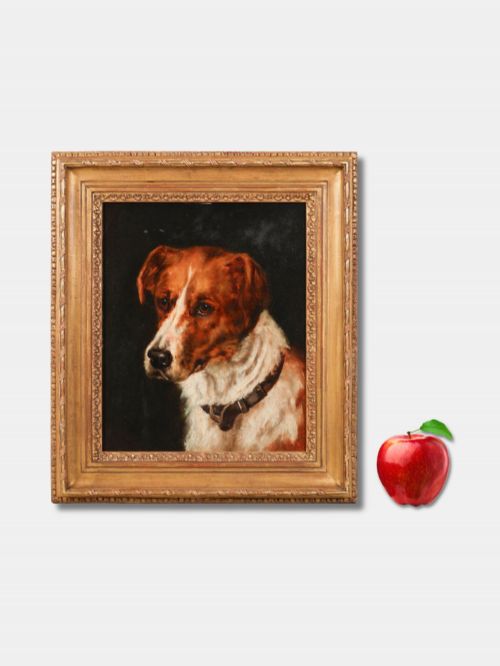
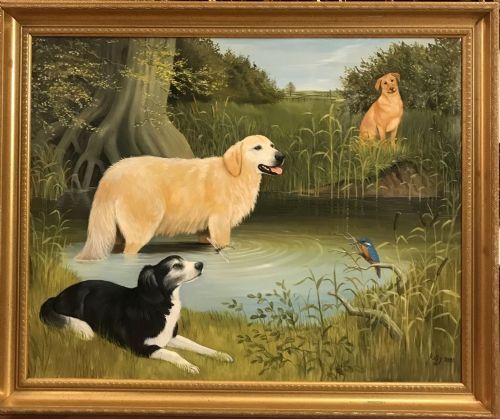


Gold Framed Canine Artwork
Gold framed canine artwork brings together historic dog portraiture and sporting oils, prized by collectors for their character and traditional framing.
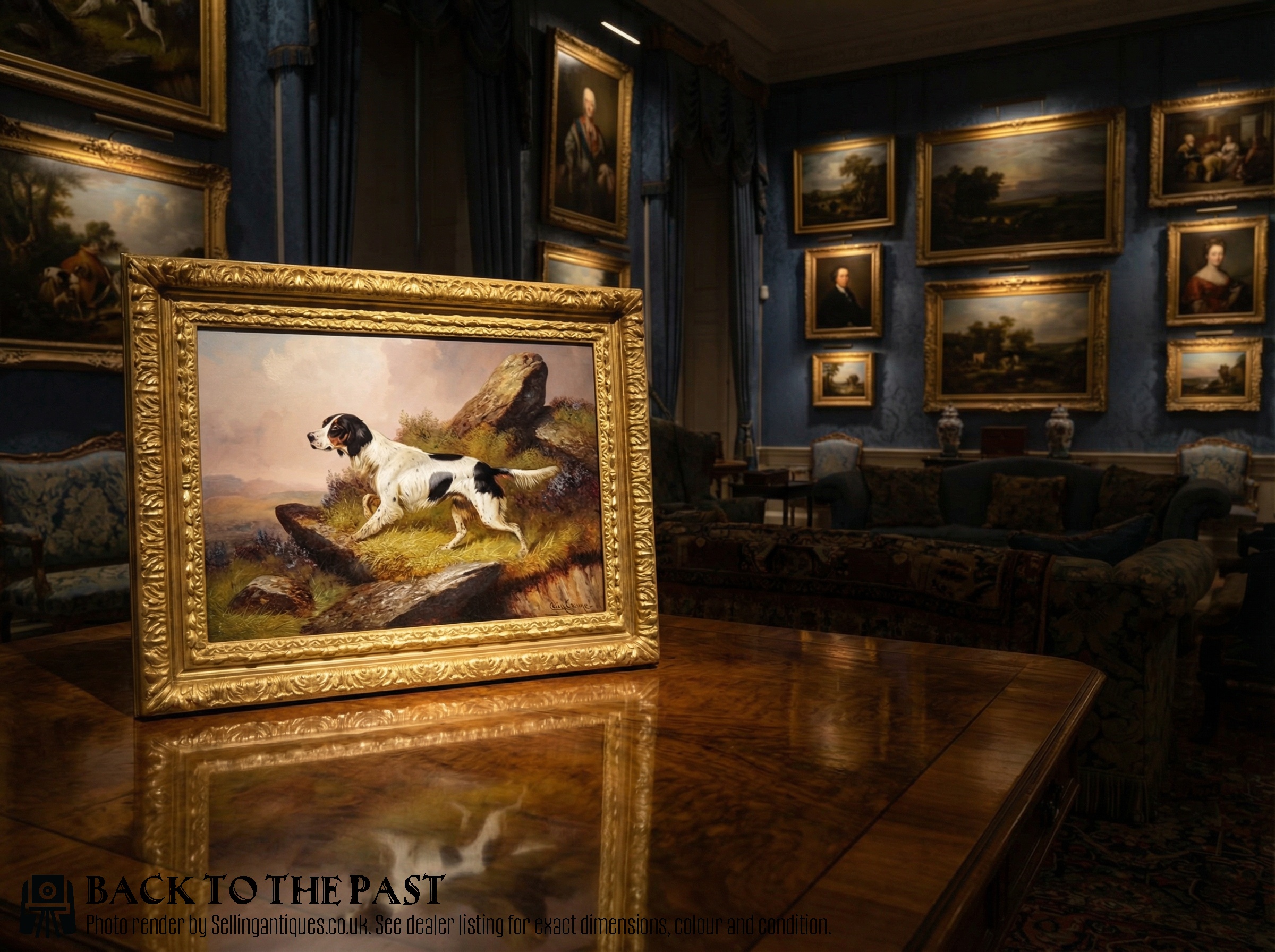
Gold Framed Canine Artwork
Gold framed canine artwork encompasses paintings, watercolours, and engravings depicting hounds, terriers, spaniels, and working dogs executed across the nineteenth and twentieth centuries. These pieces record beloved pets, field companions, and show champions within period enclosures.
Most examples encountered here date from the Victorian and Edwardian eras, rendered in oil on canvas, oil on board, or watercolour. Subjects range from solitary spaniels in landscapes to hunting packs in motion.
Originating largely from British and French studios, these works reflect traditional sporting art and domestic animal portraiture of the period. The selection covers intimate studies alongside substantial canvases.
How They Were Made
Artists painted primarily with oil paint on stretched canvas or wooden board, applying pigment to capture the texture of coats and the natural light of landscapes. Watercolours on paper also appear, often protected behind glass within matching surrounds.
The characteristic borders utilise gold leaf, giltwood, or gilded wood applied to wooden mouldings. These surrounds were carved or cast to complement the period aesthetic of the artwork.
Several dogs gaze out with expressions suggesting they just interrupted an important nap.
What Varies in Quality
Quality rests in the anatomical accuracy of the animal and the dexterity with which the artist renders expression, muscle structure, and fur. Superior hands convey distinct personality and movement rather than stiff representation.
The integrity of the mounting matters significantly, as original or period-matching gilded frames with well-preserved leaf enhance the visual unity of the piece. Craftsmanship in the moulding and depth of the gilding separate standard production from finer examples.
Valentine T. Garland·Martin Theodore Ward·Arthur Wardle·William Barraud·Samuel Raven·John Trivett Nettleship·Colin Graeme Roe·Jules Chardigny·Alfred Duke·George Earl·Florence Mabel Hollams·Philip Eustace Stretton·James Ward·Charles Bilger Spalding·George Stubbs·John Emms·Henry Frederick Lucas-Lucas·George Armfield·Arthur Alfred Davis·Robert Cleminson
The Gold Framed Canine Artwork Glossary
- Giltwood
- Wood carved and coated with gold leaf or metallic powder to create a bright, reflective perimeter. This finish was standard for framing significant paintings of the nineteenth century.
- Sporting Art
- A genre depicting field sports, hunting dogs, horses, and rural pursuits. These works document the working relationships between humans and animals in past centuries.
- Oil on Canvas
- Pigment mixed with drying oil applied to a woven fabric support stretched over a wooden frame. This method allowed artists to achieve rich colours and subtle blending.
- Watercolour
- Paint consisting of colour suspended in a water-soluble binder, used on paper to create luminous transparent washes. Such works require framing behind glass for protection.
Gold Framed Canine Artwork: Frequently Asked Questions
What is gold framed canine artwork?
Gold framed canine artwork comprises historical paintings and works on paper depicting dogs, presented in period gilded surrounds. These pieces range from intimate terrier studies to large sporting canvases.
Created primarily during the nineteenth and twentieth centuries, they document the importance of dogs in domestic and sporting life. The gold frames reflect the traditional presentation methods of their original eras.
How do I date these dog paintings?
Dating relies on stylistic clues within the painting, the clothing of any human figures, and the construction techniques of the stretcher and frame. Artist signatures and biographical dates provide the most direct confirmation.
Victorian and Edwardian works often exhibit specific conventions in brushwork and palette. Period framing methods also offer reliable indicators of age.
Where should I hang a dog portrait?
These works suit traditional reception rooms, studies, and hallways where their rich gilt borders complement period interiors. They pair well with wood panelling and traditional wall colours.
Avoid placing oil paintings and watercolours in direct sunlight or areas of high humidity to protect the canvas and the gilded frame. Proper placement ensures the longevity of both the artwork and its surround.