




Gold Framed Bird Art
Gold framed bird art gathers centuries of ornithological studies and painted studies, housed in traditional gilded surrounds.
Gold Framed Bird Art
Gold framed bird art encompasses a diverse range of historical depictions, from detailed natural history engravings to oil paintings and watercolours. You encounter pieces spanning the Georgian, Victorian, and Regency periods, alongside later twentieth-century works. These pieces often feature glass protection, wood structures, and gilded surrounds that complement the subject matter.
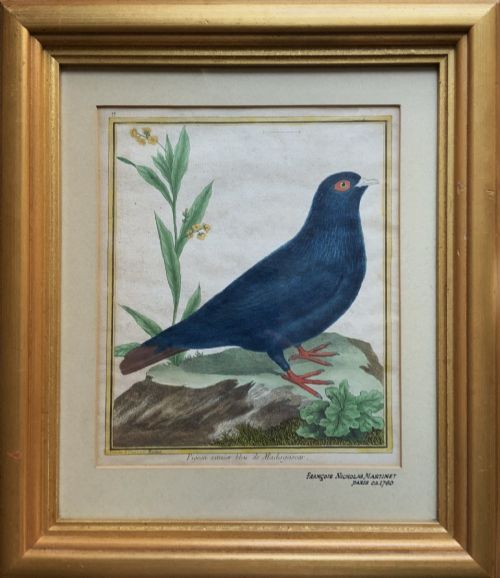
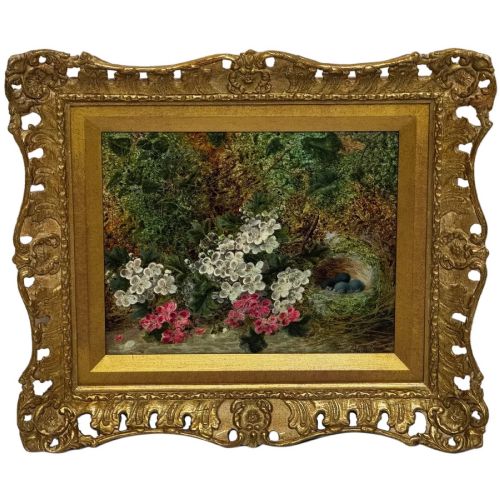
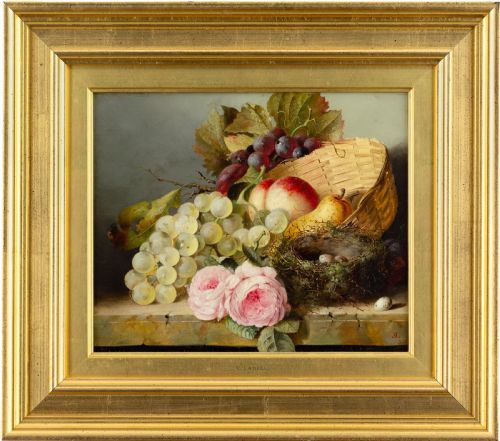
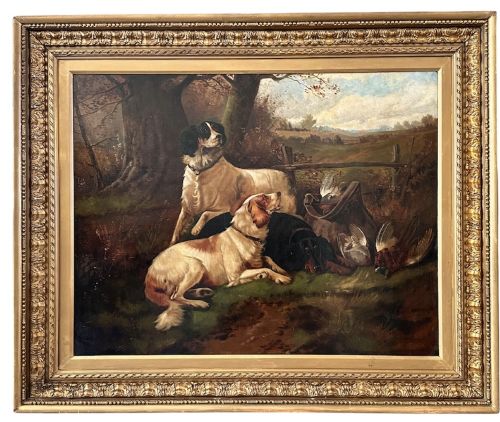
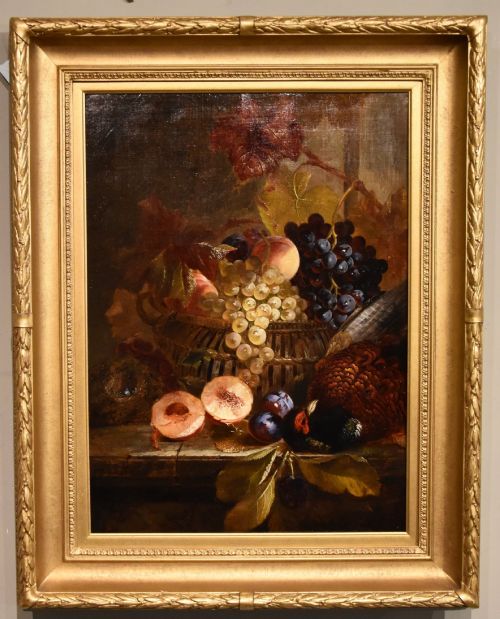
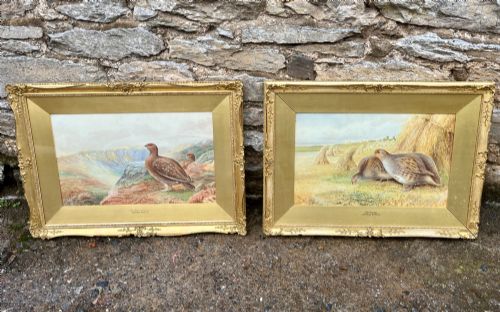
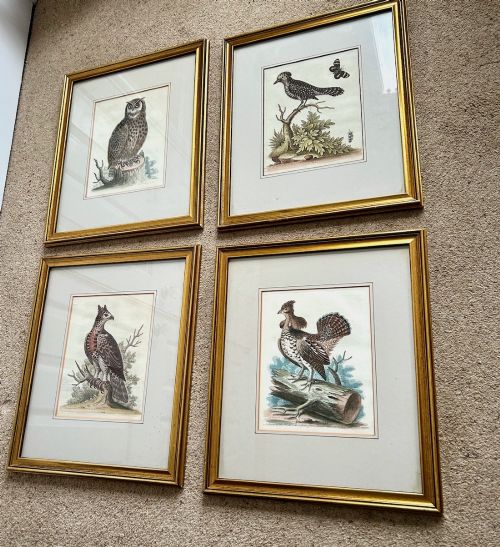
The selection on this page leans heavily into eighteenth and nineteenth-century works, including hand-coloured engravings, lithographs, and oil on canvas formats. Forms range from botanical and ornithological series to detailed still lifes and sporting scenes. Collectors seek these items for their decorative quality and their documentation of avian subjects.
Materials and Techniques
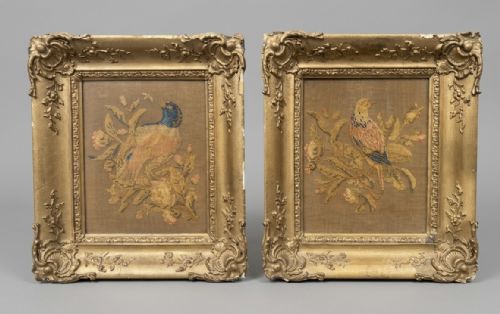
Works in this category utilise traditional media such as watercolour, oil on canvas, gouache, and hand-coloured engraving on paper. Artists applied pigments with meticulous care, often employing copperplate engraving or lithography for scientific illustration. Textiles also appear through detailed silk embroideries and needlework pieces.
Frames rely on wood construction finished with gold leaf or giltwood, providing a bright border that enhances the artwork within. Protective glass frequently covers works on paper to prevent environmental damage over time. The combination of durable wooden frames and delicate paper or canvas mediums defines the physical construction of these items.
Frogs, toads, monkeys, and domestic pets occasionally share the canvas with feathered subjects.
Evaluating the Pieces
Quality rests in the precision of the rendering and the historical significance of the artist or publisher involved. Hand-applied colouring on early engravings displays notable variation in subtlety and pigment preservation. Furthermore, the crispness of the original impression on engraved plates separates standard prints from superior examples.
The framing material contributes significantly to the overall integrity of the piece, with genuine gold leaf and period giltwood moulding holding greater appeal than later replacements. The balance between the artwork and its surround dictates the visual success of the composition. Well-preserved surfaces on both canvas and paper ensure long-term stability.
François-Nicolas Martinet·Michael Dahl·George Edwards·William Swainson·Edward Lear
The Gold Framed Bird Art Glossary
- Giltwood
- Wood that has been coated with gold leaf or gold paint to create a bright, decorative surface. This finish is commonly found on traditional frames surrounding historical paintings and prints.
- Lithography
- A planographic printing process using a flat stone or metal plate on which image areas are receptive to ink. It allowed for the mass production of coloured bird plates in the nineteenth century.
- Ornithological
- Relating to the scientific study and depiction of birds. Many works in this category derive from historical natural history volumes.
- Engraving
- A printmaking technique where an artist carves an image into a metal plate with a burin. The resulting lines hold ink to produce detailed, fine-line prints.
- Gouache
- An opaque water-based paint that dries to a matte finish, allowing for vibrant colour representation. Artists used this medium to achieve solid blocks of saturated hue.
Gold Framed Bird Art: Frequently Asked Questions
What periods do these pieces date from?
The selections span multiple centuries, with significant representation from the eighteenth and nineteenth centuries. You will find items originating from the Georgian, Regency, and Victorian eras.
Later pieces extend into the mid-twentieth century, offering a broad chronological spread of styles and techniques.
How were these artworks originally displayed?
Many works originated as plates in bound ornithological books before being separated and framed for wall display. Others were painted directly as standalone canvases or watercolours for domestic interiors.
Gilded frames were chosen to complement the formal decor of period homes, highlighting the subject matter within.
Are the frames original to the art?
Framing practices vary across the inventory, with some pieces retaining their period giltwood or gold leaf surrounds. Other works may have been paired with complementary frames at a later date to ensure protection.
Examining the corner joints and backing materials helps determine the age relationship between the artwork and its frame.
What mediums are most common?
Paper works frequently feature hand-coloured engravings and lithographs produced by natural history illustrators. Paintings on this page utilise oil on canvas, watercolour, and gouache mediums.
Textile representations also appear through historical needlework and embroidery executed in silk threads.